
Every person who invests in a Rinnai tankless water heater expects endless hot water and high energy savings. That’s the promise of “tankless.” But what happens when your Rinnai unit isn’t getting hot enough? Cold showers, lukewarm dishwashing, and frustration quickly follow. This problem is more common than you might think, and it can have many causes—some simple, some tricky.
If you’re searching for answers, you’re not alone. This guide walks you through everything you need to know about why your Rinnai tankless water heater might not be heating water properly. You’ll learn about common causes, practical troubleshooting steps, and when to call a professional. Most important: you’ll discover solutions that help you get your hot water back—without guessing or making costly mistakes.
How Rinnai Tankless Water Heaters Work
Understanding the basics makes troubleshooting much easier. Unlike traditional tanks, Rinnai tankless water heaters don’t store hot water. Instead, they heat water on demand as it flows through the unit. When you turn on a hot water tap, cold water enters the heater, passes over a heat exchanger powered by gas or electricity, and comes out hot.
This design means you get:
- Hot water only when you need it
- Potential energy savings (no standby heat loss)
- Compact wall-mounted units
But it also means that problems with flow, gas supply, or temperature settings can quickly affect performance. A small issue anywhere in the system can lead to water that’s not hot enough.
Top Causes For Rinnai Tankless Water Heater Not Getting Hot Enough
Several things can make your Rinnai deliver lukewarm or even cold water. Let’s break down the most common causes, starting with the easiest to fix.
1. Temperature Setting Is Too Low
Many units ship with a default temperature set between 110-120°F. If you want hotter water, you may need to adjust this. Sometimes, settings get changed by accident.
How to check:
- Find the digital controller on your Rinnai unit.
- Look for the “up” and “down” temperature buttons.
- Make sure the temperature is set to your desired level (often 120-125°F is hot enough for showers).
*Non-obvious tip:* Higher isn’t always better. Setting the water too hot can cause scalding and waste energy.
2. Too Much Demand (flow Rate Exceeded)
Rinnai heaters have a maximum flow rate—measured in gallons per minute (GPM). If too many fixtures run at once (for example, shower and dishwasher), the heater can’t keep up. It will reduce output temperature to protect itself.
Typical residential models:
- 6-10 GPM at 35°F rise (depends on model and incoming water temperature)
*Example:* If you run two showers and the washing machine at the same time, your water may only get lukewarm.
3. Cold Weather Or Low Incoming Water Temperature
In winter, the water coming into your home is much colder. Tankless units must work harder to raise the temperature.
*Insight:* A Rinnai set to 120°F might only manage 100°F if incoming water is near freezing and demand is high.
4. Incorrect Installation
If the unit is undersized for your household, or if gas lines are too small, you’ll get poor performance. This is a common problem when people upgrade from a tank to tankless without checking requirements.
*What matters:*
- Proper gas supply (BTU/hour matches heater needs)
- Correct venting (for gas units)
- Adequate water pressure
5. Dirty Or Clogged Components
Over time, minerals and debris can build up in the unit:
- Water filter can clog, restricting flow
- Heat exchanger can scale, reducing efficiency
Rinnai recommends regular maintenance, but many homeowners skip this.
6. System Error Codes
Modern Rinnai units show error codes if something’s wrong (like low gas pressure or ignition failure). If you see a code, check your manual or Rinnai’s support site.
*Non-obvious tip:* Not all errors stop water flow—some just reduce temperature.
7. Cross-connections In Plumbing
If cold water leaks into the hot line (for example, due to a faulty mixing valve), you’ll get lukewarm water even if the heater is working perfectly.
*Common sources:*
- Shower valves installed backward
- Single-lever faucets with worn internal parts
8. Gas Or Power Supply Issues
If your unit is gas-powered and the supply is weak (low pressure, closed valve, etc.), it won’t heat water fully. For electric models, voltage drops or faulty wiring can cause similar problems.
9. Remote Control Or Smart Home Integration Problems
Some Rinnai models use WiFi or wall remotes. If these lose connection or malfunction, the unit may revert to safe, low temperatures.
10. External Recirculation System Malfunction
If your system uses a recirculation pump (for instant hot water), problems here can affect output temperature, especially if the recirculation loop is stuck open or the pump fails.
Step-by-step Troubleshooting For Lukewarm Rinnai Tankless Water
When your water isn’t hot enough, start with these steps. Many can be done by homeowners, but don’t hesitate to call a pro if you’re unsure.
Step 1: Check The Temperature Setting
- Locate the main control panel or remote.
- Make sure the set temperature matches your needs (usually 120-125°F for showers).
- If you have children or elderly at home, avoid setting above 125°F.
Step 2: Reduce Simultaneous Hot Water Use
- Test by running only one hot water fixture at a time.
- If water gets much hotter, you may be exceeding your unit’s flow rate.
- Consider staggering use or upgrading to a higher-capacity model.
Step 3: Inspect For Error Codes
- Look for any error numbers on the display.
- Refer to your user manual for code meanings.
- Common codes: 10 (air supply/vent), 11 (ignition), 12 (flame failure), 14 (thermistor), 61 (fan motor).
Step 4: Clean The Water Filter
- Turn off power and water to the unit.
- Locate and remove the water filter (usually at the cold water inlet).
- Rinse under running water, then reinstall.
*Tip:* Clean every 6-12 months, or more often in hard water areas.
Step 5: Check For Plumbing Cross-connections
- Shut off cold water supply to the heater.
- Open hot water tap; if water still flows, there’s a cross-connection.
- Have a plumber fix any mixing valve or backflow issues.
Step 6: Inspect Gas Supply And Valves
- Confirm that the gas valve is fully open.
- If you have other gas appliances, check if they’re working properly.
- For propane, make sure the tank isn’t empty.
Step 7: Flush The Heat Exchanger
Scale buildup can stop your heater from working efficiently, especially with hard water.
How To Flush:
- Turn off the heater and water supply.
- Attach hoses to the service valves.
- Use a pump and white vinegar to circulate cleaner through the heat exchanger for 45-60 minutes.
- Rinse with clean water.
*Professional service is recommended if you’re unsure. *
Step 8: Inspect The Recirculation System (if Present)
- Make sure the pump is running and timer is set correctly.
- Listen for unusual noises.
- Check for leaks or stuck valves.
Step 9: Check Power Supply (electric Models)
- Confirm the unit is plugged in and breaker is on.
- Test the outlet with another device to ensure it’s working.
Step 10: Reset The Unit
- Many Rinnai models have a “reset” button.
- Power cycling the unit can clear minor glitches.
When To Call A Professional
Some problems need an expert. Call for service if:
- You see persistent error codes that don’t clear after basic steps
- There’s a gas smell or water leak
- The unit is making loud noises
- Water is still not hot after cleaning and resetting
A certified Rinnai technician can check advanced issues like faulty sensors, gas regulators, or complex electrical problems.
Comparison: Rinnai Tankless Vs. Traditional Water Heater
To understand what’s unique about Rinnai tankless units, compare them to tank-style heaters:
| Feature | Rinnai Tankless | Traditional Tank |
|---|---|---|
| Hot Water Supply | Endless (on demand) | Limited by tank size |
| Energy Efficiency | High (no standby loss) | Lower (constant reheating) |
| Space Needed | Small, wall-mounted | Large footprint |
| Maintenance | Regular flushing | Less frequent, but still needed |
| Common Problems | Flow rate, scaling | Rust, sediment, slow recovery |
Key Factors That Affect Rinnai Water Temperature
Several real-world factors influence how hot your water gets:
Incoming Water Temperature
Colder water entering your home means the heater has to work harder. In northern climates, winter can reduce output water temperature by 10-20°F.
Flow Rate
Every model has a maximum GPM (gallons per minute) it can heat effectively. Too many fixtures at once will reduce temperature.
Unit Size (btu Rating)
A unit that’s too small for your home can’t keep up with demand. Check your model’s BTU/hour rating and compare with your household needs.
Water Hardness
High mineral content (hard water) causes scale buildup, which insulates the heat exchanger and reduces efficiency. Consider a water softener if you have hard water.
Maintenance Frequency
Skipping regular cleaning makes performance worse over time. Flushing the system and cleaning filters can restore lost heating power.
Installation Quality
Improper installation (like undersized gas lines or poor venting) restricts fuel flow and can cause lukewarm water.
Electrical Issues
For electric models, power surges, faulty outlets, or loose connections can stop the heater from working at full power.

Credit: www.youtube.com
Advanced Troubleshooting: What Technicians Check
If the basic steps don’t solve the problem, a Rinnai-trained technician will use these advanced methods:
Combustion Analysis
Technicians use special tools to measure exhaust gases and make sure the burner is operating efficiently. Poor combustion can limit water temperature.
Gas Pressure Testing
Low or fluctuating gas pressure means the unit won’t heat water fully. Technicians test at the inlet and manifold to spot problems.
Thermistor And Sensor Testing
Rinnai heaters use thermistors (temperature sensors) to control output. If these fail or send wrong data, the water may not get hot enough.
Control Board Diagnostics
Modern units have a control board that stores error codes and history. Reading this data helps find hidden issues.
Scale Inspection
If flushing doesn’t help, technicians may open the heat exchanger to check for severe scale or corrosion.
Comparing Rinnai Models: Do All Work The Same?
Not all Rinnai units have the same performance. Here’s a sample comparison of three popular models:
| Model | Max Flow Rate (GPM) | BTU Rating | Best For |
|---|---|---|---|
| RL75iN | 7.5 | 180,000 | Small homes, 1-2 showers |
| RU160iN | 9.0 | 160,000 | Medium homes, 2-3 showers |
| RU199iN | 11.0 | 199,000 | Large homes, 3+ showers |
*Insight:* Even if you have a high-capacity unit, poor installation or lack of maintenance can reduce performance.
Common User Mistakes That Cause Lukewarm Water
Many homeowners unintentionally create problems. Here are the most frequent mistakes:
- Ignoring regular maintenance: Skipping filter cleaning and flushing causes scale buildup.
- Overloading the system: Running too many hot water fixtures at once exceeds the unit’s capacity.
- Setting temperature too low: Not realizing the default setting may be less than needed for comfort.
- Not checking for error codes: Small errors can be fixed early if noticed.
- Assuming installation was perfect: Not all installers follow manufacturer guidelines; always confirm sizing and venting.
- Using hard water without treatment: This accelerates scale and reduces heater life.
- Forgetting about plumbing issues: Cross-connections and faulty valves can mix in cold water.
*Pro tip:* Keep your Rinnai manual handy and record maintenance dates.
Preventive Maintenance For Consistent Hot Water
Maintaining your tankless heater reduces problems and extends its life. Here’s what you should do:
Annual Maintenance Tasks
- Flush the heat exchanger with vinegar or a descaling solution.
- Clean the water filter at the cold water inlet.
- Inspect venting for blockages or leaks.
- Check for error codes and clear as needed.
- Test hot water at multiple fixtures to check for cross-connection issues.
Maintenance Frequency
If you live in a hard water area or use the heater heavily, increase maintenance to every 6 months.
Professional Service
Every 2-3 years, have a certified technician inspect gas pressure, sensors, and internal parts.
Practical Tips For Reliable Hot Water
- Stagger high-demand activities: Avoid running showers, laundry, and dishwasher at the same time.
- Install low-flow fixtures: These reduce demand and help maintain temperature.
- Consider a water softener: This prevents scale and keeps the heat exchanger working efficiently.
- Monitor for leaks: Even small leaks can mix cold water into your hot lines.
- Stay updated: Register your unit with Rinnai for service alerts and warranty support.
Real-world Examples
Example 1: The Winter Surprise
A family in Minnesota found their Rinnai heater delivered only lukewarm water each winter. The problem: their incoming water temperature dropped from 55°F in summer to 40°F in winter. By reducing simultaneous usage and setting the unit to 125°F, they got hotter showers even during cold months.
Example 2: The Hidden Cross-connection
A homeowner had warm but never hot water. The culprit: a new shower mixing valve had been installed backward, allowing cold water to mix in. Fixing the valve restored full hot water.
Example 3: Overlooked Scale Buildup
A family who never flushed their heater noticed declining water temperature after 5 years. Flushing the heat exchanger with vinegar removed the scale and brought back hot water.
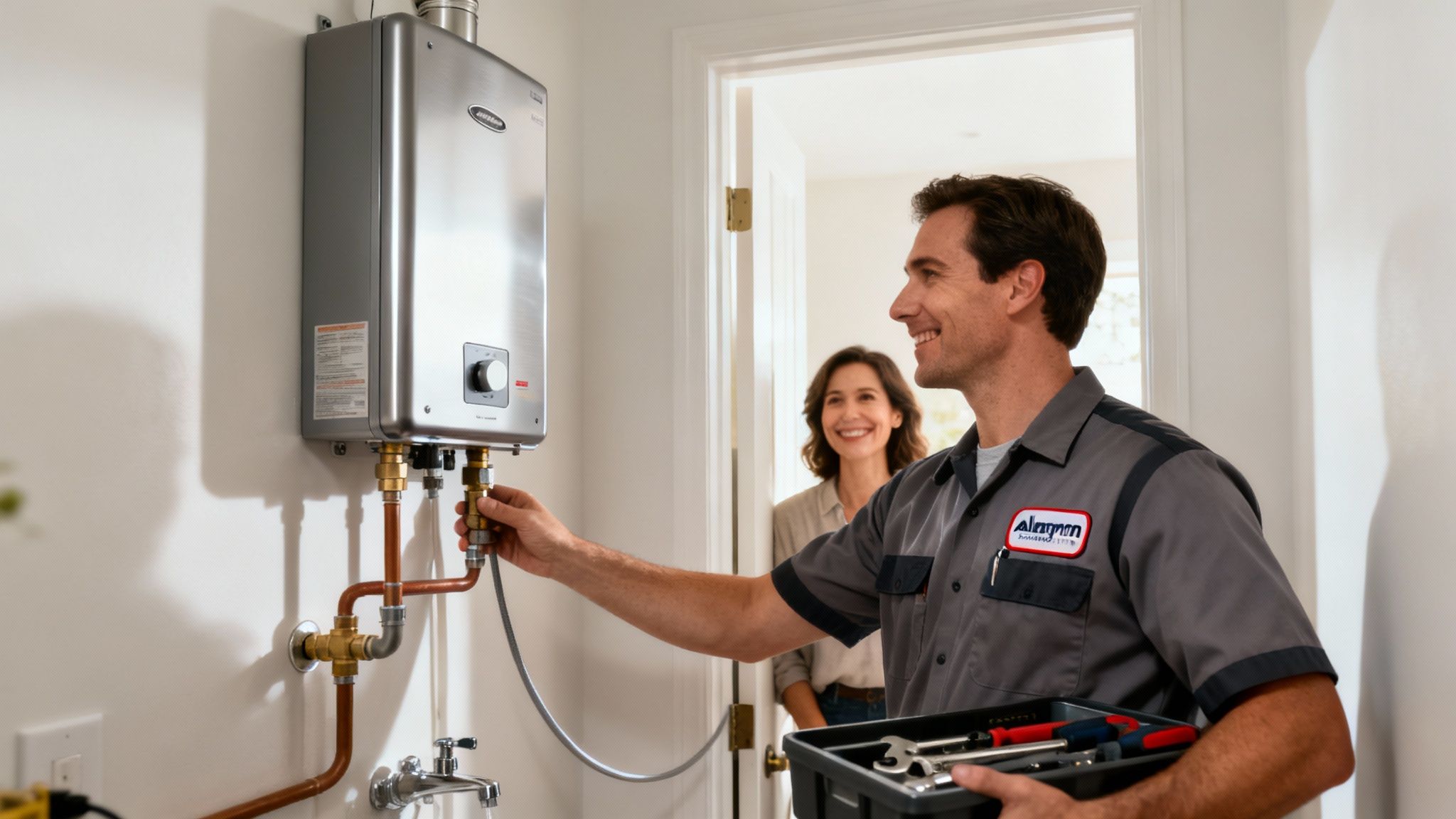
Credit: www.clubcpd.com
Rinnai Error Codes: What They Mean For Temperature
Some common codes that can affect hot water output:
- Error 10: Air supply or exhaust blockage. May reduce output temperature.
- Error 11: Ignition failure. No hot water.
- Error 12: Flame failure. No hot water.
- Error 14: Thermistor fault. May cause lukewarm water.
- Error 16: Over-temperature. Unit shuts off or reduces output to protect itself.
Always check the code in your user manual or on the Rinnai official support site for detailed explanations.
When Replacement Is The Right Choice
If your Rinnai heater is more than 10-15 years old, or if repairs cost more than half the price of a new unit, replacement may be wise. Newer models are more efficient, have smart features, and offer better performance.
Signs it’s time to replace:
- Frequent breakdowns
- Declining hot water even after maintenance
- Corrosion or leaks inside the unit
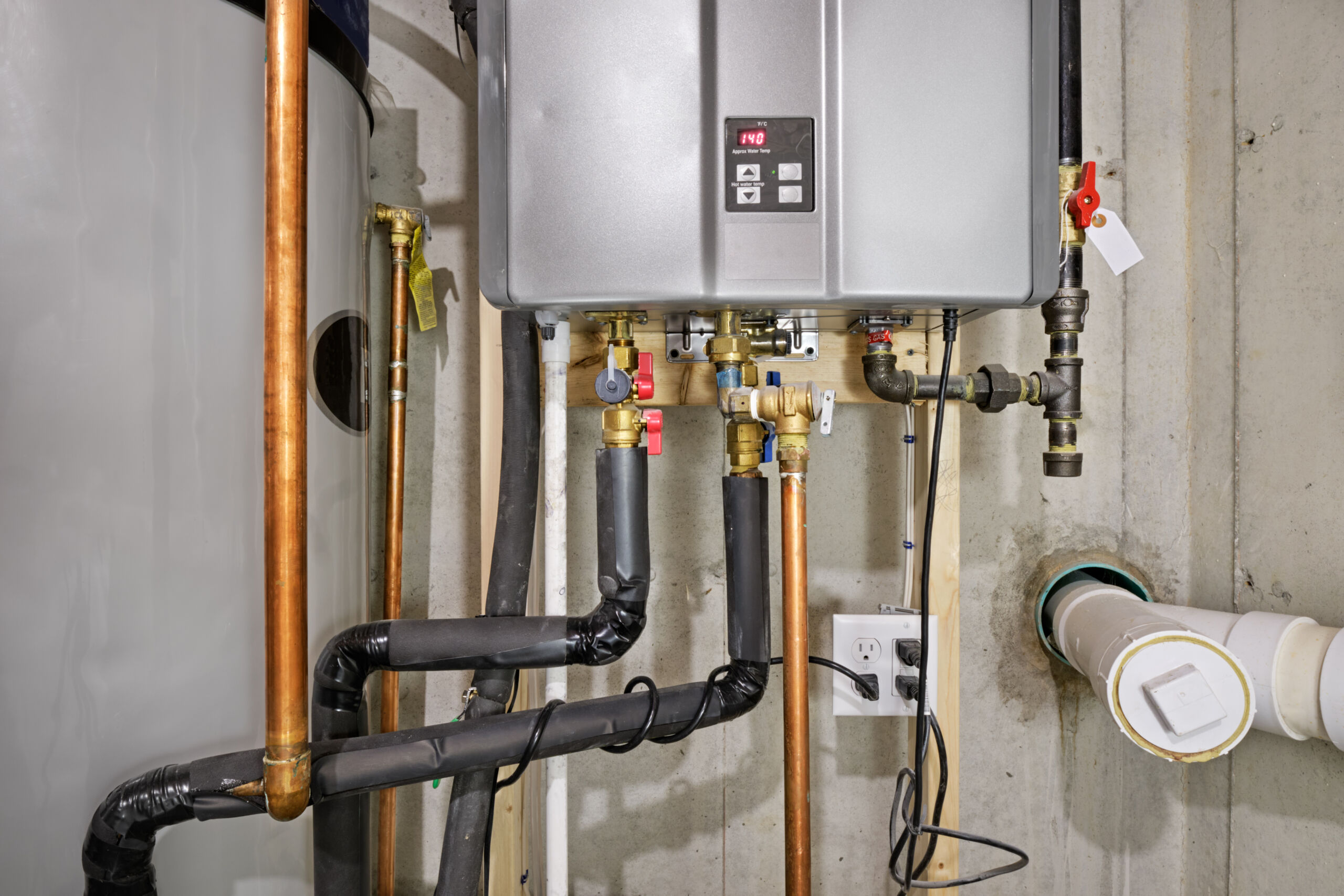
Credit: arstechnica.com
Frequently Asked Questions
Why Is My Rinnai Tankless Water Heater Not Getting Hot Enough Even After Cleaning The Filter?
If cleaning the filter doesn’t help, other causes could be at play: low gas supply, a faulty thermistor, scale buildup in the heat exchanger, or a plumbing cross-connection. Start by checking error codes and then try flushing the heat exchanger. If the problem continues, professional service is recommended.
How Often Should I Flush My Rinnai Tankless Water Heater?
Rinnai recommends flushing the heat exchanger at least once a year. In areas with hard water, every 6 months is better. Regular flushing prevents scale buildup and keeps your water as hot as possible.
Can I Increase My Rinnai Water Heater’s Temperature Above 120°f?
Yes, most Rinnai models allow settings up to 140°F for residential use. However, higher temperatures increase the risk of scalding. For safety, 120-125°F is usually hot enough for most homes.
What Error Codes Should I Look For If My Water Isn’t Hot Enough?
Watch for codes 10, 11, 12, 14, and 16. These relate to air supply, ignition, flame failure, sensor problems, or overheating. Each can affect water temperature. Check your manual for detailed code meanings.
Do I Need A Professional To Service My Rinnai Tankless Water Heater?
Basic maintenance (like cleaning filters and flushing) can be done by homeowners. For gas, electrical, or advanced issues, or if you see persistent error codes, a certified technician should handle repairs to ensure safety and performance.
A well-maintained Rinnai tankless water heater delivers the endless hot water you expect. By understanding how your system works and following these steps, you’ll solve most temperature problems quickly and confidently. If you ever feel stuck, remember that professional help is always available—and a little maintenance goes a long way toward comfort and peace of mind.