
Every homeowner expects hot water to flow on demand, but when your Bradford White water heater won’t light, it can quickly turn a normal day upside down. The frustration of cold showers, dishes piling up, or laundry plans ruined is more than just an inconvenience—it’s a problem that needs a solution, and fast. While Bradford White is known for reliability, even the best water heaters can face ignition issues. The good news is, with the right information, you can often diagnose and fix the problem yourself, or at least understand what’s wrong before calling a professional.
This guide breaks down why your Bradford White water heater might not light, how you can troubleshoot the issue, and what steps are safe for a homeowner to take. We’ll also cover when it’s time to call for expert help and how to prevent these problems in the future.
Whether you’re handy or just want to understand what your technician is talking about, you’ll find clear answers here.
Understanding How Your Bradford White Water Heater Ignites
Before you start troubleshooting, it helps to know how your Bradford White water heater creates hot water. Most residential models use either a standing pilot light or an electronic ignition system. Here’s a quick overview:
- Standing pilot models use a small, continuous flame to ignite the main burner when hot water is needed. If this pilot goes out or the system senses a problem, the burner won’t light.
- Electronic ignition models use a spark or hot surface to ignite the burner only when needed. These are more efficient but have their own set of possible issues.
Knowing your model type will guide your troubleshooting steps. You’ll usually find this information on the manufacturer’s label on your heater.
Common Reasons A Bradford White Water Heater Won’t Light
Let’s break down the typical causes, starting with the simplest. Many issues are easy to check, even for a beginner.
1. Gas Supply Problems
If your water heater uses natural gas or propane, it needs a steady, safe supply. No gas, no ignition.
- Gas valve shut off: Check if the main gas valve is open. Sometimes it gets turned off during maintenance or by accident.
- Gas line issues: If you smell gas or hear a hissing sound, leave the area immediately and contact your gas supplier.
- Empty propane tank: For propane models, make sure the tank isn’t empty.
2. Pilot Light Issues
A common frustration with standing pilot models.
- Pilot went out: Drafts, a faulty thermocouple, or even dirt can put out the flame.
- Can’t relight the pilot: If the pilot doesn’t stay lit after you follow the lighting instructions, there’s likely a deeper issue.
3. Faulty Thermocouple Or Thermopile
These parts sense the pilot flame and signal the gas valve to open. If they fail, the heater won’t light.
- Thermocouple: Found in standing pilot models. If it’s dirty, bent, or broken, the system shuts off gas as a safety measure.
- Thermopile: Used in some electronic models. Like a thermocouple, but generates more power for smart controls.
4. Igniter Problems
In electronic ignition models, the igniter creates the spark or heat to light the burner.
- Worn or broken igniter: No spark, no flame.
- Dirty igniter: Can’t create enough heat or spark.
5. Blocked Or Dirty Burner Assembly
Dust, lint, or even insects can block the gas flow or burner ports.
- Clogged burner: The flame can’t ignite if the gas doesn’t flow freely.
- Dirty pilot orifice: A tiny hole can get blocked easily.
6. Faulty Gas Control Valve
The gas control valve regulates the flow of gas to your heater. If it malfunctions, the burner won’t get the fuel it needs.
- Stuck or failed valve: No gas reaches the pilot or burner.
7. Electrical Or Control Board Issues
Modern Bradford White heaters may use circuit boards to manage ignition and safety systems.
- Blown fuse or tripped breaker: No power, no ignition.
- Control board failure: The system can’t process signals to start the heater.
8. Tripped Safety Devices
Multiple safety features can stop your heater from lighting.
- High-temperature limit switch: Shuts off the system if it overheats.
- Flammable vapor sensor: Detects dangerous fumes and locks out ignition.
9. Drafts Or Venting Problems
Proper airflow is essential for safe ignition.
- Strong drafts: Can blow out the pilot light.
- Blocked vent: Can cause the system to shut down for safety.
10. User Error Or Missed Steps
Sometimes, the issue is as simple as missing a step during relighting or not turning the knob to the correct position.

Credit: cinemaximiliaan.org
Step-by-step Troubleshooting Guide
Here’s a practical process to help you find and fix the problem. Only perform steps you feel comfortable with—safety first.
1. Check For Gas Supply
- Make sure the main gas valve is fully open. The handle should be parallel to the pipe.
- For propane models, verify the tank has fuel and the service valve is open.
- If you suspect a gas leak (rotten egg smell), stop immediately and call your utility company.
2. Inspect The Pilot Light
- Remove the access panel to see if the pilot flame is burning.
- If the pilot is out, follow your heater’s lighting instructions carefully. Usually, this involves:
- Turning the gas control knob to “Off” and waiting 5 minutes for any gas to clear.
- Turning the knob to “Pilot” and pressing down to allow gas flow.
- Pressing the ignition button until you see a flame.
- Holding the button for 30–60 seconds, then slowly releasing.
- Turning the knob to “On.”
- If the pilot won’t stay lit, the thermocouple is likely the problem.
3. Test The Thermocouple Or Thermopile
- With the pilot burning, the thermocouple should generate a small electric current. If it’s dirty or not in the flame, the pilot will go out when you release the button.
- If you have a multimeter, you can test for millivolts (around 25–35 mV for a healthy thermocouple).
- Replace the thermocouple if it fails this test. They’re inexpensive and available at hardware stores.
4. Examine The Igniter
- Listen for a clicking sound or look for a visible spark when you press the ignition button.
- If there’s no spark, check the battery (if your model uses one) or wiring connections.
- Clean the igniter with a dry cloth. Never use water.
5. Inspect The Burner Assembly
- Turn off power and gas before removing the burner.
- Check for dust, spider webs, or debris.
- Clean with compressed air or a soft brush.
6. Evaluate The Gas Control Valve
- If everything else is working but the burner won’t light, the valve may be faulty.
- Replacing a gas control valve is a job for a licensed technician.
7. Check Power And Safety Devices
- Make sure your heater is plugged in (for models with electric controls).
- Reset any tripped breakers or replace blown fuses.
- Find and press the reset button on the heater if available.
- If your heater has a display, look for error codes and consult your manual.
8. Review Drafts And Venting
- Check that nothing blocks the vent pipe.
- Look for signs of backdraft (soot or discoloration near the vent).
- Fix any open windows or doors nearby that may cause drafts.
9. Confirm Proper Relighting Steps
- Double-check the manufacturer’s lighting instructions. Missing a step can prevent ignition.
Key Components Comparison: Standing Pilot Vs Electronic Ignition
Understanding your model’s ignition system helps you troubleshoot better. Here’s how the main components compare:
| Component | Standing Pilot Model | Electronic Ignition Model |
|---|---|---|
| Pilot Light | Always on | Ignites only when needed |
| Igniter | Manual (match or igniter button) | Spark or hot surface |
| Thermocouple/Thermopile | Yes | Yes (sometimes called thermopile) |
| Gas Control Valve | Simple mechanical | Electronic controls |
| Power Needed | No (except for blower models) | Yes (for electronics) |

Credit: cinemaximiliaan.org
When To Call A Professional
Some problems require more than DIY fixes. Here’s when to call a licensed plumber or technician:
- You smell gas, hear hissing, or suspect a leak.
- You’re unsure or uncomfortable working with gas or electricity.
- The gas control valve needs replacement.
- Electrical issues persist after checking power supply.
- The burner or venting system seems damaged.
- Error codes point to complex internal problems.
Professional service is not just about repairs—it’s also about safety. Many components are protected by warranty, and improper work can void your coverage.
Preventing Water Heater Ignition Problems
You can avoid many ignition issues with regular care:
- Annual maintenance: Schedule a yearly check-up with a qualified technician. They’ll clean the burner, check the vent, and test safety systems.
- Keep area clean: Dust, lint, and debris around your heater can clog air intakes and burner assemblies.
- Inspect vents: Make sure nothing blocks airflow in and out of your unit.
- Test pilot regularly: Every few months, check that the pilot flame is steady and blue (not yellow or flickering).
- Install a carbon monoxide detector: This protects your family if venting problems occur.
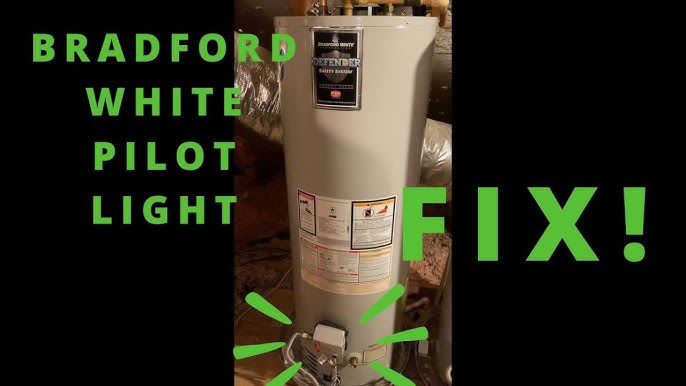
Credit: www.youtube.com
Common Mistakes Homeowners Make
Many people overlook simple but important steps when their Bradford White water heater won’t light.
- Skipping the pilot wait time: Not waiting long enough after turning off the gas can cause dangerous conditions.
- Forgetting the reset button: Some models have a small reset button near the gas control valve or thermostat.
- Ignoring error codes: Modern models flash codes—read your manual or look up the code online.
- Trying to bypass safety devices: Never tape, wedge, or force any safety part to stay on. This is dangerous and illegal.
- Not checking the power: Electric models need a working outlet and may have a hidden fuse inside the heater.
Advanced Troubleshooting: Electronic Models
If you have a newer Bradford White with electronic ignition, troubleshooting can get more technical.
Diagnostic Led Codes
Most electronic models have a small LED light that flashes error codes. Each pattern means something different.
- 1 flash: Normal operation
- 2 flashes: Thermopile voltage low
- 3 flashes: Pressure switch stuck closed
- 4 flashes: Excessive tank temperature
Always check your model’s manual for the exact meanings.
Control Board Reset
- Unplug the heater for 30 seconds, then plug it back in.
- Press the reset button (if available).
- If the error returns, the control board or sensor may need replacement.
Pressure Switch And Sensors
- These detect proper venting and gas pressure.
- If they fail, the system won’t allow ignition.
Advanced repairs should be left to trained professionals due to the risk of electric shock or gas leaks.
Real-world Example: Relighting A Bradford White Pilot
Let’s walk through a real example for a standing pilot model:
- Turn the gas control knob to “Off” and wait at least 5 minutes.
- Turn the knob to “Pilot.”
- Press and hold the knob down while pressing the igniter button repeatedly until the pilot lights.
- Hold the knob down for 30–60 seconds, then slowly release.
- If the pilot stays lit, turn the knob to “On.”
- Replace the access panel and set the thermostat to your desired temperature.
If the pilot goes out as soon as you release the knob, the thermocouple is likely bad.
Cost Comparison: Diy Vs Professional Repair
Homeowners often wonder if fixing a water heater themselves is worth it. Here’s a simple cost comparison:
| Repair Task | DIY Cost | Pro Cost (Estimate) |
|---|---|---|
| Replace thermocouple | $10–$25 | $100–$200 |
| Clean burner assembly | Free–$10 (supplies) | $100–$150 |
| Replace gas valve | $80–$150 (part only) | $300–$500 |
| Control board replacement | $80–$200 (part only) | $250–$500 |
DIY repairs can save money, but always consider safety and warranty implications.
Non-obvious Tips Most Beginners Miss
- Check air intake screens: Many models have small mesh screens near the bottom to let air in. If these clog with dust, the heater won’t get enough oxygen to ignite.
- Look for condensation: If you see water near the base, it may not be a leak—it could be condensation from a cold tank meeting warm air. Excess moisture can affect ignition parts.
- Battery in igniter: Some push-button igniters use a small AA battery. If the spark seems weak or missing, replace the battery before calling for repairs.
How Bradford White Compares To Other Brands
Curious how Bradford White stacks up on ignition reliability? Here’s a quick look:
| Brand | Typical Ignition System | Common Ignition Issues | Average Lifespan |
|---|---|---|---|
| Bradford White | Pilot & Electronic | Thermocouple, burner clog | 10–15 years |
| Rheem | Pilot & Electronic | Pilot outage, sensor faults | 8–12 years |
| A.O. Smith | Electronic | Control board, pressure switch | 10–15 years |
| State | Pilot & Electronic | Thermopile, draft issues | 8–12 years |
Bradford White is known for solid construction, but like all brands, ignition parts can fail over time.
How To Read Your Model’s Serial Number And Manuals
The serial number on your heater label tells you both the model type and its age. This info is crucial when searching for parts or troubleshooting advice.
- Serial number format: The first two digits often indicate the year of manufacture.
- Model number: Tells you if your unit is a standing pilot, electronic ignition, or power vent type.
If you’ve lost your manual, Bradford White provides free downloads on their official website. Always use the correct manual for your exact model.
When Replacement Is Better Than Repair
Sometimes, fixing ignition issues isn’t worth the cost or hassle.
- If your heater is over 10 years old and repair costs exceed half the price of a new unit, replacement is smarter.
- Repeated ignition failures may signal deeper tank or control board problems.
- New models are more energy efficient and may qualify for rebates.
Where To Get Help And More Information
If you need technical support, Bradford White’s customer service is helpful, or you can use their dealer locator to find certified technicians. For general hot water heater troubleshooting, the U.S. Department of Energy offers excellent resources.
Frequently Asked Questions
Why Does My Bradford White Water Heater Pilot Keep Going Out?
A pilot light that won’t stay lit is usually caused by a faulty thermocouple, dirty pilot orifice, or drafts blowing out the flame. Less often, it could be a failing gas control valve or venting issue. Try cleaning the pilot assembly and checking for nearby drafts first.
How Do I Know If My Water Heater Igniter Is Bad?
If you don’t hear a clicking sound or see a spark when pressing the igniter, it may be broken or need a new battery. On electronic models, a flashing error code can also signal a bad igniter. Replace or clean the igniter as your first step.
Can I Replace A Thermocouple Myself?
Yes, replacing a thermocouple is a common DIY fix and usually costs less than $25. Make sure to buy the right length and model. Always turn off the gas before starting, and follow your heater’s instructions for safe removal and installation.
Is It Dangerous To Try And Light A Water Heater Myself?
Relighting the pilot is safe if you follow the instructions carefully and wait at least 5 minutes after turning off the gas. If you smell gas, hear hissing, or feel unsure, stop and call a professional. Never try to bypass or force any safety device.
How Long Does A Bradford White Water Heater Typically Last?
A well-maintained Bradford White water heater often lasts 10–15 years. Regular maintenance, proper installation, and quick repairs can help you reach the longer end of that range.
When your Bradford White water heater won’t light, don’t panic. With a little knowledge and careful steps, you can often find and fix the problem—or at least know when to call for help. Regular maintenance and attention to small details will keep your hot water flowing for years to come.