Tankless Hot Water Heater Temperature Settings
There’s nothing quite like stepping into a hot shower only to find the water is either much too cold or way too hot. If you own a tankless hot water heater, you may know that temperature settings play a big role in comfort, energy use, and safety. Many homeowners love tankless systems for their endless hot water, but few take the time to understand how temperature settings actually work, or how to optimize them for their needs.
Getting the right temperature isn’t just about comfort. It affects your energy bills, the risk of scalding, and even the lifespan of your plumbing. It’s not as simple as picking a number—different factors like climate, water pressure, and appliance use can all make a difference.
If you’re new to tankless heaters, or you’ve switched from a tank model, there are some things you’ll want to know before you start pushing buttons or adjusting dials.
In this guide, you’ll discover what temperature settings really mean, how to set your tankless heater correctly, and what mistakes to avoid. You’ll get practical steps, real examples, and expert insights to help you stay comfortable and safe, while keeping energy costs down.
How Tankless Hot Water Heater Temperature Settings Work
Tankless hot water heaters heat water on demand. When you turn on the tap, cold water flows through a heat exchanger powered by gas or electricity. The heater only works as much as needed, which makes temperature settings especially important.
Key Temperature Controls
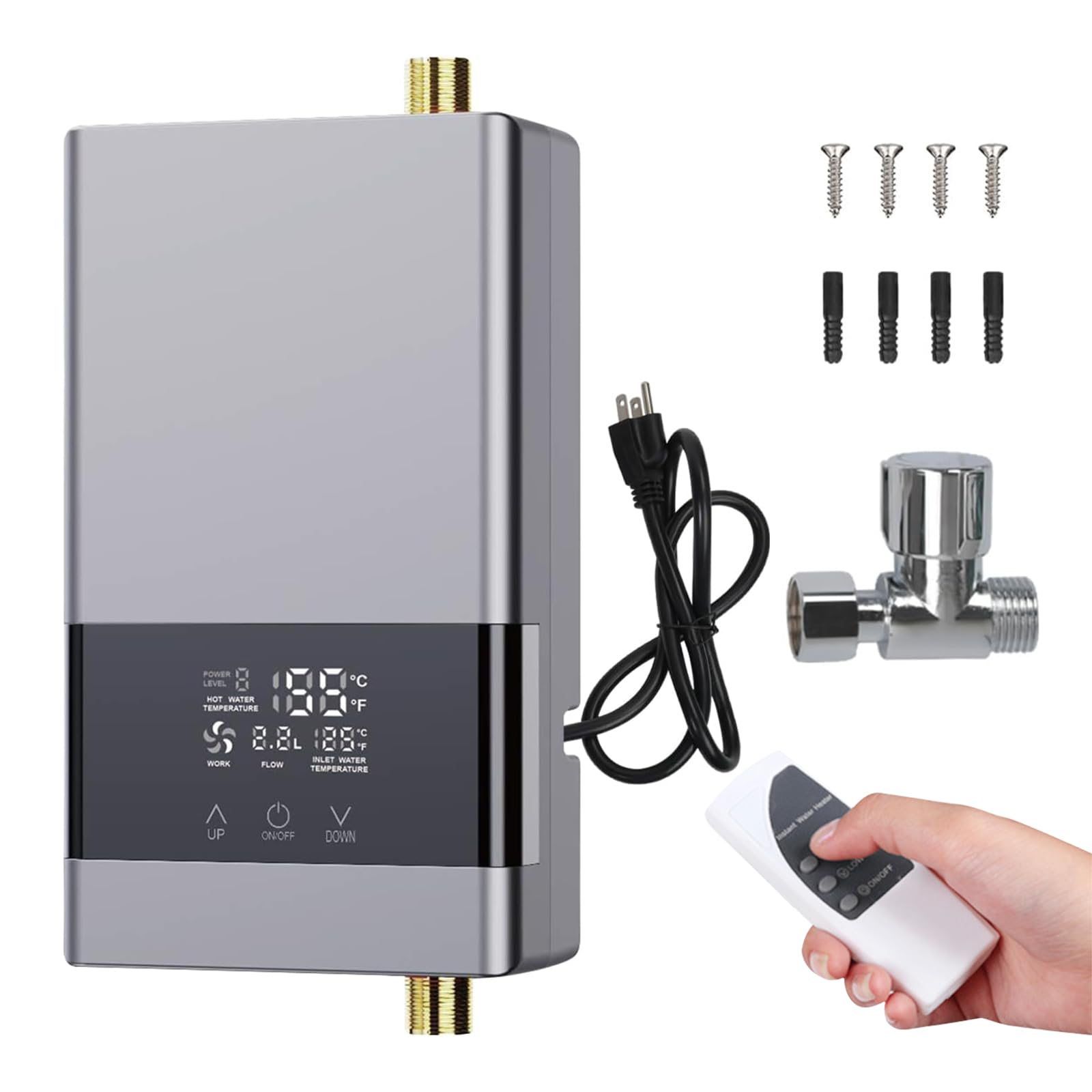
Most tankless heaters have a digital control panel. Here, you can adjust the set temperature in 1-degree steps, usually between 100°F and 140°F (38°C to 60°C). Some advanced models let you program different settings for showers, sinks, or even for certain times of day.
Unlike traditional tank heaters, there’s no stored hot water waiting to cool down. What you set is what you get—almost instantly.
Flow Rate Impact
Tankless heaters have a flow rate limit—the maximum amount of hot water they can supply at one time. If too many fixtures are used, the heater may struggle to keep up, and the temperature could drop. This is another reason why correct settings matter.
Why It’s Different From Tank Systems
With a tank system, the water is usually kept at a higher temperature, then mixed with cold water at the faucet. With a tankless heater, you set the outlet temperature directly. This means you often use less cold water to adjust the mix, and small changes in the heater’s setting can make a big difference at the tap.
Common Temperature Settings And Their Uses
Choosing the right temperature isn’t always obvious. Let’s look at what each common setting means for daily life.
110°f To 115°f (43°c To 46°c)
This range is gentle and comfortable for hand washing or light dishwashing. It’s also a good choice for homes with small children or elderly people, since the risk of scalding is low.
120°f (49°c)
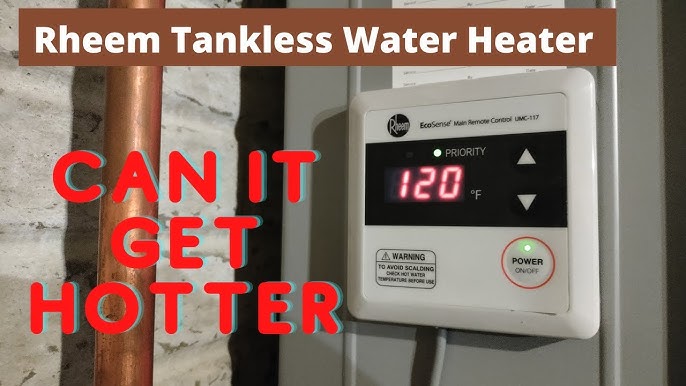
The U.S. Department of Energy recommends 120°F for most homes. This setting balances safety, comfort, and energy savings. At 120°F, the risk of scalding is low, but the water is still hot enough for showers and most cleaning tasks.
125°f To 130°f (52°c To 54°c)
Some people prefer slightly hotter water, especially if they have a large bathtub or want faster hot water at distant faucets. However, the risk of scalding increases above 120°F, especially for children and seniors.
135°f To 140°f (57°c To 60°c)
Settings in this range are mainly for commercial use, like restaurants or laundries, where very hot water is needed to kill bacteria. For home use, these temperatures are usually unsafe without mixing valves.
Example Temperature Chart
Here’s a quick reference for what different temperatures mean:
| Temperature (°F) | Main Use | Scald Risk |
|---|---|---|
| 110-115 | Hand washing, baby baths | Very low |
| 120 | Showers, dishwashing | Low |
| 125-130 | Faster hot water, large tubs | Moderate |
| 135-140 | Commercial kitchens, sanitizing | High |
Credit: www.amazon.com
How To Adjust Your Tankless Water Heater Temperature
Setting your tankless heater is usually simple, but you need to be careful. Here’s a step-by-step approach:
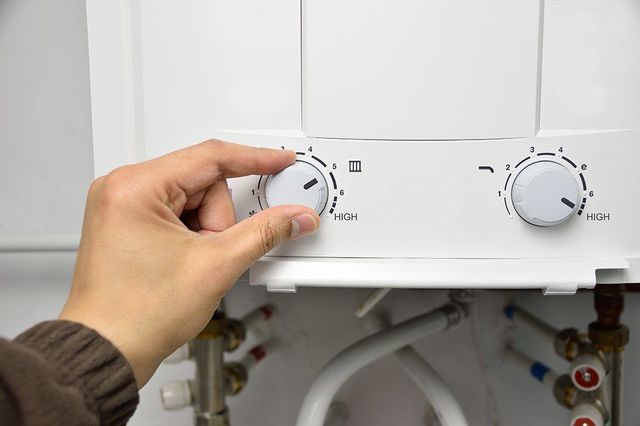
- Find the control panel: Most heaters have a digital or dial control. It may be on the front of the unit or in a nearby panel.
- Read the manual: Each brand has its own way to adjust settings. Some require pressing and holding buttons; others use a dial.
- Set your desired temperature: Start with 120°F. Test the water at the tap.
- Fine-tune as needed: If the water feels too cool, go up by 2-3 degrees. If it’s too hot, turn it down.
- Test again: Let the water run for a few minutes before checking. Adjust gradually.
- Lock or child-proof the control: Many units let you lock the setting so it can’t be changed by mistake.
Pro Tip
If you have a long distance between the heater and your bathroom, you might need to set the temperature a bit higher. Hot water loses heat as it travels through pipes, especially in cold weather.
Factors That Affect The Best Temperature Setting
Many people are surprised to learn that the “right” temperature isn’t just about preference. Several factors play a role:
1. Household Members
Homes with young children or elderly people should use lower temperatures to reduce the risk of burns. Their skin is more sensitive to heat.
2. Climate And Incoming Water Temperature
In cold climates, the water entering your heater is much colder. This can make the output feel cooler at the tap, especially in winter. You might need to set the heater a few degrees higher.
3. Plumbing Length And Insulation
The longer your pipes, the more heat you lose before water reaches the tap. Poorly insulated pipes can drop water temperature by 5°F or more, especially in basements or crawl spaces.
4. Flow Rate And Multiple Fixtures
Running several showers, dishwashers, or washing machines at once can stretch your tankless heater’s capacity. If the heater can’t keep up, water may not reach the set temperature.
5. Hard Water And Mineral Buildup
Over time, minerals from hard water can build up inside the heater, reducing its efficiency. This can make the water cooler even if the setting hasn’t changed.
6. Local Regulations
Some states or cities have rules about maximum water temperature for safety reasons. Check local codes if you’re not sure.
Example: How Climate Affects Output
Let’s compare two regions:
| Location | Typical Incoming Water Temp (°F) | Heater Output Needed (°F) | Suggested Setting (°F) |
|---|---|---|---|
| Florida | 70 | 120 | 120 |
| Minnesota | 40 | 120 | 125-130 |
As you can see, colder climates usually need a higher heater setting to deliver the same comfort at the tap.
Safety: The Dangers Of Setting Temperatures Too High
Many people think hotter is better, but with tankless heaters, there are real risks if you set the temperature too high.
Scalding Risks
Water at 140°F can cause third-degree burns in just 5 seconds. Even 130°F water can cause burns within 30 seconds. Children and seniors are most at risk, since their skin is thinner.
Legionella Bacteria
Some worry that lower temperatures can allow Legionella bacteria to grow, which causes Legionnaires’ disease. However, 120°F is hot enough to prevent bacteria in most home systems, as long as the water doesn’t sit for days.
Mixing Valves
If you need very hot water for a dishwasher or laundry, consider installing a mixing valve at the tap. This device blends hot and cold water to prevent scalding, even if the heater is set high.
Real Example
In a hospital study, reducing water temperature from 140°F to 120°F cut scald accidents by 50% without increasing bacterial risks.
Energy Efficiency And Cost Savings
Lowering your tankless heater’s temperature can save energy and money. Every 10°F reduction can save 3-5% on water heating costs.
How Tankless Heaters Use Energy
When you set a lower temperature, the heater doesn’t have to work as hard. This means lower gas or electricity bills and less wear on the system.
Standby Losses
Unlike tank heaters, tankless systems don’t lose much energy when not in use. But if you set the temperature too high, you’ll use more energy each time you run hot water.
Real Numbers
If a family of four drops their water heater setting from 140°F to 120°F, they can save up to $50 per year on energy.
Special Settings For Different Appliances
Some appliances work better at certain water temperatures. Here’s what you need to know:
Showers And Baths
Most people prefer showers around 105°F to 110°F. Since you mix in some cold water, setting your heater to 120°F gives you plenty of control.
Dishwashers
Some dishwashers need water at 140°F for proper cleaning, but most modern ones have a built-in heater. Check your model—if it has its own heater, you can leave your tankless setting at 120°F.
Washing Machines
Cold and warm cycles don’t require super-hot water. 120°F is usually fine. For sanitizing cycles, check if your washer has a built-in heater.
Filling Large Tubs
If you have a big bathtub or whirlpool, you may want water at 125°F or higher. But be careful—don’t set the whole system too high just for one appliance. Instead, use a mixing valve or fill the tub more slowly.
Troubleshooting Common Temperature Issues
Tankless heaters are reliable, but sometimes the hot water isn’t the temperature you expect. Here’s how to solve common problems:
1. Water Isn’t Hot Enough
- Check the temperature setting on the control panel.
- Make sure you’re not using too many fixtures at once.
- Inspect for mineral buildup inside the heater.
- Check the incoming water temperature—cold weather may require a higher setting.
2. Water Is Too Hot
- Lower the set temperature in small steps.
- Make sure a mixing valve isn’t stuck.
- If only one tap is affected, the problem may be at the faucet, not the heater.
3. Fluctuating Temperatures
- Tankless heaters may struggle if the flow rate drops below the minimum (for example, when using a low-flow showerhead).
- Avoid quick on/off cycles at the tap.
- Clean the inlet filter to ensure full water flow.
4. Error Codes
Many modern heaters display error codes for problems like overheating, low flow, or sensor failure. Check your manual for details.
Credit: www.youtube.com
Advanced Features: Smart Controls And Recirculation
Today’s tankless heaters may offer extra features that help with temperature control.
Smart Controls
Some models let you adjust temperature from your smartphone, set schedules, or get alerts if the water is too hot. These features are great for families or rental homes.
Recirculation Pumps
If you hate waiting for hot water, a recirculation pump can keep hot water moving through the pipes, so it’s always ready. This can reduce water waste, but you may need to fine-tune the heater’s temperature to avoid overheating.
Comparing Popular Tankless Water Heater Brands
To help you understand how different brands handle temperature settings, here’s a comparison of three top tankless heater models:
| Brand / Model | Temperature Range (°F) | Control Type | Special Features |
|---|---|---|---|
| Rinnai V Series | 98-140 | Digital panel | Wi-Fi control, recirculation |
| Noritz EZ Series | 100-140 | Push button | Lockable settings, error codes |
| EcoSmart ECO 27 | 80-140 | Digital dial | Self-modulating, compact |
Credit: www.ferrariplumbing.net
Mistakes To Avoid When Setting Your Tankless Heater
Many new owners make the same errors when adjusting their tankless water heater. Here’s what to watch out for:
1. Setting The Temperature Too High
It’s easy to think higher is better. In reality, you risk scalding, waste energy, and may even damage plumbing over time.
2. Ignoring Seasonal Changes
You might need to adjust the setting in winter when incoming water is colder. Don’t set it and forget it—check at least twice a year.
3. Not Testing At The Tap
Always test the water at the furthest fixture, not just at the heater. This shows the real temperature you’ll use.
4. Forgetting About Other Appliances
If you have a dishwasher or washing machine that needs hot water, check their requirements before adjusting your heater.
5. Not Cleaning The Heater
Mineral buildup can lower output temperature. Schedule regular maintenance, especially in areas with hard water.
6. Overloading The System
If you try to run too many fixtures at once, the heater may not reach the set temperature. Know your unit’s flow rate limits.
Practical Tips For Better Comfort And Safety
Here are some expert tips to get the best results from your tankless water heater:
- Set your heater to 120°F for most homes.
- If you have small kids or elderly people, consider 115°F or install anti-scald devices.
- Insulate hot water pipes to reduce heat loss, especially in cold basements.
- Test the water temperature every few months at the tap.
- Schedule annual maintenance to remove mineral deposits.
- Use smart controls if available for remote adjustments and safety alerts.
- If you travel often, lower the heater to a safe minimum to save energy.
Non-obvious Insights Most Owners Miss
Many people overlook these important points:
- Flow Rate Matters as Much as Temperature: If your flow rate is too low (for example, using a very low-flow showerhead), your tankless heater may not activate, or it may deliver cooler water. Always check your heater’s minimum flow rate—usually around 0.5 to 0.75 gallons per minute.
- Cold Water Sandwich Effect: When using a tankless heater, you may notice a quick burst of cold water in the middle of a long shower or between uses. This happens because the heater needs a moment to ramp up when water first flows. To minimize this, look for models with recirculation pumps or buffer tanks.
- Mixing Valves Are Essential for High Settings: If you must set your heater above 120°F for appliances, install mixing valves at sinks and showers to blend in cold water and prevent burns.
- Altitude Can Affect Performance: At high altitudes, gas tankless heaters may produce less heat output. If you live in the mountains, check your model’s specifications.
- Water Quality Impacts Temperature Stability: Hard water or sediment can cause temperature fluctuations. Using a pre-filter or water softener can improve both comfort and heater lifespan.
Frequently Asked Questions
What Temperature Should I Set My Tankless Water Heater To?
Most experts recommend 120°F for general home use. This setting gives you safe, comfortable hot water for showers, washing, and cleaning, while minimizing the risk of scalding and keeping energy costs down. If you have children or elderly people at home, you may want to go lower, but don’t drop below 110°F.
How Do I Know If My Tankless Heater Is Set Too High?
If you notice water is uncomfortably hot, or someone gets burned even briefly, your heater is set too high. Also, if you’re mixing in a lot of cold water at the tap, it’s a sign to lower the setting. High settings can waste energy and shorten the life of your plumbing.
Why Does My Tankless Water Heater Sometimes Deliver Cold Water Before It Gets Hot?
This is known as the cold water sandwich effect. It happens when the heater needs a few seconds to start heating after you turn on the tap. If it happens often, consider a model with recirculation or a small buffer tank. Insulating your pipes can also help.
Do I Need To Adjust My Tankless Heater In Winter?
Yes, especially if you live in a cold climate. Incoming water temperature drops in winter, so you may need to increase the heater’s setting by 5°F or more to get the same comfortable hot water at the tap.
Is 140°f Ever Necessary For Home Use?
For most homes, 140°F is not needed and is unsafe without mixing valves. Some appliances, like older dishwashers, may require it, but most modern ones heat water internally. If you must use 140°F, install anti-scald devices at all fixtures.
For more details on safe and efficient water heater settings, you can check the U.S. Department of Energy guide.
Getting your tankless hot water heater temperature settings right is a simple way to enjoy comfort, save money, and keep your home safe. With a few adjustments and regular checks, you’ll get the most from your system for years to come.