Every home relies on hot water, whether it’s for a refreshing shower, washing dishes, or doing laundry. But have you ever wondered how your water heater settings affect your comfort, energy bills, and safety? Many people don’t realize that the top and bottom temperature settings on a water heater play a vital role in everyday life. Adjusting them properly can prevent scalding, lower costs, and even extend the life of your heater.
This guide takes you deep into the world of water heater top and bottom settings. We’ll look at what they are, why they matter, and how to adjust them safely. You’ll also find practical advice, common mistakes to avoid, and answers to questions most homeowners don’t know to ask. Let’s make your hot water system smarter and safer, step by step.
Understanding Water Heater Basics
Before diving into top and bottom settings, it’s important to understand how a typical tank-style water heater works. Most American homes use either electric or gas water heaters with a large insulated tank that holds water at a set temperature, ready for use.
How Tank Water Heaters Work
Inside the tank, cold water enters from the bottom and is heated by one or two heating elements (electric) or a gas burner (gas models). Hot water rises to the top, where it’s drawn out when you turn on a tap.
The heater keeps the water at your chosen temperature, regulated by thermostats.
For most electric water heaters, there are two thermostats and two heating elements:
- Upper (top) thermostat and element: Heats the upper part of the tank.
- Lower (bottom) thermostat and element: Heats the lower part.
When you use hot water, cold water enters the bottom. The bottom element heats it first. When the lower part is hot, the upper element takes over to heat the top. This design ensures you always have hot water available.
Gas water heaters usually have a single gas burner near the bottom. They often have just one thermostat, but advanced models may have sensors at different points.
Why Settings Matter
The temperature settings you choose for the upper and lower thermostats directly affect:
- How much hot water you get at once
- Energy efficiency and utility bills
- Risk of bacterial growth (like Legionella)
- Scalding risk, especially for children and elderly
Most people never adjust these settings, but a few small changes can make a big difference.
What Are Top And Bottom Settings?
When people talk about water heater top and bottom settings, they usually mean the temperature controls for the upper and lower thermostats on an electric water heater. Some gas heaters with advanced controls also let you adjust multiple points, but most have a single knob.
The Role Of The Upper Thermostat
The upper thermostat controls the heating element at the top of the tank. It’s responsible for:
- Keeping the upper layer of water hot (what you use first)
- Acting as a “master” thermostat in most models
If the top thermostat is set higher than the bottom, it will heat water more at the top, which can give short bursts of very hot water but leave the tank inconsistent.
The Role Of The Lower Thermostat
The lower thermostat controls the bottom heating element. Its job is to:
- Reheat incoming cold water
- Maintain the temperature in the lower part of the tank
If the bottom thermostat is set higher than the top, you might have more hot water overall, but the top may not be as hot right away.
Typical Setting Ranges
Most water heater thermostats allow settings between 90°F and 150°F (32°C to 66°C), but the default factory setting is around 120°F (49°C).
Some heaters use dials with “Low/Medium/High” instead of numbers. Always check your heater’s manual for exact details.
How To Adjust Top And Bottom Settings
Making changes to your water heater’s thermostats is usually simple, but safety is critical. Here’s how to do it, step by step.
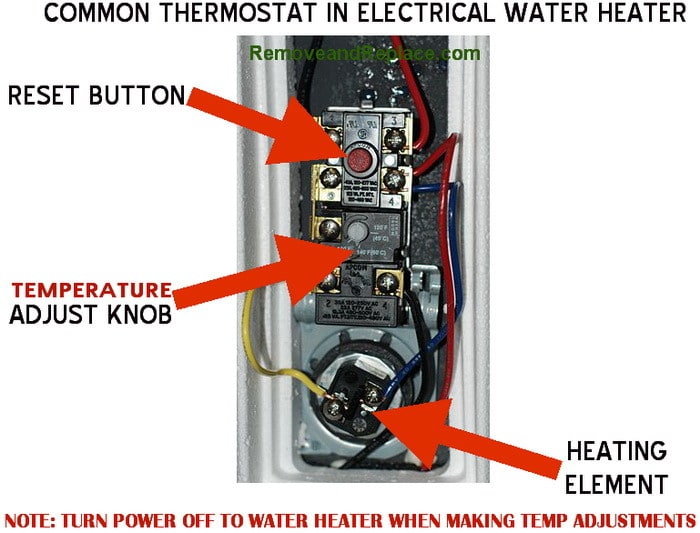
- Turn off the power. For electric heaters, switch off the breaker. For gas, set the control to “Pilot.”
- Remove the access panels. Find the panels on the side of the tank, usually held by screws.
- Locate the thermostats. The upper thermostat is near the top; the lower is lower down.
- Adjust the dials. Use a flathead screwdriver to turn the dial to your chosen temperature.
- Replace the panels and turn power back on.
Tip: Wait a few hours after adjusting to see the effect. Use a thermometer at the tap for accuracy.
Safe Temperature Guidelines
The US Department of Energy recommends 120°F (49°C) for most homes. This temperature is hot enough to kill bacteria but less likely to cause burns. However, some homes (like those with immune-compromised people) may need 130°F (54°C) or higher.
Scalding can happen in just 2 seconds at 140°F (60°C). Children and elderly are at special risk.
Setting Both Thermostats
For best results, set the upper and lower thermostats to the same temperature, or have the lower one slightly higher (by 2-5°F). This ensures consistent heat and efficient recovery.
| Setting | Effect | Best For |
|---|---|---|
| Both at 120°F | Safe, efficient, enough for most homes | General households |
| Top 120°F, Bottom 125°F | Faster recovery, slightly hotter water | Homes with high demand |
| Top 130°F, Bottom 120°F | Short bursts of very hot water, risk of scalding | Special needs, but caution required |
Factors That Affect The Best Setting
Choosing the right top and bottom settings isn’t the same for everyone. Several factors play a role.
1. Household Size
Larger families use more hot water, often back-to-back. Setting the bottom thermostat slightly higher helps ensure you don’t run out during busy periods.
2. Water Heater Size
A smaller tank (30-40 gallons) may need higher settings to keep up with demand. Larger tanks (50-80 gallons) can often stay at 120°F.
3. Climate
In colder climates, incoming water is much colder (sometimes as low as 40°F). You may need higher settings to reach comfortable shower temperatures.
4. Health And Safety
If anyone in your home has a weakened immune system, set the heater to at least 130°F to prevent bacteria like Legionella. Use anti-scald devices at taps to stay safe.
5. Energy Costs
Heating water can make up 14-18% of your utility bill. Lowering the temperature by 10°F can save 3-5% on energy costs.
6. Appliance Requirements
Some dishwashers require higher water temperatures to clean properly. If your dishwasher has its own heater, you can keep the water heater at 120°F.
Common Mistakes When Setting Water Heater Thermostats
Many homeowners make simple but costly mistakes when adjusting their water heater’s top and bottom settings. Avoid these to keep your system running smoothly.
Setting Temperatures Too High
It’s tempting to crank up the heat for endless hot showers. But temperatures above 130°F increase the risk of scalding and waste energy. Burns can happen in seconds at 140°F.
Setting Temperatures Too Low
Under 120°F, you risk bacterial growth inside the tank, especially Legionella, which causes Legionnaires’ disease. The water may also feel lukewarm in showers.
Large Differences Between Top And Bottom
Setting the upper and lower thermostats more than 5°F apart can cause:
- Uneven heating
- Short cycles (wears out elements faster)
- Reduced hot water supply
Not Checking With A Thermometer
The dial on your heater may not be accurate. Use a kitchen thermometer at the tap to check the real temperature.
Forgetting To Replace Access Panels
Leaving panels off after adjusting can expose wires and insulation, creating a safety hazard and heat loss.
How Top And Bottom Settings Affect Performance
The way you set your water heater’s top and bottom thermostats changes how your system works in practice.
Hot Water Recovery Time
Recovery time is how fast your tank reheats after you use hot water. With both thermostats set correctly, recovery is faster and more reliable. If the lower thermostat is set higher, you’ll have more hot water during heavy use.
Hot Water Consistency
If the settings are mismatched, you may notice:
- First shower is hot, later ones are cold
- Water temperature changes during use
Consistent settings prevent these problems.
Energy Usage
Lower settings save energy. For every 10°F you lower, you can save 3-5% on your bill, according to the US Department of Energy.
Heater Lifespan
Frequent extreme adjustments or large differences between top and bottom settings can wear out heating elements faster, leading to expensive repairs.
Special Situations And Advanced Settings
Some homes have unique needs. Here’s how to adjust your settings for special cases.
Homes With Infants Or Elderly
Set both thermostats to 120°F and install anti-scald devices at taps for extra safety. Children and seniors have thinner skin, so burns happen faster.
Vacation Or Extended Absence
Set your heater to “Vacation” mode or lower both thermostats to 90°F. This saves energy but prevents freezing in winter.
High Demand (many People, Back-to-back Showers)
Set the lower thermostat 5°F higher than the upper. This keeps the bottom hot, so the tank recovers faster between showers.
Using Solar Or Heat Pump Water Heaters
These systems often have different controls or use just one thermostat. Always check the manual and consult a pro for settings.
Water Softeners
Softened water can cause faster buildup on heating elements, especially at higher temperatures. If you use a softener, stick to 120-125°F.
Comparing Top Vs. Bottom Thermostat Adjustment
Understanding how each thermostat affects your system can help you troubleshoot issues or optimize performance.
| Feature | Top Thermostat | Bottom Thermostat |
|---|---|---|
| Location | Upper tank | Lower tank |
| Role | Master, heats top water | Heats incoming cold water |
| Effect of Higher Setting | Hotter water at start | More hot water overall |
| Common Mistake | Too high = scald risk | Too low = cold showers |

Credit: www.ebay.com
Practical Tips For Adjusting Water Heater Settings
Here are some real-world pointers to help you set your water heater like a pro.
- Always shut off power before opening panels.
- Write down the original settings before changing anything.
- Adjust in small steps. Change temperatures by 5°F at a time and test for a day.
- Use a thermometer at the tap, not just the dial.
- Check for leaks or drips after adjusting.
- Monitor hot water use for a week after changes.
- Label the panels with “Upper” and “Lower” for easy future adjustments.
- Consult a professional if unsure.
Non-obvious insight: Many homeowners don’t realize that mineral buildup (especially in hard water areas) can cause the lower element to heat slower, making the lower thermostat seem “broken” when it’s just scale. Flushing your tank yearly helps prevent this.
Another tip: If your water heater is over 10 years old, the thermostats may no longer be accurate. Consider replacing them or upgrading to a new model for better control.
Safety Precautions When Adjusting
Adjusting thermostats is usually safe, but always follow these guidelines:
- Turn off electricity at the breaker.
- Wait for the tank to cool before touching parts.
- Wear gloves to avoid cuts on metal edges.
- Never set above 130°F unless needed for immune safety.
- Test water at taps before letting children or elderly use it.
If you ever feel unsure, call a licensed plumber or electrician.
Credit: editorial.uaw.edu.ec
Maintenance Tips For Consistent Performance
Keeping your water heater in top shape helps settings work as intended.
Flush The Tank Yearly
Sediment buildup can insulate the lower thermostat, making it less effective. Flushing removes this and extends heater life.
Test The Pressure Relief Valve
This valve prevents dangerous pressure buildup. Lift the lever once a year to make sure it works.
Check For Leaks And Rust
Inspect around the thermostat panels and the tank base for moisture. Early leaks are cheaper to fix.
Replace Old Thermostats
If you notice inconsistent hot water, old thermostats may be failing. They cost little to replace and restore performance.
Energy Savings With Proper Settings
Heating water is the second-largest energy use in most homes. Getting your top and bottom settings right can have a real impact.
- Reducing from 140°F to 120°F can cut your bill by up to 10%.
- Insulating your water heater and pipes reduces heat loss by up to 45%.
- Fixing leaks saves both water and energy.
Smart thermostats and modern heaters can even learn your patterns for maximum efficiency.
Troubleshooting Common Problems
If you adjust your settings but still have issues, here’s what to check:
No Hot Water
- Check if the breaker tripped
- Thermostats may be set too low or faulty
- Heating elements may be burned out
Inconsistent Temperatures
- Upper and lower settings differ by more than 5°F
- Sediment buildup on heating elements
- Old or faulty thermostats
Water Is Too Hot
- Thermostats set above 130°F
- Faulty thermostat stuck “on”
Water Not Hot Enough
- Thermostats set too low
- Incoming water very cold (winter)
- High demand over long periods
If unsure, always consult a professional.
When To Call A Professional
While most homeowners can adjust thermostats, call a licensed plumber if you experience:
- Repeated tripping of the breaker
- Leaks from the tank
- Rusty or discolored hot water
- Water not heating despite correct settings
A professional can check wiring, replace elements, or recommend a new heater if needed.
Comparing Gas Vs. Electric Water Heater Settings
While this article focuses on electric models (with two thermostats), gas water heaters work a bit differently.
| Feature | Electric | Gas |
|---|---|---|
| Number of Thermostats | Two (top and bottom) | Usually one |
| Adjustment Method | Behind access panels, screwdriver | Dial on front |
| Recovery Speed | Slower | Faster |
| Common Issues | Element failure, mis-set thermostats | Pilot out, faulty gas valve |
For more on how water heaters work, check out the Wikipedia page on water heating.
Frequently Asked Questions
What Is The Ideal Setting For Both Top And Bottom Thermostats?
For most homes, 120°F on both the upper and lower thermostats is ideal. This provides enough hot water, saves energy, and reduces scald risk. If you need more hot water, you can set the lower thermostat 2-5°F higher than the top.
Can I Set My Water Heater Above 130°f For Safety?
You can, but only if necessary for health reasons, such as preventing Legionella in homes with immune-compromised people. Install anti-scald devices on taps to prevent burns, as water above 130°F can scald in seconds.
Why Does My Water Heater Run Out Of Hot Water Quickly?
This could be due to:
- The lower thermostat set too low
- Sediment buildup on the lower heating element
- High demand (many showers back-to-back)
- A failing thermostat or heating element
Check and adjust the lower thermostat first, and flush the tank if needed.
How Often Should I Check And Adjust My Water Heater Settings?
Check your settings once a year or whenever you notice changes in hot water supply. Test with a thermometer at the tap for accuracy.
Is It Safe To Adjust Water Heater Thermostats Myself?
Yes, if you follow safety steps: turn off power, use the right tools, and don’t set temperatures above 130°F unless needed. Call a pro if you’re unsure or notice leaks, rust, or electrical problems.
—
Choosing the right water heater top and bottom settings isn’t just about comfort—it’s about safety, savings, and reliability. A few careful adjustments can make showers more pleasant, prevent burns, and lower your bills. Take the time to check your heater today, and you’ll enjoy better hot water for years to come.

Credit: waterheatertimer.org