
Many homeowners expect a new water heater will improve their home’s hot water experience. But sometimes, after installation, they notice something surprising: low water pressure throughout the house, or just at the hot taps. This can be confusing and frustrating, especially if water pressure was fine before. So why does water pressure drop after putting in a new water heater? Let’s break down the real causes, how to troubleshoot, and what steps can help you fix it for good.
How Water Heaters Affect Pressure
A water heater is a key part of your plumbing system. Cold water enters the unit, gets heated, and then flows to your taps and appliances. In theory, the heater shouldn’t affect water pressure much if installed correctly. But in practice, there are several ways it can cause problems.
When you notice low water pressure after a new heater is installed, it’s usually a sign that something isn’t right. This might be due to the installation itself, the design of the heater, or pre-existing plumbing issues that are now more noticeable.
Common Reasons For Low Water Pressure After Water Heater Installation
Let’s look at the most frequent causes, one by one.
1. Incorrect Pipe Sizing
If the pipes connected to your new heater are too narrow, they restrict the flow of water. This is a common mistake during installation, especially in older homes where the heater is upgraded but the pipes are not.
- Example: If your old heater had 3/4-inch pipes, but the installer used 1/2-inch for the new one, you’ll feel a big drop in pressure.
- Tip: Always match or increase pipe size when replacing a water heater.
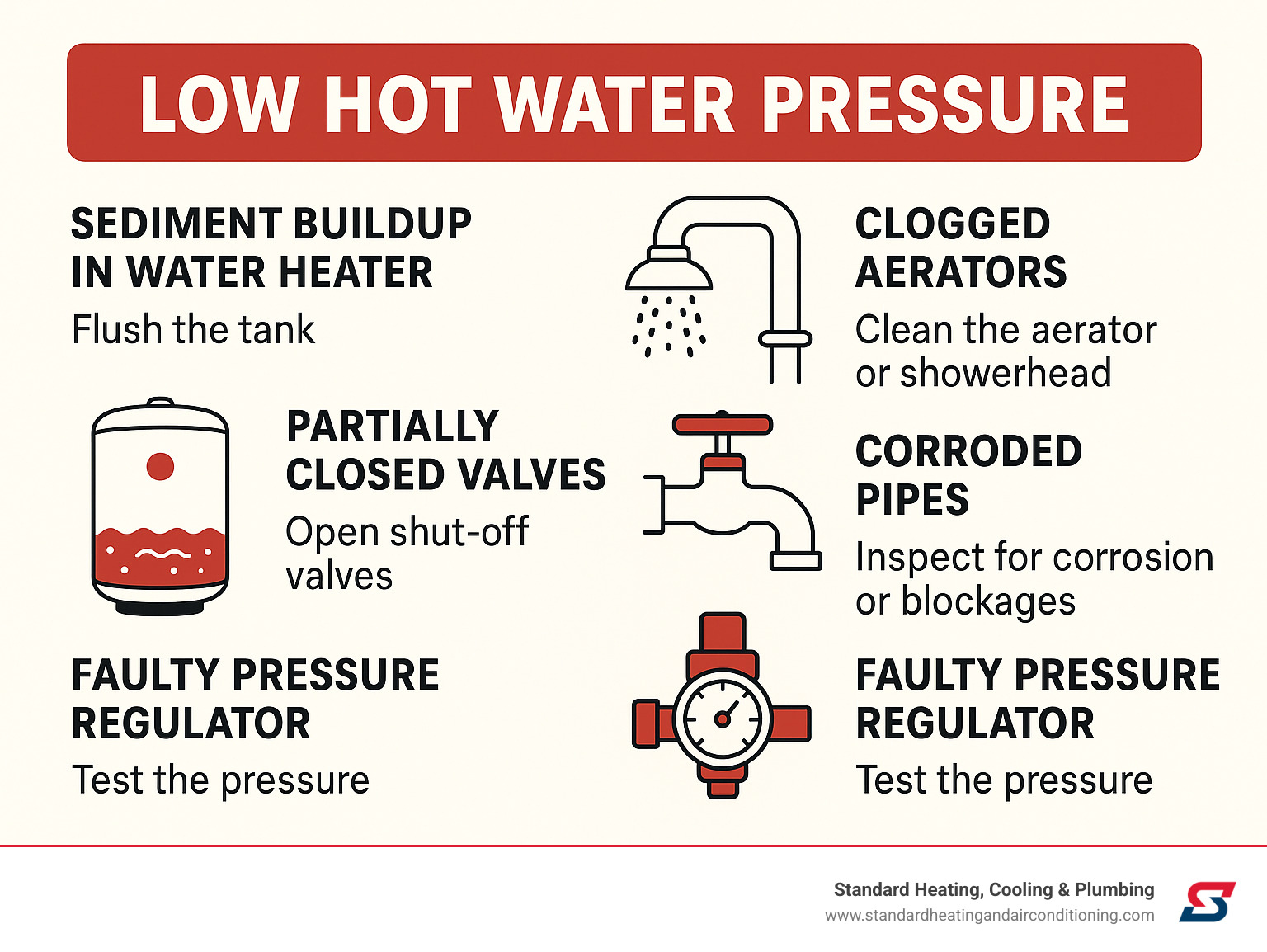
2. Sediment Or Debris In Pipes
Sometimes, installing a new water heater stirs up sediment or loose debris inside old pipes. This can clog the pipes or the heater’s inlet screen, leading to lower pressure.
- Fact: Even a small amount of debris can reduce flow at faucets and showers.
3. Faulty Or Partially Closed Shut-off Valve
During installation, plumbers turn off the water using a shut-off valve. If the valve isn’t opened fully afterward, water can’t flow freely.
- Non-obvious insight: Some valves (like gate valves) can seem open when they’re not, due to worn parts.
4. Clogged Or Dirty Water Heater Inlet/outlet
New heaters sometimes come with factory debris or install shavings inside the pipes. This can settle in the inlet screen or outlet, restricting water.
- Tip: Ask your installer to flush the heater after installation.
5. Pressure Reducing Valve (prv) Issues
Many homes have a pressure reducing valve to protect plumbing. If disturbed during installation, it may be set too low or become faulty.
- Example: If your PRV is stuck or incorrectly adjusted, the whole house will have lower pressure.
6. Mixing Valve Problems
A mixing valve blends hot and cold water to control temperature. If it malfunctions or is incorrectly set, hot water pressure drops.
- Non-obvious insight: Some new water heaters require a mixing valve upgrade, but this is often missed.
7. Flexible Connector Restrictions
Installers sometimes use flexible connectors to attach the water heater. If these are kinked, twisted, or too narrow, they can cause a bottleneck.
- Practical tip: Flexible connectors should be smooth, short, and match pipe size.
8. Air In The Plumbing System
After installation, air pockets can remain in the pipes. This can temporarily lower pressure or make water sputter.
- Fact: Bleeding air from the system usually fixes this in a few minutes.
9. High-performance Heater Requirements
Some modern heaters, especially tankless water heaters, need a certain flow rate to activate. If your supply is too weak, you’ll notice poor hot water pressure.
- Example: If your main supply is under 0.5 gallons per minute, a tankless unit may not even turn on.
10. Old Plumbing Revealed
Sometimes, the new heater isn’t the problem—old corroded pipes are. Installation can shake loose minerals or expose blockages that were hidden before.
- Tip: If you have galvanized steel pipes, consider a full plumbing inspection.
How To Diagnose Where The Problem Lies
Finding the exact cause saves time and money. Here’s a step-by-step way to diagnose low water pressure after a new water heater is installed:
- Test cold vs. hot water: Is pressure low everywhere, or just with hot water?
- Check all faucets: Does the issue affect just one location, or the whole house?
- Inspect the shut-off valve: Make sure it’s fully open and working.
- Look at the connectors: Are the flex lines kinked or too small?
- Try a pressure gauge: Measure incoming pressure before and after the heater.
- Flush the system: Run hot water for a few minutes to clear air and debris.
Example: Diagnosing With A Pressure Gauge
A simple pressure gauge (costs about $10) can be attached to a hose bib or laundry tap. Normal home pressure is 40–60 psi. If it’s much lower after the heater, the issue is inside.
Comparing Before And After: Water Pressure Data
Here’s a typical comparison for homes before and after heater installation:
| Measurement Point | Before Install (psi) | After Install (psi) |
|---|---|---|
| Cold Water Kitchen Sink | 55 | 55 |
| Hot Water Kitchen Sink | 54 | 42 |
| Shower (Hot) | 53 | 40 |
| Laundry Tap (Cold) | 56 | 56 |
This shows that a drop in pressure after the heater usually affects only the hot water side.
Credit: www.standardheatingandairconditioning.com
Installation Mistakes That Cause Low Pressure
Some installation errors are more common than you think. Here’s what to watch for:
Poor Soldering Or Excessive Pipe Flux
If pipes are not soldered well, leftover flux or blobs of solder can partially block water flow.
Wrong Fittings Or Adapters
Using the wrong size or type of adapter can choke water, especially on the hot water outlet.
Cross-threaded Connections
Improperly threaded fittings can reduce flow or even cause leaks.
Not Flushing The Heater
Skipping the post-installation flush leaves debris inside, leading to clogs.
How Different Water Heaters Affect Pressure
The type of heater matters. Here’s how various models behave:
Tank-style Water Heaters
- Pros: Usually do not reduce pressure if pipes are right size.
- Cons: Can collect sediment over time, especially with hard water.
Tankless Water Heaters
- Pros: Offer endless hot water, but need a minimum flow to activate.
- Cons: More sensitive to pressure; any restriction leads to big drops.
Heat Pump Water Heaters
- Pros: Efficient, but use complex valves that can restrict flow.
- Cons: More parts that can fail and block water.
Comparison Table: Water Heater Types And Pressure Sensitivity
| Heater Type | Pressure Sensitivity | Common Issues |
|---|---|---|
| Tank-Style | Low | Sediment, valve issues |
| Tankless | High | Flow sensor, minimum activation flow |
| Heat Pump | Medium | Valve clog, air pockets |
The Role Of Water Quality
Hard water (high in minerals) creates sediment, which can clog a heater fast. If you live in an area with hard water and don’t use a softener, your new heater can get blocked in months instead of years.
- Fact: The average American home has water hardness of 120–170 mg/L (moderately hard).
- Tip: Flushing the heater every 6–12 months helps prevent this.
What To Do If You Have Low Pressure
Here’s a practical action plan:
- Double-check the shut-off valve. Make sure it’s fully open.
- Inspect flex connectors. Replace any that are kinked or too narrow.
- Flush the heater. Run water through to remove debris.
- Check for mixing valves. Adjust or replace if faulty.
- Look for sediment. Drain a gallon from the tank; if it’s cloudy, flush fully.
- Test incoming pressure. If it’s low, the issue is with city supply or PRV.
- Call your installer. If under warranty, have them re-inspect the work.
When To Call A Pro
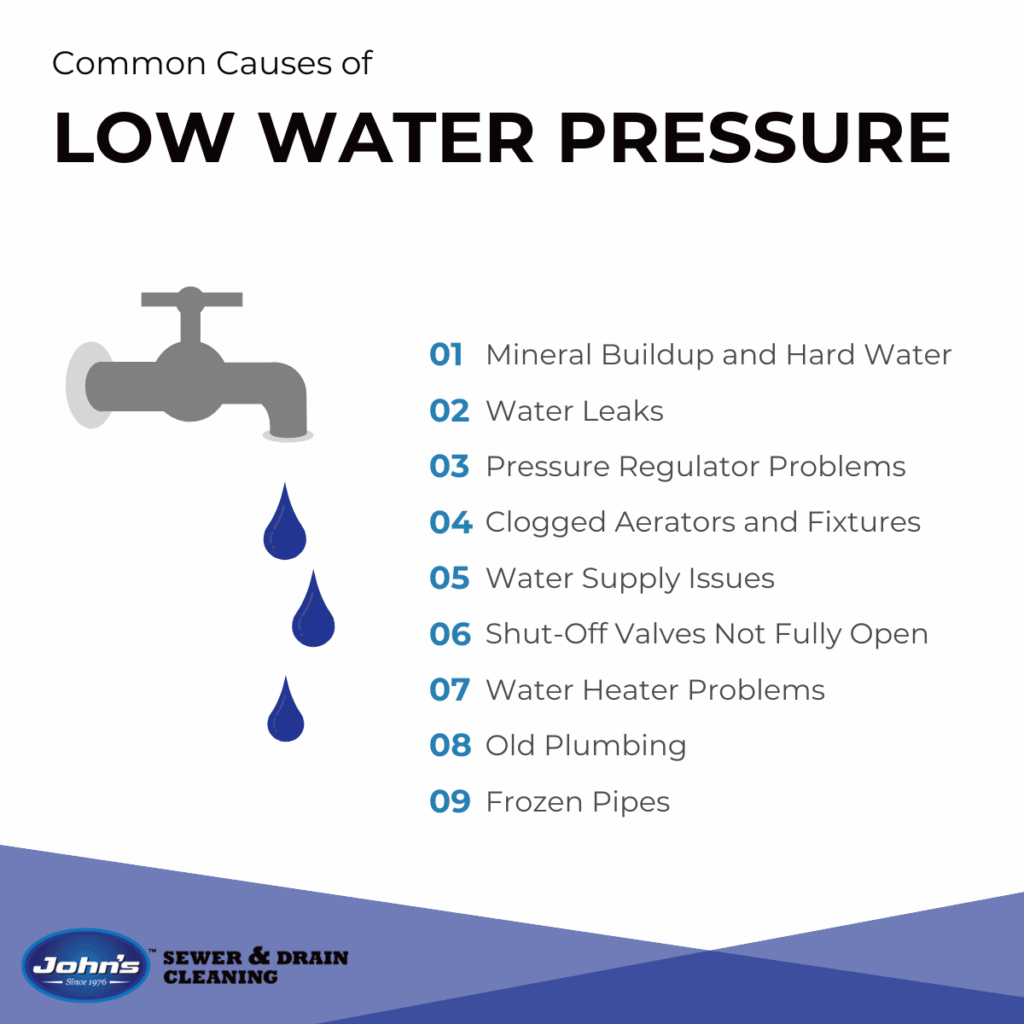
- All faucets are weak, hot and cold: Likely a main supply or PRV issue.
- Only hot water is weak: Problem is with heater or nearby plumbing.
- Sudden pressure drop with leaks: Turn off water, call a plumber immediately.
Credit: johnsewer.com
How To Prevent Water Pressure Problems
Installers and homeowners can take simple steps to avoid these issues:
- Use full-sized piping for both hot and cold lines.
- Always flush the system after installation.
- Use high-quality, non-kinking flexible connectors.
- Test water pressure before and after with a gauge.
- Install a sediment filter if you have hard water.
- Upgrade old shut-off valves if they’re stiff or corroded.
Real-world Example: Case Study
A homeowner in Texas replaced a 10-year-old tank heater with a new tankless unit. Before installation, hot water pressure was 50 psi. After, it dropped to 30 psi at every hot tap. Diagnosis showed the installer used 1/2-inch flex connectors instead of 3/4-inch, and left debris in the lines.
After replacing the connectors and flushing the system, pressure returned to 49 psi.
Lesson: Small details in installation make a big difference.

Credit: www.reddit.com
Water Pressure Vs. Water Flow: What’s The Difference?
Many people confuse water pressure with water flow. Pressure is the force (measured in psi), while flow is the amount (gallons per minute). You can have high pressure but low flow if pipes are blocked.
Comparison Table: Pressure Vs. Flow
| Situation | Pressure (psi) | Flow (GPM) | What You Experience |
|---|---|---|---|
| Open pipes, no blockage | 55 | 5 | Strong, fast water |
| Blocked pipe, high pressure | 55 | 1 | Strong but thin stream |
| Low pressure, open pipes | 30 | 5 | Weak but plenty of water |
Mistakes Homeowners Make When Troubleshooting
Many people waste time or money by:
- Blaming the new heater without checking other plumbing
- Ignoring the shut-off valve
- Forgetting to flush out debris and air
- Not measuring with a pressure gauge
- Changing faucets or showerheads when the problem is at the heater
Should You Install A Pressure Booster Pump?
If your city supply is weak, a pressure booster pump can help. But if the problem started only after installing a new heater, you should first fix installation mistakes or blockages.
- Tip: Only use a booster pump if incoming water pressure is below 40 psi.
When Is Low Water Pressure A Sign Of A Bigger Problem?
Sometimes, low pressure means more than just a heater issue. Watch for:
- Discolored water: May signal rust or corroded pipes.
- Sudden drops throughout the house: Could mean a broken main or a large leak.
- No improvement after flushing: Suggests a deeper plumbing problem.
If you notice these, call a licensed plumber. They can inspect for major issues.
How To Talk To Your Plumber Or Installer
Communication helps you get better results. When calling for help, give:
- The exact symptoms (which taps, hot/cold, when it happens)
- Any steps you’ve tried (flushing, checking valves, etc.)
- Data from a pressure gauge if you have it
- Details about your heater model and age
This helps the professional diagnose and solve the issue faster.
Hidden Insights Most People Miss
- Mixing valve settings can be the silent culprit. If adjusted too cold or too restricting, you’ll get weak hot water.
- Old water heaters often masked flow problems by building up sediment slowly. New heaters, especially tankless, are more sensitive and expose pre-existing plumbing issues.
- City water supply changes can sometimes coincide with a heater replacement. Always check with neighbors to see if they’re affected too.
When Replacement Is The Only Option
If your pipes are very old (especially galvanized steel), or if your heater is defective from the factory, sometimes replacement is the only fix. Modern heaters and pipes offer better flow and pressure.
How To Maintain Good Water Pressure Long-term
- Flush your water heater every 6–12 months.
- Replace flexible connectors every 5–10 years.
- Use a water softener if you have hard water.
- Have a plumber inspect your system every few years.
- Upgrade pipes when renovating, especially in old homes.
External Resource For Further Reading
For more technical details about water pressure and plumbing systems, check out this guide from Wikipedia.
Frequently Asked Questions
Why Is Only My Hot Water Pressure Low After Installing A New Heater?
This usually means the issue is between the heater and your taps. The most common causes are a partially closed shut-off valve, debris stuck in the heater, or a faulty mixing valve.
Can A New Water Heater Be Defective And Cause Low Pressure?
Yes. Sometimes new units have blocked screens, manufacturing debris, or faulty internal valves. If you’ve checked everything else, ask your installer to test or replace the unit.
Should I Flush My New Water Heater After Installation?
Absolutely. Flushing removes debris and air pockets that can cause pressure problems. It’s a simple step that prevents most post-installation issues.
Is Low Water Pressure Dangerous For My Home?
Low pressure itself isn’t dangerous, but it can be a sign of leaks, pipe corrosion, or other problems. If pressure drops suddenly or is combined with leaks, call a plumber.
Will Installing A Bigger Water Heater Solve Low Pressure?
No. Water heater size affects hot water quantity, not pressure. Fixing pipes, valves, and installation errors will help more than a larger tank.
—
Low water pressure after installing a water heater is frustrating, but almost always fixable. By understanding the real causes, checking each part of your system, and taking action, you can restore strong flow to every tap. With the right information and regular maintenance, your home’s hot water will stay powerful and reliable for years to come.