A reliable water heater is something many people take for granted—until the hot water suddenly stops. When that happens, one common culprit is a burned-up thermostat. This tiny but vital device controls the water temperature, keeping it safe and comfortable. But when it fails, you’re left with cold showers, potential leaks, and sometimes even dangerous situations.
Understanding what causes a water heater thermostat to burn up isn’t just for plumbers or home repair pros. Homeowners, renters, and property managers can all benefit from knowing the signs, the underlying reasons, and how to prevent future problems. This guide will walk you through the major causes, explain how thermostats work, and offer practical solutions to keep your hot water running smoothly.
How A Water Heater Thermostat Works
A thermostat is the brain of your water heater. It senses the water temperature inside the tank and tells the heating element when to turn on or off. In electric water heaters, there are usually two thermostats—one for the upper heating element and one for the lower.
Gas models use a single thermostat linked to the gas valve.
When the water drops below the set temperature, the thermostat sends power to the heating element. Once the right temperature is reached, the power cuts off. This cycle repeats many times a day, sometimes thousands of times each year.
A burned-up thermostat means this process has been interrupted. The device overheats, melts, or fails, leaving you with either cold water or dangerously hot water. But what actually causes this failure?
Most Common Causes Of Water Heater Thermostat Burnout
1. Power Surges And Electrical Spikes
One of the most frequent causes is a power surge. These sudden increases in voltage can come from lightning strikes, faulty wiring, or problems in the local power grid. When a surge passes through the wiring, the thermostat’s delicate components can overheat and burn out almost instantly.
Example: If lightning hits a nearby power line, the surge can travel into your home, damaging sensitive devices like the water heater thermostat.
Non-obvious insight: Even small, repeated voltage spikes can slowly damage a thermostat. It’s not always a single big event.
2. Loose Or Corroded Electrical Connections
Loose wires or corroded terminals create resistance. This resistance generates extra heat, which can damage the thermostat over time. If you ever notice burnt wire ends or a melted thermostat housing, poor connections are likely to blame.
Example: Homes in humid areas often see more corrosion around electrical terminals, especially if the water heater is installed in a damp basement.
Non-obvious insight: Corroded connections can cause intermittent heating problems before total failure, so look for flickering hot water or tripped breakers.
3. Faulty Or Aging Heating Elements
If a heating element develops a short circuit or starts to degrade, it can draw more electrical current than usual. This overloads the thermostat, causing it to overheat and eventually burn up.
Example: A 10-year-old water heater might have scale buildup on the heating element, leading to hotspots and electrical shorts.
Non-obvious insight: Replacing only the thermostat without checking the heating element can lead to repeated failures.
4. Thermostat Quality And Manufacturing Defects
Not all thermostats are created equal. Cheap or defective models may fail prematurely, especially if they use substandard materials or poor internal design. Brand-name thermostats generally last longer and handle heat better.
Comparison: High-Quality vs. Low-Quality Thermostats
| Feature | High-Quality Thermostat | Low-Quality Thermostat |
|---|---|---|
| Expected Lifespan | 8–12 years | 2–5 years |
| Heat Resistance | High | Low |
| Warranty | 3–5 years | 1 year or none |
Non-obvious insight: Even reputable brands can have a “bad batch.” Always check for recalls or known issues before buying.
5. Incorrect Installation
Mistakes during installation—like improper wiring or not securing the thermostat tightly—can cause immediate or delayed burnout. It’s easy to swap two wires or miss a ground connection, especially for DIY installations.
Example: If the thermostat isn’t flush against the tank, it might sense the wrong temperature, staying on too long and overheating.
6. Sediment Buildup In The Tank
Hard water contains minerals that settle at the bottom of the tank. Over time, this sediment acts as insulation, forcing the lower heating element to work harder and run hotter. The extra strain can damage both the element and the thermostat.
Data: In areas with hard water, sediment can reduce water heater efficiency by up to 40% after just a few years.
Non-obvious insight: Flushing the tank once a year can extend both element and thermostat life.
7. Thermostat Set Too High
Setting your water heater thermostat above 140°F (60°C) is risky. Higher temperatures mean more frequent and longer heating cycles, which put extra stress on both the thermostat and the heating element.
Example: Some people crank up their thermostat to fight bacteria, but this can shorten the lifespan of the device.
Practical tip: The US Department of Energy recommends 120°F (49°C) for most homes, balancing safety and energy efficiency.
8. Water Leaks And Moisture Intrusion
If water leaks from the tank or pipes onto the thermostat, it can cause short circuits or corrosion. Even a small drip can cause big problems over time.
Example: A leaking tank seam above the lower thermostat can go unnoticed for months, slowly corroding the terminals.
Non-obvious insight: Moisture can come from condensation, not just leaks. Poor ventilation in the water heater area increases risk.
9. Excessive Cycling
A water heater that turns on and off too frequently—called “short cycling”—can wear out the thermostat. This often happens if the tank is too small for the household or if hot water is drawn in frequent bursts.
Example: In a busy gym or large family home, the thermostat may cycle dozens of times a day, increasing wear.
10. Faulty High-limit Switch
Most electric water heaters include a high-limit switch (or ECO—energy cut-off). This safety device shuts off power if the water gets too hot. If the high-limit switch fails, the thermostat can be forced to stay on, causing overheating and burnout.
Non-obvious insight: A tripped high-limit switch is often a warning of deeper problems, not just a one-time event.
11. Poor Quality Power Supply
In areas with unstable electricity, low voltage or brownouts can cause the thermostat to work improperly. The device may struggle to maintain temperature, leading to overheating and early burnout.
Example: Rural homes with older electrical infrastructure are more prone to voltage fluctuations.
12. Physical Damage
Thermostats can be damaged during maintenance or by accidental impacts. Dropping tools, overtightening screws, or bending terminals can break the delicate components inside.
Non-obvious insight: Even a small crack in the thermostat case can let moisture in, starting a slow path to failure.
13. Overloaded Electrical Circuits
If your water heater shares a circuit with other high-power appliances, the thermostat may experience voltage drops or surges. This irregular power can stress the thermostat and shorten its life.
Example: Running a water heater and an electric dryer on the same circuit is a common mistake in older homes.
How To Identify A Burned-up Thermostat
Knowing the signs of a failing thermostat helps you act before there’s a full breakdown. Here’s what to watch for:
- No hot water: The most obvious sign is a sudden lack of hot water.
- Water too hot: If the thermostat is stuck on, the water may become dangerously hot.
- Tripped circuit breaker: A burned thermostat can short out, causing the breaker to trip.
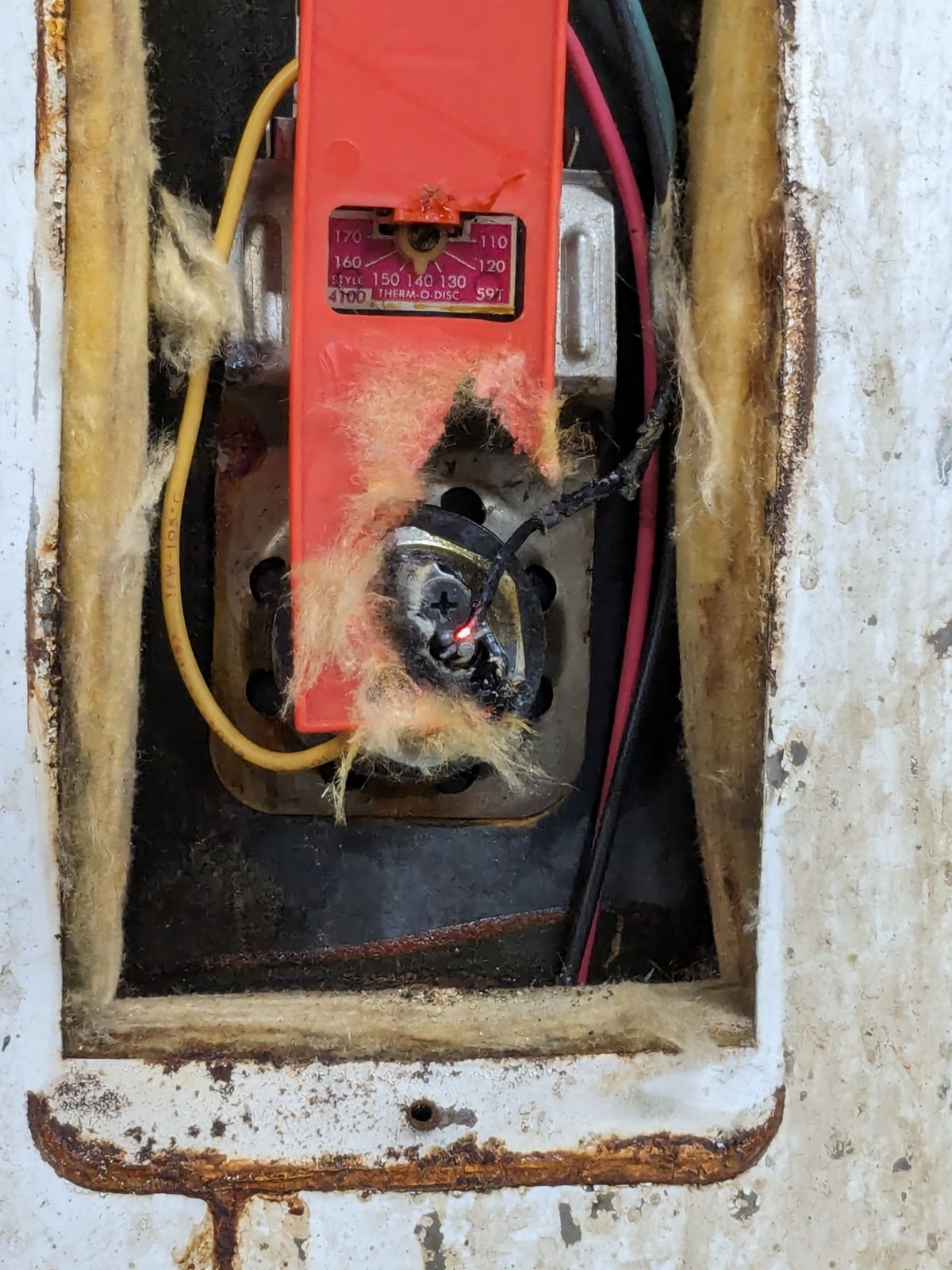
- Visible damage: Melted plastic, scorch marks, or a burnt smell near the water heater.
- Irregular heating: Water temperature fluctuates or doesn’t match the thermostat setting.
Non-obvious insight: Sometimes a burned thermostat will work intermittently before failing completely.
How To Prevent Thermostat Burnout
Preventing thermostat failure is much easier than fixing it. Simple maintenance and good habits make a big difference.
Regular Maintenance
- Flush the tank yearly to remove sediment.
- Check wiring for tightness and corrosion every 12–18 months.
- Test the thermostat by running hot water and checking the temperature matches the setting.
Use A Surge Protector
Installing a whole-house surge protector or a dedicated surge suppressor for your water heater can shield it from electrical spikes. This is especially important in areas with frequent storms.
Keep The Area Dry
Make sure the water heater is in a dry, well-ventilated spot. Fix leaks quickly, and insulate pipes to prevent condensation.
Choose The Right Temperature Setting
Stick to 120°F (49°C) for most homes. Only go higher if there’s a specific need, and never above 140°F (60°C).
Use Quality Replacement Parts
When replacing a thermostat, choose a reputable brand. Check compatibility with your water heater model.
Inspect For Overloading
Ensure your water heater has a dedicated circuit. Avoid running other big appliances on the same line.
What To Do If Your Thermostat Burns Up
If you suspect the thermostat is burned out, turn off the power at the breaker. Never try to test or replace the thermostat with the power on. Here’s a step-by-step approach:
- Turn off power at the panel.
- Remove the access panel and insulation.
- Check for visible damage to the thermostat or wires.
- Test with a multimeter if you know how. If not, call a professional.
- Replace with the correct part if needed.
- Flush the tank and check for sediment if element damage is suspected.
- Restore power and test the system.
Example: If you’re not comfortable working with electrical components, it’s always safer to hire a licensed plumber or electrician.
Comparing Common Causes: How They Affect Thermostat Life
To clarify how different causes impact thermostat lifespan, see the comparison below.
| Cause | How Often It Occurs | Average Thermostat Lifespan | Prevention Difficulty |
|---|---|---|---|
| Power Surges | Occasional | 2–8 years | Medium |
| Sediment Buildup | Common in hard water | 3–6 years | Easy |
| Loose Connections | Moderate | 2–5 years | Medium |
| Moisture/Leaks | Rare | 1–3 years | Medium |
| Poor Quality Parts | Depends on purchase | 2–5 years | Easy |
Real-world Examples Of Thermostat Burnout
Case 1: The Hidden Leak
A homeowner in Florida noticed their hot water was inconsistent. The lower thermostat had burned up due to a slow leak dripping onto the wiring. By the time they opened the access panel, corrosion had spread to the heating element terminals.
Fixing the issue required replacing both the thermostat and the lower element, plus sealing the leak.
Case 2: Power Surge After A Storm
After a thunderstorm, a family in Texas found their water heater dead. The thermostat had melted internally due to a lightning-induced power surge. Adding a surge protector afterward prevented future damage.
Case 3: Sediment Strain
In a region with hard water, a landlord received frequent complaints about no hot water. Each time, the lower thermostat was burned out. Eventually, a plumber found that thick sediment in the tank was causing both the element and thermostat to overheat.
A full tank flush, new element, and new thermostat fixed the problem for years.
Myths And Misunderstandings
Some people believe that water heater thermostats are “set and forget. ” In reality, they need attention like any other electrical part. Others think only old heaters fail, but new units can burn out their thermostats if installed or used incorrectly.
Non-obvious insight: Tankless water heaters can also have thermostat issues, especially if the unit is oversized or the wiring is incorrect.
How To Choose A Replacement Thermostat
When buying a replacement, consider:
- Compatibility: Match the voltage, wattage, and type (single or double element).
- Brand reputation: Stick with known brands with solid warranties.
- Temperature range: Standard models go from 90°F to 150°F.
- Safety certifications: Look for UL or CSA marks.
Tip: Bring the old thermostat to the store to ensure a match, or check your heater’s manual.
Professional Vs. Diy Replacement
Replacing a thermostat is possible for skilled DIYers, but there are risks. Incorrect wiring or poor installation can cause electrical shock, fire, or more damage.
When to call a professional:
- If you’re unsure about electrical safety
- If there’s visible water damage or rust
- If the thermostat burned up repeatedly
A licensed professional can also check other parts of the water heater to ensure the problem doesn’t return.

Credit: www.reddit.com
Cost Of Repair And Replacement
Thermostat replacement usually costs between $100–$250 if done by a professional, including parts and labor. DIY replacement can be as low as $20–$50 for the thermostat itself. However, if additional repairs (like replacing a heating element or cleaning sediment) are needed, costs can rise.
Data: According to HomeAdvisor, the average water heater repair in the US is $150–$350, depending on the problem.
Water Heater Thermostat Life Expectancy
A well-maintained thermostat typically lasts 8–12 years, matching the life of the water heater. Poor maintenance, power issues, or cheap parts can shorten this to just a few years.
Non-obvious insight: Most thermostats fail early in their life (due to manufacturing defects) or late (due to wear). Mid-life failures often point to installation or maintenance issues.

Credit: www.reddit.com
When To Replace The Whole Water Heater
If your water heater is over 10 years old, or if you notice rust, leaks, or multiple thermostat burnouts, it may be time to replace the entire unit. Newer models are more efficient and have better safety features.
Comparison: Repair vs. Replacement
| Situation | Repair | Replace |
|---|---|---|
| Thermostat burnout only | ✔ | |
| Multiple burned thermostats in <5 years | ✔ | |
| Tank leaks or rust | ✔ | |
| Heater >10 years old | ✔ | |
| One-time power surge | ✔ |
How To Extend Thermostat And Heater Life
- Flush the tank annually
- Check wiring and terminals regularly
- Install a surge protector
- Keep the area dry and well-ventilated
- Set the thermostat to 120°F
- Use only quality replacement parts
- Have a professional check the heater every few years
Credit: diy.stackexchange.com
When To Worry About Safety
A burned thermostat can be more than an inconvenience—it can be a safety hazard. If you notice:
- Burning smells
- Scorch marks
- Tripped breakers
- Water leaking into electrical parts
Turn off the power and call a professional immediately.
Tip: Install a smoke detector in the water heater area if possible.
Where To Learn More
For more technical details and safe DIY guides, see the US Department of Energy’s advice on Water Heating.
Frequently Asked Questions
What Are The First Signs Of A Bad Thermostat In A Water Heater?
Look for no hot water, water that’s too hot, or the circuit breaker tripping. Sometimes you’ll notice a burnt smell or visible damage near the access panel.
Can A Water Heater Work With A Bad Thermostat?
Usually, it will not work correctly. You might get only cold water, or the water may become dangerously hot. It’s not safe to continue using a heater with a bad thermostat.
Is It Safe To Replace A Thermostat Myself?
If you have basic electrical skills and follow safety steps—turning off power at the breaker—it’s possible. But if you’re unsure, always hire a professional.
How Much Does It Cost To Replace A Water Heater Thermostat?
DIY replacement can cost $20–$50 for parts. A professional repair usually costs $100–$250, depending on your location and heater type.
Can A Bad Thermostat Damage The Water Heater?
Yes. A stuck-on thermostat can overheat the tank and damage the heating element or even cause leaks. A stuck-off thermostat can also lead to more wear on other parts.
—
A burned-up thermostat doesn’t have to mean cold showers forever. With the right maintenance, awareness of warning signs, and quality parts, you can keep your water heater running safely for years. Understanding the real causes behind thermostat failure helps you act early—protecting your comfort, your wallet, and your safety.