
Are you tired of running out of hot water just when you need it most? Choosing the right water heater can make a huge difference in your daily comfort and energy bills.
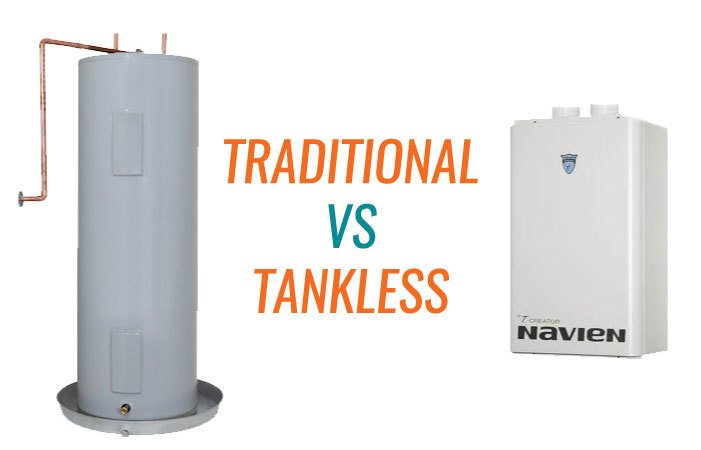
Should you stick with a conventional water heater, or is it time to switch to a tankless model? This guide will help you understand the key differences, benefits, and drawbacks of both options. By the end, you’ll know which water heater fits your lifestyle and saves you money.
Keep reading to find the perfect solution for your home.
Credit: www.herrmannservices.com
How Tankless Water Heaters Work
Tankless water heaters offer a different way to heat water compared to traditional models. Instead of storing hot water, they heat it only when needed. This method saves energy and provides endless hot water. Understanding how they work helps decide if they fit your home.
Instant Heating Process
Tankless water heaters heat water instantly as it flows through the unit. A powerful heating element or gas burner activates when you turn on the tap. Water passes through a heat exchanger, warming quickly without delay. This process eliminates the need for a storage tank. Hot water arrives right away, reducing wait times.
Compact Design Benefits
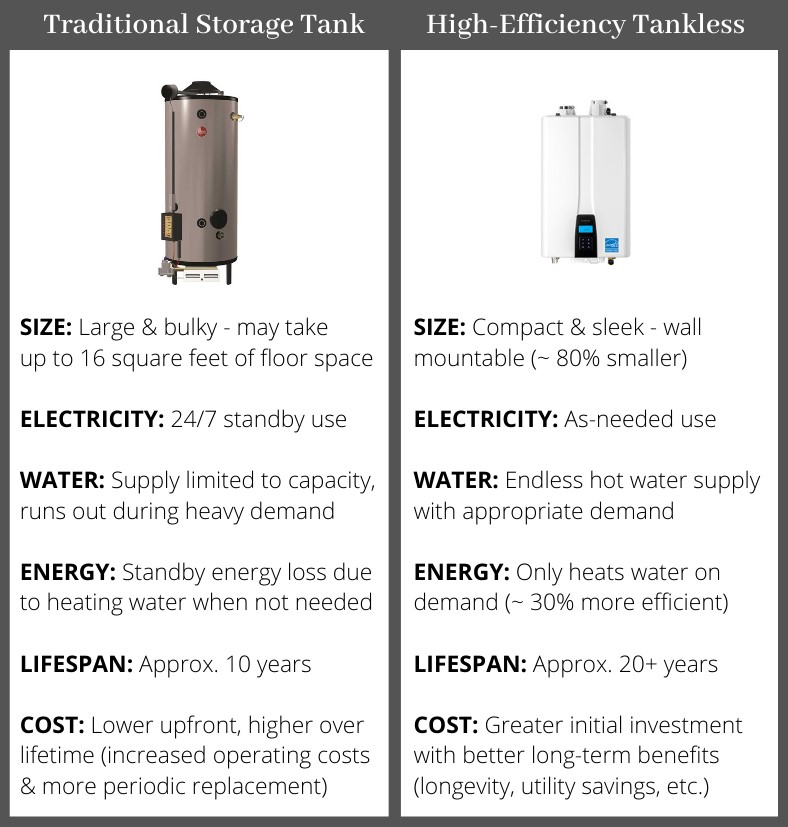
These heaters are much smaller than conventional tanks. Their compact size makes them easy to install in tight spaces. Wall mounting saves floor area, freeing room for other uses. Small design also means less material waste and often lower installation costs. This space-saving feature suits apartments and small homes well.
Credit: aurabio.com
How Conventional Water Heaters Work
Conventional water heaters use a simple but effective method to provide hot water. They store water in a tank and heat it continuously. This approach has served many homes well for years. Understanding how these heaters work helps in comparing them with tankless models.
Storage Tank Mechanism
A conventional water heater stores a set amount of water in a large tank. The tank is usually between 30 and 80 gallons. When water is heated, it stays in the tank until you need it. Cold water enters the bottom of the tank and is heated by a gas burner or electric element. Hot water rises to the top and flows out to your faucets when you turn them on.
Heat Retention Features
The tank has insulation to keep water hot for hours. This reduces the energy needed to reheat the water. Some tanks have thicker insulation for better heat retention. A thermostat controls the water temperature inside the tank. It turns the heating element on and off to keep the water at the set temperature. This system helps maintain a steady supply of hot water.
Energy Efficiency Comparison
Comparing energy efficiency between tankless and conventional water heaters shows clear differences. Choosing the right system affects monthly energy bills and environmental impact. Understanding how each consumes energy helps make a smart decision.
Energy Consumption Patterns
Conventional water heaters keep a full tank heated at all times. This means energy is used even when hot water is not needed. Tankless heaters only heat water when you turn on the tap. This on-demand heating reduces wasted energy.
Because tankless units heat water instantly, they use energy in short bursts. Conventional tanks cycle on and off to maintain temperature. This cycling uses more electricity or gas over the day. Tankless models avoid this constant energy use.
Standby Heat Loss Factors
Conventional tanks lose heat through the tank walls. This loss is called standby heat loss. It forces the heater to reheat water frequently. The longer the water sits, the more heat escapes.
Tankless heaters have no stored water, so no standby heat loss occurs. This means energy is saved by not reheating cooled water. Minimizing standby loss improves overall efficiency.
Cost Analysis Over Time
Understanding the cost differences between tankless and conventional water heaters helps make a smart choice. Costs vary not only at the start but also over the years. This section breaks down the expenses to give clear insights.
Initial Purchase And Installation
Tankless water heaters usually cost more upfront. The units themselves are pricier than traditional tanks. Installation can be complex and take longer. This raises labor costs. Sometimes, home modifications are needed for tankless models. Conventional water heaters are cheaper to buy and install. Their simple setup saves time and money. Homeowners often choose this option to keep initial costs low.
Long-term Savings
Tankless water heaters save energy by heating water only when needed. This lowers monthly utility bills. They last longer, often 20 years or more, reducing replacement costs. Conventional models use more energy because they keep water hot all day. They usually last 10 to 15 years. Over time, energy and maintenance costs add up. Tankless models offer better savings despite higher upfront costs.
Space And Installation Considerations
Choosing between a tankless water heater and a conventional one involves thinking about space and installation. These factors affect where you put the unit and how easy it is to set up. Understanding these points helps make a smart choice for your home.
Placement Flexibility
Tankless water heaters are small and compact. They fit on walls or tight spaces easily. This saves floor space and frees up room for other uses. Conventional heaters need a large area for the tank. They often go in basements or closets. The size limits where you can place them.
Installation Complexity
Installing a tankless water heater can be tricky. It may require new wiring or gas lines. Proper venting is also important to install safely. Conventional water heaters have simpler setups. Most homes already have the needed connections. This makes installation faster and often cheaper.
Maintenance And Lifespan
Maintenance and lifespan are important factors when choosing a water heater. They affect how much effort and money you will spend over time. Both tankless and conventional water heaters need care to work well and last long. Understanding their maintenance and durability helps you decide which fits your needs better.
Routine Maintenance Needs
Tankless water heaters need regular flushing to remove mineral build-up. This keeps the system efficient and prevents damage. Conventional water heaters require checking the anode rod to avoid rust. Draining the tank yearly helps remove sediment and keeps water clean. Tankless models usually need less frequent maintenance, but tasks are more specific. Conventional heaters need simple but more regular checks and cleaning.
Durability And Warranty
Tankless water heaters last longer, often 20 years or more. Their design reduces wear and tear. Conventional water heaters typically last 10 to 15 years. They have larger tanks that can corrode over time. Warranties on tankless models tend to be longer, reflecting their durability. Conventional models often have shorter warranty periods. Choosing a heater with a strong warranty gives peace of mind about its lifespan.
Environmental Impact
Choosing between a tankless water heater and a conventional model affects the environment in many ways. Understanding their environmental impact helps you make a better choice. This section explains how each type uses energy and affects emissions. It also looks at their roles in sustainability.
Energy Usage And Emissions
Tankless water heaters use energy only when hot water is needed. This reduces wasted energy compared to conventional heaters. Conventional heaters keep a large tank of water hot all the time. This constant heating uses more energy. Less energy use means fewer emissions from power plants or gas burning. Tankless systems often lead to lower carbon footprints. Conventional heaters can produce more greenhouse gases due to constant heating.
Sustainability Factors
Tankless water heaters last longer and need fewer replacements. This reduces waste and resource use over time. They also require less water to heat, saving water resources. Conventional heaters have shorter lifespans and use more materials for replacements. Tankless units are smaller, needing fewer raw materials to make. Choosing a tankless system supports sustainable living by lowering environmental harm.
Credit: www.greggio.com
Choosing The Right Heater For Your Home
Choosing the right water heater for your home affects comfort and costs. Both tankless and conventional heaters have pros and cons. Your choice depends on how much hot water you need and your budget. This guide helps you decide which heater fits your home best.
Household Size And Usage
Think about how many people live in your home. Larger families need more hot water at once. Conventional heaters store hot water and work well for big households. Tankless heaters heat water on demand. They suit smaller homes or fewer people using hot water at once.
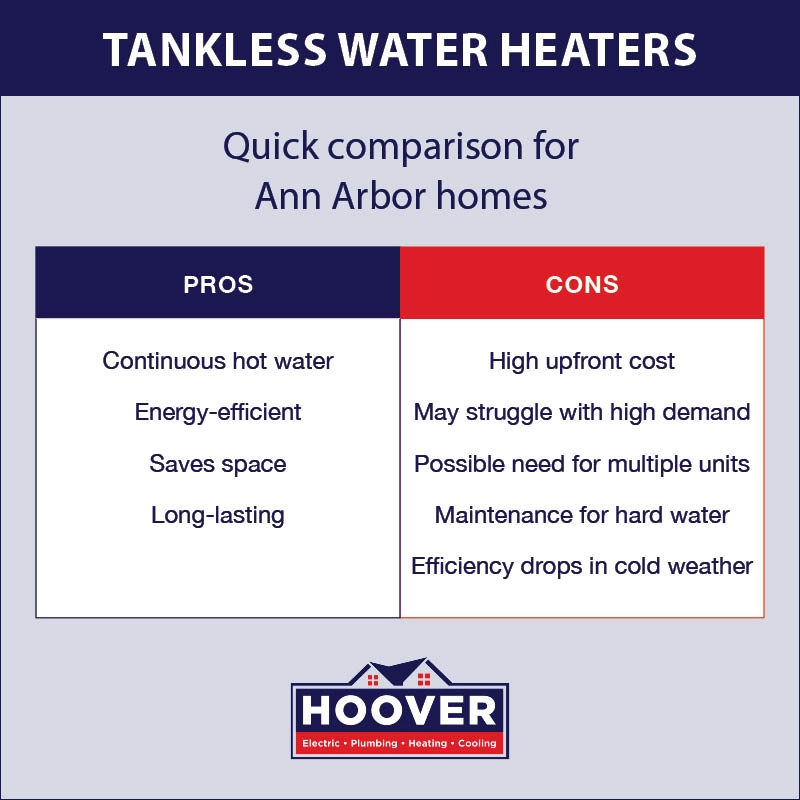
Consider your daily water use. Showers, laundry, and dishes add up fast. Conventional tanks can run out during heavy use. Tankless systems provide endless hot water but may struggle if many taps run simultaneously.
Budget And Energy Goals
Initial cost differs between systems. Conventional heaters cost less upfront. Tankless heaters have higher installation prices. Think about long-term savings. Tankless models use energy only when needed, saving money over time.
Energy efficiency matters. Tankless heaters often reduce energy bills. Conventional heaters keep water hot all day, using more energy. If saving on electricity or gas is a priority, tankless heaters may be better.
Frequently Asked Questions
What Is The Main Difference Between Tankless And Conventional Water Heaters?
Tankless heaters warm water only when needed. Conventional heaters store hot water in a tank for later use. This affects energy use and water availability.
Which Water Heater Type Saves More Energy?
Tankless water heaters save energy by heating water on demand. Conventional models keep water hot all the time, using more energy.
How Does The Installation Cost Compare For Both Heaters?
Tankless water heaters usually cost more to install due to complex setup. Conventional heaters have lower installation costs but may need more space.
Which Water Heater Provides Endless Hot Water?
Tankless heaters offer continuous hot water as long as needed. Conventional heaters can run out of hot water once the tank is empty.
Are Tankless Water Heaters Better For Small Homes?
Yes, tankless heaters fit well in small homes with limited space. Conventional heaters need more room because of their large tanks.
Conclusion
Choosing between a tankless water heater and a conventional one depends on your needs. Tankless heaters save space and energy but may cost more upfront. Conventional heaters store hot water and work well for larger families. Think about your budget, water use, and space.
Both types have benefits and limits. Understanding these helps you pick the best fit for your home. Make a choice that suits your daily life and saves money in the long run.