
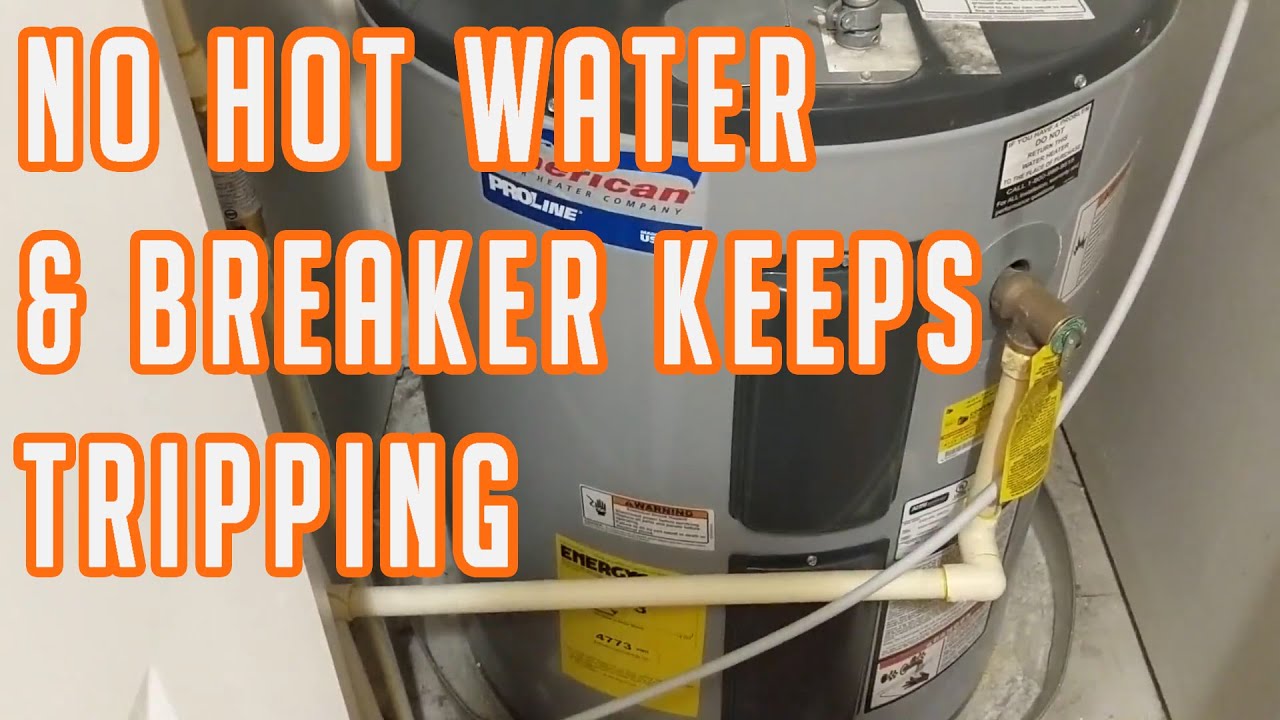
A new hot water heater is a major investment for any home. You expect it to deliver hot water reliably, safely, and efficiently. So, when your new hot water heater keeps tripping the breaker, it can be both confusing and frustrating. This kind of issue often means there is a safety risk, an installation error, or a hidden problem with your home’s electrical system. If left unsolved, it can damage your heater and even threaten your family’s safety.
Many homeowners run into this issue soon after installing a new unit. Sometimes, the breaker trips immediately after turning the heater on. In other cases, it works for a few hours or days, then suddenly shuts off. Either way, it is a sign that you should not ignore.
This guide will help you understand why a new water heater might trip the breaker, how to diagnose the cause, and what steps to take next.
You’ll get clear explanations, practical troubleshooting steps, and tips to prevent problems in the future. Whether you’re a DIY homeowner or want to speak confidently with a technician, you’ll find everything you need to solve the problem and restore safe, steady hot water.
Understanding Why Breakers Trip
When a breaker trips, it means the electrical circuit has become unsafe. The breaker “breaks” the flow of electricity to prevent overheating, fire, or electric shock. Understanding the basics can help you recognize why your hot water heater is causing problems.
Electric water heaters usually draw a lot of power. A typical unit uses between 3,000 and 5,500 watts and needs a dedicated 30-amp circuit. If the heater or circuit is faulty, the breaker will trip as a protective measure.
Common reasons for breaker tripping include:
- Short circuits: Wires touch where they should not, causing a sudden surge of electricity.
- Overloaded circuits: The heater draws more power than the circuit can handle.
- Ground faults: Electricity escapes to the ground, often due to faulty wiring or water exposure.
- Faulty appliances: Internal parts of the heater may be defective.
A tripping breaker is not only annoying; it’s a warning sign. Ignoring it can lead to electrical fires or total heater failure.
Immediate Steps To Take When Your Breaker Trips
If your new water heater keeps tripping the breaker, here’s how to respond safely:
- Turn off the water heater at its power switch or circuit breaker.
- Do not try to reset the breaker repeatedly. This can damage the electrical system or create a fire risk.
- Check for water leaks around the heater. Water and electricity are a dangerous mix.
- Look for burning smells or scorch marks near the heater or electrical panel. These are signs of overheating.
- Call a licensed electrician if you see smoke, sparks, or melted wires. Do not attempt repairs yourself if you notice these signs.
Following these steps reduces the risk of injury or property damage. Now, let’s look at why this issue happens, even with a brand-new heater.
Credit: www.youtube.com
Common Causes: Why A New Hot Water Heater Trips The Breaker
Many people assume a new appliance should work perfectly. However, even new water heaters can cause breaker problems. Here’s why:
1. Incorrect Circuit Size Or Wiring
A new water heater requires a dedicated circuit. If the circuit is too small (for example, 20 amps instead of 30 amps), it cannot handle the heater’s power draw. Incorrect wiring, such as loose connections or undersized wires, also causes breaker trips.
Example: A 4,500-watt heater on a 20-amp breaker will overload the circuit and trip the breaker.
2. Faulty Or Weak Breaker
Sometimes the breaker itself is old, weak, or defective. Even if your heater is new, an old breaker can trip too easily. Breakers wear out over time, especially if they’ve been flipped often.
Insight: Many people replace the heater but forget to check the breaker’s condition.
3. Defective Heating Elements
Even new heaters can come with factory defects. A damaged heating element may develop a short circuit or ground fault, causing the breaker to trip whenever the heater is turned on.
Non-obvious tip: Manufacturing defects are rare but possible, especially if the unit was damaged during shipping or installation.
4. Water Leaks Inside The Heater
Internal leaks can cause water to contact electrical parts, creating a ground fault. This is dangerous and will almost always trip the breaker.
5. Loose Electrical Connections
If the heater was installed in a hurry, connections may not be tight. Loose connections cause arcing (tiny sparks) and heat, which can trip the breaker.
6. Incorrect Voltage Supply
Water heaters are designed for specific voltages (usually 240V in the US). If your home’s supply is unstable or incorrect, the heater may draw too much current, causing the breaker to trip.
7. Multiple Devices On The Same Circuit
A dedicated circuit is key. If other appliances are sharing the same line (for example, outlets or a washing machine), the total power draw can overload the breaker.
8. Faulty Thermostat
The thermostat controls how long the heater stays on. If it’s stuck in the “on” position, the heater can run non-stop, drawing excess current and tripping the breaker.
9. Incorrect Installation
Many problems start during installation. Mistakes such as swapped wires, improper grounding, or missing parts can lead to electrical faults.
Example: A missing ground wire can cause a ground fault, triggering the breaker.
10. Breaker And Heater Mismatch
Sometimes, homeowners upgrade to a larger water heater without upgrading the breaker. If the new heater needs more power than the existing breaker can provide, tripping will occur.
Diagnosing The Problem: Step-by-step Troubleshooting
Solving a breaker tripping problem requires careful, safe troubleshooting. Here’s a step-by-step guide:
Step 1: Confirm The Circuit Size
Check your electrical panel. The breaker for your water heater should usually be 30 amps for most standard units. Look for a label or marking.
- If the breaker is less than 30 amps, it’s likely too small.
- If unsure, check the heater’s manual for required breaker size.
Step 2: Inspect The Breaker
Flip the breaker off, then back on. If it feels loose or does not “click” firmly, it may be worn out.
- Tip: Old breakers sometimes fail internally even if they look fine.
Step 3: Test For Shared Circuits
Turn off all other appliances on the same circuit. If the breaker stops tripping, you may have an overloaded circuit.
- Non-obvious tip: Outlets in nearby rooms may secretly share the same line.
Step 4: Examine The Heater Connections
Turn off power. Remove the cover plate from the water heater’s wiring compartment. Check for:
- Loose wires
- Burn marks
- Signs of water inside
Tighten any loose wires. If you see water, call a professional.
Step 5: Check The Heating Elements
Use a multimeter to test for continuity and ground faults in the heating elements. If the reading shows a short, the element is faulty.
- Tip: Even new elements can be defective.
Step 6: Inspect The Thermostat
A stuck or broken thermostat can keep the heater running constantly. Test with a multimeter or replace with a known-good unit.
Step 7: Check For Water Leaks
Look for moisture inside the unit or around connections. Even a tiny leak can cause a ground fault.
Step 8: Test The Voltage
Use a multimeter to check the voltage at the heater’s terminals. It should match the unit’s rated voltage (usually 240V).
Step 9: Replace Or Upgrade The Breaker
If all else fails, the breaker itself may need to be replaced. Always use the correct amp rating for your heater.
Step 10: Call A Licensed Electrician
If you cannot find the problem, or if you see signs of burning, melted wires, or water near electrical parts, call a professional. Safety is more important than saving money on DIY repairs.

Credit: www.reddit.com
Table: Common Causes And Solutions
Here’s a quick reference for the most common causes and their solutions.
| Cause | How to Check | Solution |
|---|---|---|
| Incorrect circuit size | Check breaker amp rating | Upgrade to correct breaker |
| Faulty breaker | Test/reset breaker, replace if loose | Install new breaker |
| Defective heating element | Test with multimeter | Replace element |
| Loose connections | Inspect wiring compartment | Tighten connections |
| Water leak | Look for moisture or drips | Repair leak, dry unit |
| Faulty thermostat | Test or replace thermostat | Install new thermostat |
Installation Mistakes That Cause Breaker Trips
Even professional installers sometimes make mistakes. Here are some common installation errors:
Using The Wrong Wire Size
Heaters need thick wires (usually 10-gauge for 30-amp circuits). Thinner wires can overheat and trip the breaker.
Skipping Ground Connections
A missing or loose ground wire increases the risk of shocks and ground faults.
Swapping Hot And Neutral Wires
If hot and neutral wires are mixed up, the heater will not work right and can trip the breaker immediately.
Not Using A Dedicated Circuit
Sharing a circuit with other appliances almost always leads to overloads.
Forgetting To Tighten Connections
Loose screws or wire nuts can cause arcing and heat buildup.
Not Checking For Internal Leaks
Installers sometimes skip this step, but even a small leak can cause major issues.
Table: Correct Sizing For Water Heater Circuits
Choosing the right wire and breaker size is critical for safety. Here’s a simple guide:
| Heater Wattage | Breaker Size | Wire Gauge |
|---|---|---|
| 3,000 – 4,500 watts | 30 amps | 10 AWG |
| 5,500 watts | 30 amps | 10 AWG |
| 6,000+ watts | 40 amps | 8 AWG |
Preventing Breaker Trips: Best Practices
You can reduce the risk of future problems by following these best practices:
1. Use A Dedicated Circuit
Never share the water heater’s circuit with other devices. This is the number one way to prevent overloads.
2. Match Breaker And Wire Size
Always match the heater’s wattage with the right breaker and wire size. If upgrading to a larger heater, upgrade your wiring and breaker too.
3. Inspect Connections Regularly
Check all connections during installation and after a few days of use. Loose wires are a top cause of problems.
4. Test The Heater Before Full Use
Run the heater for an hour after installation. Watch for breaker trips, smells, or unusual noises. It’s easier to fix issues before regular use.
5. Check For Leaks
Inspect for leaks before powering on the heater. Fix any leaks immediately.
6. Buy Quality Components
Cheap breakers, wires, or connectors can cause trouble. Invest in good quality parts.
7. Hire Qualified Professionals
Choose experienced, licensed electricians and plumbers. Ask for references or reviews.
8. Keep The Area Dry
Make sure the area around the heater is free from water spills, humidity, and leaks.
9. Monitor Circuit Load
If you add new appliances to your home, review your electrical load. Upgrades may be needed.
10. Schedule Regular Maintenance
Have your heater and breaker checked by a professional once a year.
Table: Diy Vs. Professional Repair
Let’s compare when it’s okay to try a DIY fix versus when you should call a professional.
| Problem | DIY Possible? | When to Call a Pro |
|---|---|---|
| Resetting a tripped breaker | Yes | If breaker trips again immediately |
| Tightening wire connections | Yes (if comfortable with electricity) | If unsure or see burn marks |
| Replacing a thermostat | Maybe (with experience) | If unsure how to test/replace |
| Testing heating elements | Yes (with multimeter) | If unfamiliar with tools |
| Fixing water leaks inside heater | No | Always call a pro |
| Replacing a breaker | No | Always call a pro |
Safety Tips For Homeowners
Electrical issues are dangerous. Here’s how to stay safe:
- Never touch wires or parts if you don’t know what they do.
- Turn off power at the breaker before working on the heater.
- Wear rubber-soled shoes and use insulated tools.
- If you see smoke, fire, or water near electrical parts, get out and call 911.
- Do not keep resetting a tripping breaker. This means there’s a real problem.
Non-obvious Insights Most Beginners Miss
Many first-time homeowners or DIYers overlook these points:
- A “new” breaker isn’t always new. Sometimes, installers reuse old breakers. Always ask for a truly new unit when replacing your heater.
- Shared neutral wires can cause confusion. In some homes, two circuits share a neutral wire. If that neutral is loose, it can trip the breaker even if only the heater is running.
- Breaker trips can be delayed. The heater may work for a while, then trip after 20–30 minutes. This points to a slow overload or a heating element that shorts when hot.
When To Replace Your Hot Water Heater
Not all problems are worth fixing. Sometimes, replacing the heater is the best choice. Here’s when:
- Your new heater keeps tripping the breaker after all repairs.
- There are signs of internal leaks or rust.
- The cost of parts and labor exceeds half the price of a new unit.
- Your heater is the wrong size for your home.
If you bought the heater new and it’s still under warranty, contact the manufacturer. Most will cover repairs or replacements for faulty units.

Credit: www.reddit.com
Talking To Professionals: What To Say
When you call an electrician or plumber, be ready to explain:
- The make and model of your heater
- When the breaker trips (immediately, after heating, etc.)
- Any DIY steps you’ve tried
- Any strange sounds, smells, or leaks
Good communication helps professionals solve the problem faster and saves you money.
How To Avoid Future Problems
Once your heater is fixed, keep it running smoothly by:
- Checking for leaks monthly
- Scheduling yearly electrical inspections
- Keeping the area around the heater clean and dry
- Avoiding power-hungry devices on the same circuit
Preventive maintenance is cheaper than emergency repairs.
Helpful Resources
If you want to learn more about electrical safety or water heaters, visit the Electrical Safety Foundation International for detailed guides and tips.
Frequently Asked Questions
Why Does My New Hot Water Heater Trip The Breaker Right After Installation?
This usually means there’s a wiring problem, an undersized breaker, or a factory defect in the heater. Check that the heater is on a dedicated 30-amp circuit and that all connections are tight. If the problem started immediately after installation, call your installer to inspect their work.
Can I Keep Resetting The Breaker If It Trips?
No. Repeatedly resetting a tripping breaker is dangerous. It means there is an electrical fault that could cause a fire or damage your heater. Find and fix the problem before using the heater again.
Is It Safe To Replace My Own Breaker Or Heater?
Replacing breakers or heaters can be dangerous if you are not trained. Mistakes can lead to electric shock or fire. It’s best to call a licensed electrician for these repairs.
What If The Breaker Trips Only After The Heater Has Been On For A While?
This points to a slow overload, possibly from a heating element that shorts when hot, a faulty thermostat, or insufficient wire size. Test the elements with a multimeter and check for loose connections.
Does A Tripping Breaker Mean My Heater Is Broken?
Not always. Sometimes the problem is in the wiring, the breaker, or the installation—not the heater itself. A professional can help you find the real cause and fix it.
A hot water heater should make life easier, not more stressful. By understanding why your new heater keeps tripping the breaker, you can solve the problem quickly and safely. Use this guide to troubleshoot, prevent future issues, and know when to call in the experts.
Hot water—and peace of mind—are worth the effort.