
Many homeowners are drawn to tankless water heaters because they save space and deliver endless hot water. But one question often arises: *Can a tankless water heater be installed in an attic?* The attic is often unused and out of sight, making it seem like a good place for such equipment. However, this decision is not as simple as it seems. There are benefits, challenges, and important safety issues to consider before making this choice.
Below, you’ll find a detailed guide exploring if an attic installation is possible, what you must think about, and how to do it safely. This article covers all the practical, technical, and safety aspects, including real-world examples, regulations, and expert advice.
By the end, you’ll know if your attic is the right spot for a tankless water heater—and how to avoid common mistakes that could cost you money or even put your home at risk.
Understanding Tankless Water Heaters
A tankless water heater, also called an on-demand or instant water heater, heats water directly as you need it. There is no big storage tank. When you turn on the hot water tap, cold water flows through the heater and is warmed by electric coils or a gas burner. This means you get hot water almost instantly and only use energy when needed.
Key Features Of Tankless Units
- Space-saving design: They are compact and can fit in small areas.
- Energy efficiency: They only heat water when you need it, reducing energy waste.
- Endless hot water: As long as the unit is sized correctly, you won’t run out of hot water.
- Longer lifespan: Many units last 20 years or more, compared to 10–15 years for tank models.
Types Of Tankless Water Heaters
- Electric models: Use electricity to heat water. They’re usually smaller but require heavy wiring.
- Gas models: Use natural gas or propane. They heat water faster but need venting for exhaust gases.
Not all models are suitable for every location, especially in difficult spaces like attics.
Why Homeowners Consider The Attic For Installation
Many homes, especially in warmer climates or those with limited space, have the water heater installed in the attic. The main reasons include:
- Saving floor space: Attic installations free up storage or living space elsewhere in the home.
- Out of sight: Keeping the unit out of view reduces noise and clutter in living areas.
- Proximity to plumbing: In some layouts, the attic is close to bathrooms, which can reduce hot water wait times.
However, what seems logical can have hidden drawbacks. The attic is not a traditional utility area, and there are important factors to consider before moving forward.
Is It Legal And Safe To Install A Tankless Water Heater In An Attic?
The short answer: Yes, it can be legal and safe, but only if you follow building codes, manufacturer instructions, and proper safety steps. Not every attic is suitable. Some local rules prohibit it due to risk of leaks or fire hazards.
Local Codes And Permits
- Building codes: Many places have strict rules about installing water heaters in attics. These codes protect your home from fire, leaks, and poor ventilation.
- Manufacturer guidelines: Most tankless water heater manuals explain where and how the unit can be installed. Not following these rules can void your warranty.
- Permits: You usually need a permit for any water heater installation, especially if gas or electric lines are involved.
Always check with your city’s building department before starting. Some regions have extra rules for attic installations, such as requiring a drain pan or special venting.
Advantages Of Installing A Tankless Water Heater In The Attic
There are real benefits to attic installations—if done correctly.
1. Space Optimization
The attic is often wasted space. Installing your tankless water heater there frees up room in your laundry, garage, or utility closet. This is especially useful in small homes, condos, or townhouses.
2. Centralized Location
In many homes, plumbing pipes run through the attic. Placing the water heater here can shorten the distance to bathrooms or kitchens, providing hot water faster and reducing water waste.
3. Reduced Noise
Tankless units make some noise when operating. Installing in the attic keeps this noise away from living spaces, making your home quieter.
4. Aesthetics
With the unit hidden away, there are no visible pipes or equipment in bathrooms or utility spaces. This creates a cleaner look in your home.
5. Less Risk Of Water Damage (with Proper Setup)
If a leak occurs and the attic is equipped with a proper drain pan and drainage, water can be directed outside instead of damaging floors and walls below.
Disadvantages And Risks Of Attic Installation
While the benefits are real, there are also significant risks. Many homeowners overlook these until it’s too late.
1. Freezing Temperatures
Attics are often unheated. In cold climates, water in the heater or pipes can freeze, causing the unit to crack or burst. Even “frost-protected” tankless units can fail in extreme cold.
2. Harder Maintenance
Attics are harder to reach, especially for larger or older adults. Regular maintenance is needed for all tankless water heaters—cleaning filters, checking for leaks, and inspecting gas lines.
3. Increased Installation Cost
It is usually more expensive to install a tankless water heater in the attic. You may need to run new gas, electric, and water lines, add venting, and build a safe platform.
4. Leak Risk
Leaks in the attic can cause water to drip down into walls or ceilings, leading to mold, rot, or major structural damage. A drain pan with a drain line is essential, but not foolproof.
5. Ventilation Problems
Gas units need special venting to remove carbon monoxide safely. Poor venting in an attic can cause dangerous gas buildup. Electric units also need good airflow to avoid overheating.
6. Not Ideal For All Attics
If your attic is unfinished, has low ceilings, or poor access, it may not be a safe or legal place for a water heater.
Key Factors To Consider Before Installing In The Attic
Before you decide, think carefully about these factors. Missing even one could cause expensive or dangerous problems later.
1. Attic Access
Is there a safe, permanent staircase or ladder? Will a service technician be able to reach the unit easily for maintenance or repairs?
2. Structural Support
Tankless water heaters are lighter than tanks, but still need a strong platform. Attic joists must support the unit and anyone working on it. You may need to build a special platform.
3. Drainage
A drain pan under the unit is a must. It should have a pipe leading outdoors (not just to the attic floor) to drain any leaks safely away from your home’s structure.
4. Freeze Protection
Insulate all water lines and the unit itself. Some tankless units have built-in heaters or “freeze protection mode,” but these require electricity to function. If the power goes out, you’re still at risk.
5. Venting And Airflow
Gas units need proper vent pipes to direct exhaust gases outside. Electric units need good airflow to avoid overheating. The attic must have enough space for both.
6. Power Source
If you’re installing an electric model, does your attic wiring support the high power needs? For gas, is there a safe way to run a gas line to the attic?
7. Compliance With Codes
You must follow both local building codes and the manufacturer’s installation guide. This is not only for safety—it also protects your home’s value and keeps your warranty valid.
Step-by-step Guide To Installing A Tankless Water Heater In The Attic
If you’ve checked all the boxes and want to move forward, here’s how a typical attic installation works. Most experts recommend hiring a licensed plumber and electrician for this job. DIY mistakes can be costly or even deadly.
1. Evaluate The Attic
- Check the space: Measure to ensure there’s enough room for the unit and for a person to work safely.
- Inspect the structure: Make sure the attic floor can support the weight.
- Look for existing utilities: Is there easy access to water, gas, and electric lines?
2. Prepare The Space
- Build a strong platform if needed.
- Add lighting for safe access.
- Install a drain pan with a dedicated drain line leading outside.
- Insulate all water lines.
3. Install Utilities
- Run water lines to and from the heater.
- For electric units: Install the correct high-capacity wiring and circuit breaker.
- For gas units: Run a gas line, following all local codes.
- Set up venting for gas models—this often means a double-walled vent pipe leading outside.
4. Mount The Heater
- Secure the unit to the platform or wall studs, following the manufacturer’s instructions.
- Connect water, gas or electric, and vent lines.
5. Test The System
- Check for leaks at all connections.
- Test the unit to make sure it heats water properly.
- Verify that the drain pan works by pouring water into it and watching for proper drainage.
6. Insulate And Finish
- Add insulation to pipes and around the heater if needed.
- Seal any holes in the attic floor or ceiling to prevent air leaks.
7. Final Inspection
- Many cities require a final inspection before you can use the system.
- Keep all permits and paperwork for your records.
Example: Common Attic Installation Scenario
Imagine a two-story home in Texas. The bathrooms are upstairs, and the kitchen is downstairs. The owner wants a tankless gas water heater in the attic to free up garage space.
- The attic is unfinished, but has a pull-down ladder.
- There’s no existing gas line, so it must be installed.
- The plumber builds a platform, installs a drain pan with a pipe running outside, and adds insulation around all pipes.
- A professional vents the heater through the roof using double-walled pipe.
- The city inspector checks for code compliance and gives approval.
This setup works well in a mild climate. But if this home was in Minnesota, where winter temperatures regularly drop below freezing, this solution would likely fail due to frozen pipes.
Comparing Attic With Other Installation Locations
To help you decide, here’s a comparison of attic installation versus other common locations.
| Location | Pros | Cons |
|---|---|---|
| Attic | Saves indoor space, out of sight, can be near bathrooms | Freeze risk, harder to access, higher install cost |
| Garage | Easy access, good ventilation, lower install cost | Takes up storage space, may need extra insulation in cold regions |
| Utility Closet | Easy to reach, inside climate zone, less freeze risk | Takes up living space, can be noisy |
| Basement | Low freeze risk, out of sight, easy access | Not available in all homes, may be far from bathrooms |
Real-world Data: How Common Is Attic Installation?
A 2022 survey by the National Association of Home Builders found that only about 7% of new homes in the US use the attic for water heater installation. The most common locations are the garage (40%) and utility closets (35%). However, in the South and Southwest, attic installs are more popular due to mild winters and smaller home footprints.
In cold regions, attic installations are rare because of freeze risk. This trend shows that while attic installs can work, they are not the default choice, especially in colder climates.
Manufacturer Guidelines: What Do Leading Brands Say?
Top tankless water heater brands (like Rinnai, Navien, and Noritz) allow attic installations in some cases, but always with important warnings.
| Brand | Attic Installation Allowed? | Special Requirements |
|---|---|---|
| Rinnai | Yes | Drain pan required, freeze protection, proper venting |
| Navien | Yes | Must follow local codes, insulate pipes, install drain pan |
| Noritz | Yes | Requires inspection, freeze protection, drain line |
| Rheem | Yes | Drain pan, insulation, attic access required |
Ignoring these requirements can void your warranty, lead to leaks or freeze damage, and even cause dangerous conditions.
Cost Breakdown: Attic Vs. Other Install Locations
Tankless water heater installation costs depend on location, access, and utility work needed. Here’s a typical cost comparison:
| Location | Estimated Cost (Gas Unit) | Notes |
|---|---|---|
| Attic | $2,500 – $5,000 | Extra for platform, drain, insulation, venting |
| Garage | $1,800 – $3,500 | Usually easier access, existing utilities |
| Utility Closet | $1,700 – $3,200 | Minimal extra work if space is available |
Attic installs can cost 30–50% more than garage or closet installs due to extra work and materials.

Credit: www.sandersplumbinghvac.com
Common Mistakes To Avoid
Even experienced homeowners and some contractors make these errors:
- Not insulating pipes: Even in mild climates, uninsulated attic pipes can freeze during a cold snap.
- Skipping the drain pan: One small leak can cause thousands of dollars in ceiling and wall repairs.
- Using the wrong vent: Gas tankless heaters need special vent pipes—not basic dryer vent tubes.
- Ignoring attic access: If you can’t easily reach the unit, maintenance will be neglected.
- Not pulling permits: Skipping this step can cause insurance problems if you ever have a fire or flood.
- Choosing the wrong size heater: Undersized units won’t provide enough hot water; oversized units cost more and waste energy.
Practical Tips For Successful Attic Installation
- Choose a unit with built-in freeze protection if you live in a region with any chance of freezing temperatures.
- Install a leak detection system: Some modern tankless heaters have Wi-Fi leak alerts that can notify you of a problem before it gets big.
- Schedule annual maintenance: Have a pro check the unit each year, especially before winter.
- Label attic access: Mark the attic entrance clearly so emergency workers can find the heater fast.
- Take photos of the installation: Keep these for warranty claims or if you sell the home.

Credit: www.youtube.com
Two Non-obvious Insights For Beginners
- Electric tankless heaters rarely make sense for attics in older homes. That’s because they need very heavy-gauge wiring and big circuit breakers. Most attic circuits are not built for this load and upgrading them can be expensive or impossible.
- Freeze damage isn’t always immediate. Even if you never see a burst pipe, repeated small freezes can weaken pipes or joints over time, leading to leaks months or years later.
When You Should Not Install In The Attic
There are times when attic installation is a bad idea:
- You live in a region with winter temperatures below 32°F (0°C) for more than a few days each year.
- Your attic is hard to reach (no stairs or safe ladder).
- The attic is unfinished, with poor flooring or low ceilings.
- There’s no easy way to drain leaks outside the house.
- Your city’s building code prohibits it.
If any of these apply, choose a different location.
Alternatives To Attic Installation
If the attic is not right for you, here are other options:
- Garage: Easy access, usually has space for venting and utilities.
- Utility closet: Keeps the unit inside the main structure for climate protection.
- Basement: Ideal in colder regions, but not all homes have one.
- Outdoor wall-mounted units: In some climates, you can mount tankless units outside, but they must be rated for exterior use and protected from freezing.
Summary: Is Attic Installation Right For You?
Installing a tankless water heater in the attic is possible, but only if you address all the risks and follow the rules. It can save space and keep your home looking neat, but the dangers of freezing, leaks, and hard maintenance are real.
For warm climates and homes with easy attic access, it can be a smart solution—if you use a pro and follow all codes. In cold regions or tricky attics, it’s better to choose another location. Always check your local rules, and never cut corners on safety features like insulation, drain pans, and venting.
If you want more details on tankless technology and installation best practices, you can find a wealth of information at the U.S. Department of Energy’s Energy Saver guide.
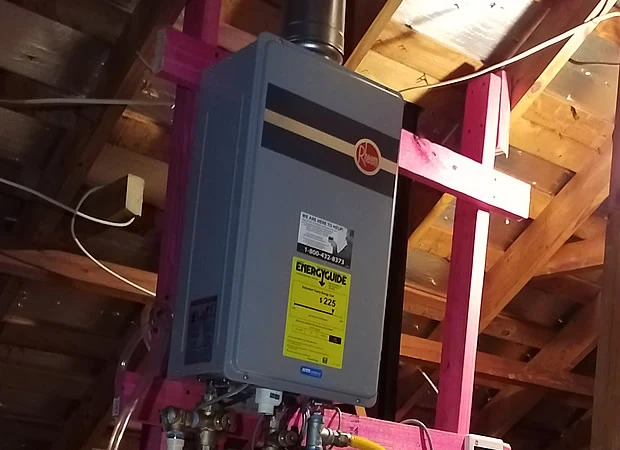
Credit: www.johnmooreservices.com
Frequently Asked Questions
Can I Install An Electric Tankless Water Heater In My Attic?
Yes, but only if your attic has the right electrical setup. Electric tankless units need heavy-duty wiring and large circuit breakers. Most attics are not wired for this, especially in older homes. Upgrading your wiring can be expensive. You also need proper insulation and a drain pan to protect from leaks and freezing.
What Is The Biggest Risk Of Installing A Tankless Water Heater In The Attic?
The biggest risk is freezing. Water in pipes or the heater can freeze during cold weather, causing cracks or leaks that lead to major water damage. Even in mild regions, a rare cold snap can cause thousands of dollars in repairs. Insulating pipes and using a unit with freeze protection helps, but it’s not foolproof.
Will Installing A Tankless Water Heater In The Attic Make My Hot Water Reach Faucets Faster?
Sometimes. If the attic is above the main bathrooms, the hot water may reach these fixtures more quickly compared to a garage or basement install. But if your kitchen is far away, you may still have to wait for hot water at that tap. A recirculation pump can help reduce wait times throughout the house.
Do Attic Tankless Water Heaters Need Regular Maintenance?
Yes. All tankless water heaters need at least yearly maintenance—cleaning filters, flushing out mineral buildup, and checking for leaks. Attic units are harder to reach, so it’s easy to forget or skip maintenance. This can shorten the unit’s life or void your warranty.
Is Attic Installation More Expensive Than Other Locations?
Usually, yes. Attic installs often cost 30–50% more than garage or closet installs. You may need to add a platform, run new pipes or wires, install a drain pan, and add insulation. However, in homes where attic access and utilities are easy, the cost can be more competitive.
Tankless water heaters are a smart, energy-saving choice—but attic installation requires special planning. Take time to consider all the risks and features before choosing this option for your home.