
A hot water heater isn’t something most people think about until it stops working. Suddenly, you’re dealing with cold showers and the urgent need for a replacement. But before you call a plumber or start shopping, it’s important to understand the average cost of installing a hot water heater. Many factors can affect the final bill, from the type of unit you choose to the complexity of the installation. Costs can vary widely, and there are often hidden expenses that catch homeowners off guard. This guide will walk you through everything you need to know, from the types of heaters and installation challenges to long-term costs and money-saving tips.
What Influences Hot Water Heater Installation Cost?
The price to install a hot water heater isn’t fixed. Several main factors decide how much you’ll pay:
- Type of water heater (tank vs. tankless, gas vs. electric)
- Size and capacity
- Brand and quality
- Labor costs
- Complexity of installation
- Location and local codes
- Additional materials and upgrades
Let’s break down each factor and see how it can impact your total cost.
Type Of Water Heater
There are several common types:
- Tank water heaters: Store hot water in a large tank (usually 30–80 gallons). These are the most common and generally the least expensive to install.
- Tankless water heaters: Heat water only when needed, so they are more energy-efficient but often cost more upfront and to install.
- Heat pump water heaters: Use electricity to move heat from the air or ground to heat water. More efficient, but higher installation costs.
- Solar water heaters: Use solar panels to heat water. The most expensive option, but can save a lot on energy over time.
Each type has a different average cost range. For most homes, tank or tankless heaters are the main choices.
Size And Capacity
A bigger family needs more hot water, which means a bigger or multiple heaters. A 30-gallon unit costs less than an 80-gallon one, but choosing the wrong size can leave you with cold showers or wasted money.
Brand And Quality
Like all appliances, better brands usually mean higher prices but also longer life and better energy savings.
Labor Costs
Labor rates change by location and by company. Urban areas with higher costs of living usually have higher installation rates. Licensed, experienced plumbers cost more but reduce the risk of mistakes.
Complexity Of Installation
If your current setup is outdated, or you’re switching from electric to gas (or vice versa), extra work is required. This might include new venting, gas lines, or electrical wiring.
Location And Local Codes
Some states or cities require certain safety features, permits, or upgrades. These can add to your total cost.
Additional Materials And Upgrades
Don’t forget about extras like expansion tanks, drain pans, water alarms, or insulation. These can all add to the final bill, but sometimes are required by code.
Average Cost To Install A Hot Water Heater: Real Numbers
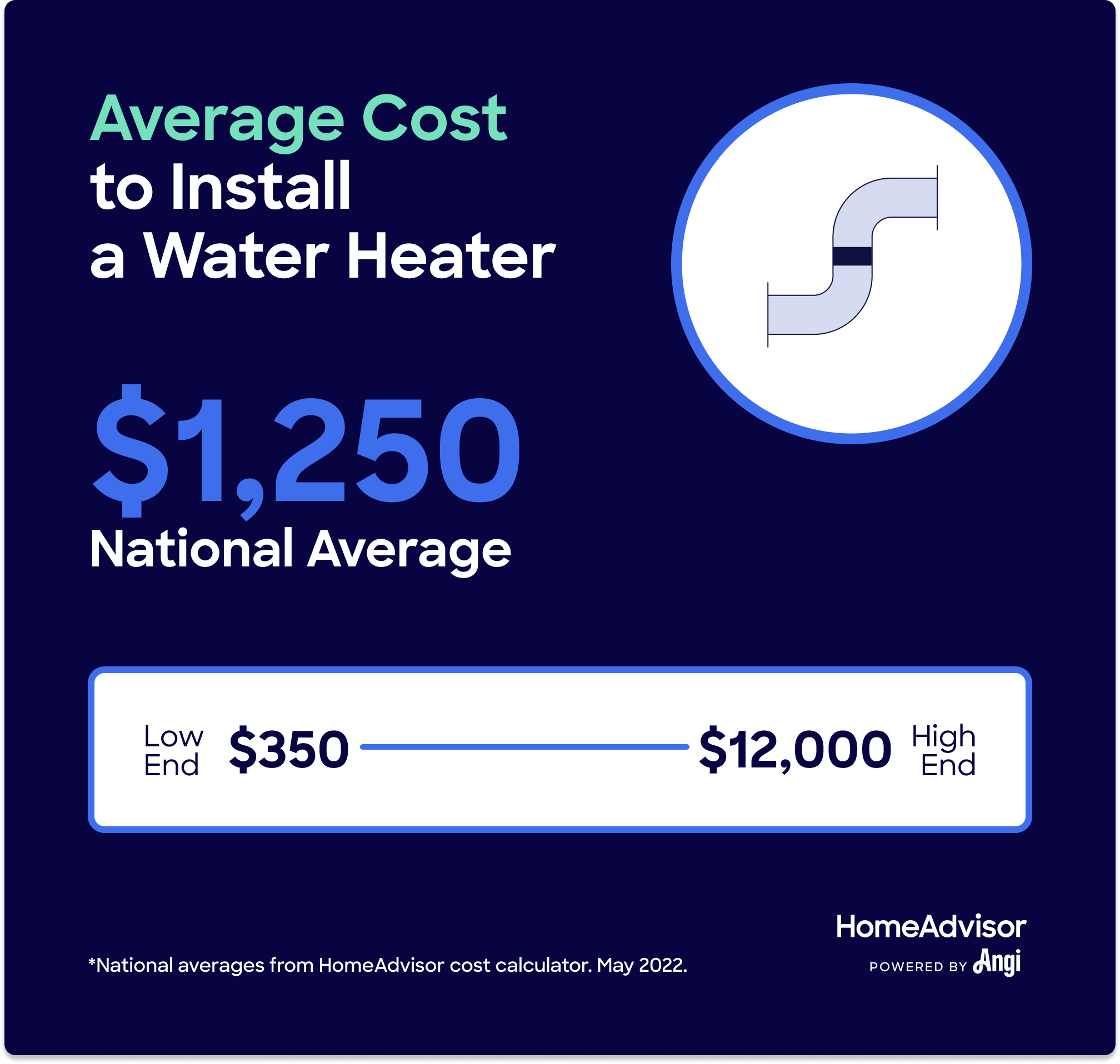
Most homeowners want a clear answer: “What’s the average cost?” Here are general price ranges for the US as of 2024:
- Standard tank water heater (40-50 gallons): $900–$2,000 (including installation)
- Tankless water heater: $1,800–$3,500 (including installation)
- Heat pump water heater: $2,000–$4,500 (including installation)
- Solar water heater: $3,000–$9,000 (including installation)
These ranges include basic materials and labor. The final price can be higher if your home needs extra work.
Here’s a simple comparison:
| Type | Unit Cost (USD) | Installation Cost (USD) | Total Installed Cost (USD) |
|---|---|---|---|
| Tank (Gas/Electric) | $500–$1,300 | $400–$700 | $900–$2,000 |
| Tankless | $800–$2,000 | $1,000–$1,500 | $1,800–$3,500 |
| Heat Pump | $1,200–$2,500 | $800–$2,000 | $2,000–$4,500 |
| Solar | $2,000–$6,500 | $1,000–$2,500 | $3,000–$9,000 |
Non-obvious insight: Sometimes the installation can cost as much or more than the unit itself, especially for tankless or solar systems that need new gas lines, vents, or roof work.
Cost Breakdown: What Are You Really Paying For?
Many people are surprised by what’s included in the bill. Here’s where your money usually goes:
The Water Heater Unit
The unit itself is usually 40–60% of the total cost for tank models, and 20–40% for tankless or solar systems.
Labor
Labor covers removal of the old heater, installation, connecting pipes, and safety checks. Expect this to be 30–50% of your total bill.
Permits And Inspection
Most cities require a permit. The fee is often $50–$250, but can be higher in some places.
Materials And Parts
This includes piping, fittings, valves, insulation, and sometimes a new expansion tank or drain pan. These can add $100–$500+.
Disposal
Most installers will remove the old water heater for an extra $50–$200.
Upgrades Or Repairs
If your home needs new venting, gas lines, or electrical work, add $300–$1,500 or more.
Example: If you switch from an electric to a gas heater, you may need a new gas line. This can add $500–$1,000, and sometimes more if the gas meter or main line needs upgrading.
Comparing Tank Vs. Tankless Hot Water Heaters
Choosing between tank and tankless is one of the biggest cost decisions. Here’s a quick look at how they stack up:
| Feature | Tank | Tankless |
|---|---|---|
| Upfront Cost | Lower | Higher |
| Installation Complexity | Simpler | May need new gas line or venting |
| Energy Efficiency | Less efficient | More efficient |
| Lifespan | 10–15 years | 20+ years |
| Hot Water Supply | Limited by tank size | Endless (if sized correctly) |
| Maintenance | Lower | May require annual service |
Non-obvious insight: Many homes need upgraded gas lines or electrical panels for tankless models, which can add $1,000 or more to your cost. Always ask your installer if your home is “tankless-ready.”
Cost By Fuel Source: Gas Vs. Electric
Another major factor is whether you choose gas or electric. Here’s what to consider:
Gas Water Heaters
- Usually cheaper to run, especially if you already have a gas line.
- Installation is more complex due to venting and safety requirements.
- Can work during power outages (for tank models).
- Generally more expensive to install if you need a new gas line.
Electric Water Heaters
- Usually easier and cheaper to install, especially for tank models.
- Slightly higher energy costs in most areas.
- Require a strong enough electrical circuit.
- Simpler for homes with no gas line.
Average installed cost: Gas models often cost $100–$500 more to install than electric, but may save money over time.
How Location Affects Installation Costs
Where you live has a big impact on cost. Plumbers in large cities charge more. In areas with strict building codes, you may need extra safety features. Here are some examples:
- California: Extra earthquake straps, low-NOx burners, and permits can add $300–$600.
- Northeast US: Cold climates may require larger tanks or extra insulation, adding $100–$300.
- Rural areas: Fewer installers can mean higher prices, but sometimes less strict codes.
Tip: Always check local requirements. Skipping a permit can cause problems if you sell your home or have a warranty claim.
Credit: stogagirlssoccer.com
Other Costs To Consider
Removal Of Old Unit
Most installers charge extra for hauling away your old water heater. Expect $50–$200.
Permits And Inspections
City permits are usually required by law. These cost $50–$250, and inspection is needed before you can use the new heater.
Expansion Tanks
Some cities require an expansion tank to absorb extra pressure. This can add $100–$350 to your bill.
Plumbing Upgrades
If your pipes are old or corroded, you may need new plumbing. Costs vary, but $250–$1,000 is common.
Electrical Or Gas Upgrades
Switching from electric to gas (or vice versa) can require a new line, vent, or breaker. This is often the most expensive surprise.
Drip Pans And Water Alarms
Required in some areas, especially if your heater is in an attic or upper floor. Adds $25–$150.
Pro tip: Ask your installer for a written estimate showing all possible extra charges.
Diy Vs. Professional Installation: What’s Cheaper?
Installing a hot water heater yourself can save labor costs, but there are risks:
- Most cities require a licensed plumber for gas or tankless units.
- Mistakes can cause water leaks, gas leaks, or void your warranty.
- You may not be able to get a permit or pass inspection as a DIYer.
- Insurance may not cover water damage from a self-installed heater.
DIY tank heater installation (if legal in your area) can save $400–$700 in labor. But for most people, the risks and code requirements make professional installation the safer choice.
Credit: fundacionblazer.org
How To Save Money On Hot Water Heater Installation
You don’t have to pay top dollar for a new water heater. Here are some ways to reduce costs:
- Get multiple quotes: Prices can vary by as much as 50% between companies.
- Choose the right size: Oversized units waste money upfront and on energy.
- Install during off-peak times: Some plumbers offer discounts in the slower season.
- Ask about rebates: Many utilities offer rebates for energy-efficient models.
- Check for tax credits: Some high-efficiency or solar heaters qualify for federal or state tax credits.
- Bundle upgrades: If you need plumbing or electrical work, combining projects can save money.
- Buy your own unit: Sometimes buying the heater yourself (and paying for installation only) is cheaper, but check with your plumber first.
Non-obvious tip: Some home warranty companies offer discounts or partial coverage for water heater replacement. Check your policy before you buy.
Real Examples: Case Studies
Sometimes, it helps to see real-world examples.
Example 1: Standard Tank Replacement
- Location: Suburban Texas
- Unit: 50-gallon gas tank heater
- Old heater removed, simple installation (no new plumbing)
- Permit and disposal included
Total cost: $1,250
Example 2: Tankless Upgrade
- Location: Urban California
- Unit: Whole-house gas tankless heater
- Needed new vent, larger gas line, earthquake straps
- Permit, inspection, and disposal
Total cost: $3,800
Example 3: Heat Pump Water Heater
- Location: Florida
- Unit: 50-gallon heat pump water heater
- Minor electrical upgrade needed
- Utility rebate: $600
Total cost (after rebate): $2,200
Example 4: Diy Electric Tank Heater
- Location: Midwest
- Unit: 40-gallon electric tank heater
- Homeowner removed and installed unit
- No permit (not recommended)
Total cost: $650
Note: Most cities do not allow DIY installation for gas or tankless heaters.
Long-term Costs: Maintenance, Repairs, And Energy Use
The upfront cost is just part of the story. Here’s what you might pay over time:
Energy Costs
- Tank heaters: $300–$600 per year (average)
- Tankless heaters: $150–$400 per year (average, if sized correctly)
- Heat pump heaters: $100–$300 per year
- Solar heaters: $50–$150 per year (may need backup heating)
Maintenance
- Tank heaters: Flush sediment once a year ($80–$200 if done by a pro)
- Tankless heaters: Annual descaling and service ($100–$250)
- Heat pump: Clean filters and check coils
Repairs
Parts like thermostats, valves, or elements may need repair. Budget $100–$500 for minor fixes, more for major repairs.
Lifespan
- Tank: 10–15 years
- Tankless: 20+ years
- Heat pump: 10–15 years
- Solar: 15–20 years
Tip: Good maintenance can add years to your water heater’s life, saving you money in the long run.
Common Mistakes When Installing A Hot Water Heater
It’s easy to make costly mistakes. Here’s what to avoid:
- Choosing the wrong size (too small or too large)
- Ignoring local codes or skipping permits
- Not upgrading gas lines or electrical circuits when required
- Poor venting or installation errors
- Not checking for rebates or incentives
- Hiring an unlicensed installer
Always do your homework before you buy. Ask your installer for references and proof of insurance.

Credit: aurabio.com
Questions To Ask Your Installer
Before you hire someone, ask these key questions:
- Are you licensed and insured?
- Is a permit included in the price?
- Will you remove and dispose of the old unit?
- Are there possible extra costs?
- Do you offer a warranty on labor?
- What brand and model do you recommend, and why?
- Are there rebates or incentives available?
Hot Water Heater Installation Cost Vs. Value
Is it worth the cost? In most cases, yes. A new water heater is one of the few home upgrades that can pay for itself in energy savings, especially if you switch to a more efficient model. And, of course, reliable hot water is a must for comfort and hygiene.
Insider tip: If you plan to sell your home soon, a new water heater can make your property more attractive to buyers and help pass inspections.
Where To Learn More
For detailed advice on water heater types, installation guides, and energy savings, visit the U.S. Department of Energy.
Frequently Asked Questions
How Long Does It Take To Install A Hot Water Heater?
Most tank water heaters can be installed in 2–4 hours. Tankless or heat pump models often take 6–10 hours because of extra plumbing or electrical work. If the installer finds surprises (like old pipes or a tricky location), it can take longer.
What Size Water Heater Do I Need For My Home?
For most families, a 40–50 gallon tank is enough for 2–4 people. Larger families or homes with deep soaking tubs might need 75–80 gallons. For tankless units, look at the “gallons per minute” (GPM) rating—5 GPM is usually enough for a shower and washing machine at the same time.
Is It Cheaper To Repair Or Replace A Hot Water Heater?
If your heater is less than 8 years old and the problem is small (like a bad thermostat or heating element), repair is usually cheaper. If the tank is leaking or the unit is over 10 years old, replacement is often the better long-term choice.
Can I Install A Hot Water Heater Myself?
In some places, you can install an electric tank heater yourself, but you need to follow all codes and get a permit. For gas, tankless, or complex systems, most cities require a licensed pro. DIY mistakes can be dangerous and may void your warranty.
Are There Rebates Or Tax Credits For New Water Heaters?
Yes, many utility companies and some states offer rebates for installing energy-efficient models, especially heat pump and solar heaters. There are also federal tax credits for certain types. Always check before you buy so you don’t miss out on savings.
A new hot water heater is a major investment, but the right choice can bring years of comfort and energy savings. Take your time, ask questions, and make sure you know all the costs—both upfront and long-term—before installing your next unit.