
Reliable pool heating solutions A quality heater extends your swimming season by maintaining comfortable water temperatures throughout the year.
Real Life Opening
You wake up on a Saturday morning, ready for a swim, only to find the pool water feels far too cold to enter. You have friends coming over in a few hours, and you need a quick, reliable way to warm the water so everyone can enjoy the day without shivering.
Finding the right heater depends on your pool size, power source, and how fast you need the heat. Whether you prefer the raw power of gas or the energy efficiency of a modern heat pump, these options help you take control of your backyard experience.
As an Amazon Associate, we earn from qualifying purchases. This post contains affiliate links – if you buy through them, we may earn a commission at no extra cost to you.
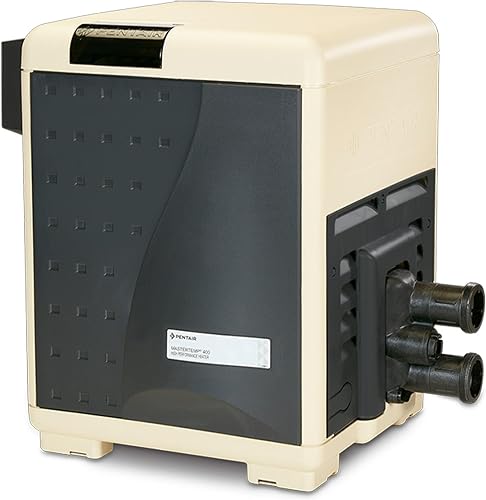
1. MasterTemp 400 Pool Heater
Best for: Large residential pools needing rapid and efficient natural gas heating.
This unit uses natural gas to provide high-performance heating for both pools and spas. It features premix combustion technology designed for fast warm-ups and includes a rust-proof exterior to handle the elements.
The controls are rotatable and intuitive, making it simple to adjust the settings to your liking. It’s certified for both indoor and outdoor installation, though it requires a natural gas connection which may limit where you can place it.
Pros
- Fast heating with premix technology
- Durable, rust-proof exterior finish
- Simple, intuitive rotatable control panel
- Suitable for indoor or outdoor setup
- Built-in safety protection features
Cons
- Requires professional natural gas installation
- Doesn’t include venting or gas lines
Why this one: This is the choice for users who prioritize speed and have access to a natural gas line. If you need to heat a large volume of water quickly, the performance here is hard to beat. Those without existing gas infrastructure should look at an electric heat pump instead.
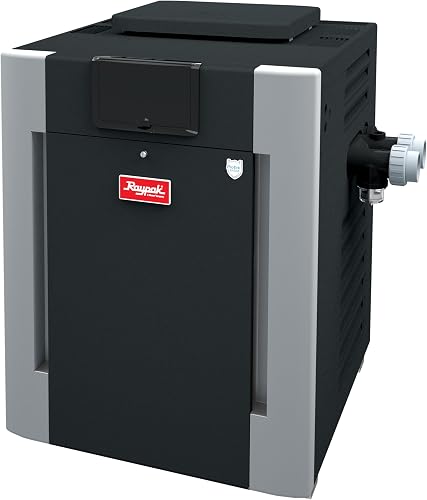
2. Raypak 009218 PR336AENC49 336000 BTU Natural Gas Pool Heater
Best for: Owners of large pools looking for high-capacity heating performance.
This heater features an integral fin copper exchanger tube for efficient heat transfer and corrosion-free polymer headers. It relies on a self-diagnostic microprocessor to manage the ignition process, providing a steady and reliable heat source for your pool.
The backlit LCD screen makes it easy to read your settings even in low light. It’s built to handle high-capacity demands, but it’s a heavy-duty piece of equipment that requires careful placement and professional setup.
Pros
- High 336,000 BTU heating capacity
- Corrosion-free polymer header construction
- Easy-to-read backlit LCD controls
- Self-diagnostic ignition system
- Efficient copper exchanger tubing
Cons
- Very heavy and large footprint
- Professional installation required for gas
Why this one: If you have a large pool and want a proven, high-capacity gas heater, this is a strong candidate. It’s designed for durability and ease of diagnostics. If you have a small above-ground pool, this model is likely overkill for your needs.
3. Raypak Heat Pump 8450 Model with Titanium Heat Exchanger

Best for: Homeowners wanting a durable, quiet, and efficient electric heat pump.
This heat pump utilizes a scroll compressor and a titanium heat exchanger to provide efficient, quiet operation. The cabinet is made from powder-coated steel, and the base is a composite material designed to dampen sound and resist rust.
The plumbing connections are offset, which can simplify the installation process. Because it uses a titanium tube, it’s built to resist corrosion from harsh pool chemicals, though it requires an electrical connection that must be handled by a professional.
Pros
- Quiet scroll compressor technology
- Corrosion-resistant titanium heat exchanger
- Rugged powder-coated steel cabinet
- Sound-dampening composite base
- Offset plumbing for easier connection
Cons
- Requires dedicated electrical circuit
- Not suitable for very tight spaces
Why this one: This is an excellent choice for those who value quiet operation and long-term durability. The titanium construction is a major plus for longevity. If you need something that plugs into a standard outlet, this isn’t the right model for you.
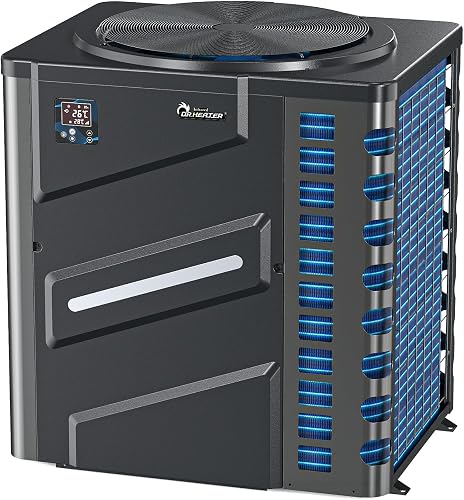
4. DR. Infrared Heater DR-1400HP Full DC Inverter 140
Best for: Users seeking smart control and high energy efficiency.
This 140,000 BTU inverter heat pump is designed for pools up to 42,000 gallons. It uses a full DC inverter fan motor and a twin rotary compressor to adjust heating capacity between 20% and 100%, which helps manage energy use based on your actual needs.
The unit includes WiFi connectivity for app-based control and scheduling from anywhere. It also features a “soft-start” function to reduce strain on your electrical system during startup, though it does require a high-voltage connection.
Pros
- Smart WiFi control and scheduling
- Full DC inverter for efficiency
- Soft-start function for longevity
- Twin rotary compressor for quietness
- Suitable for large pool volumes
Cons
- Requires 208-230V electrical setup
- Large size needs dedicated space
Why this one: This is perfect for the tech-savvy pool owner who wants remote monitoring and high efficiency. Its ability to scale power usage makes it very versatile. Those who want a simple “plug-and-play” device should look at smaller models.
5. 80,000 BTU Pool Heat Pump for In-Ground Pool, 208–240V Inverter

Best for: Large inground pools up to 22,000 gallons.
This inverter heat pump provides up to 80,000 BTU and features an adaptive performance system that handles heating, cooling, and defrosting automatically. It’s designed for energy efficiency, with a high COP rating that helps reduce electricity consumption.
It includes WiFi control and a water pump sync feature to automate your entire heating cycle. The cabinet is made of rust-proof ABS, and it operates at a very low noise level, making it a good choice for backyards where quiet is important.
Pros
- Very quiet operation at 28 dB
- Energy-efficient inverter technology
- Integrated app and WiFi control
- Automatic water pump synchronization
- Corrosion-resistant ABS cabinet
Cons
- Professional electrician required for installation
- Limited to 22,000-gallon capacity
Why this one: This model is ideal for those who want a “set it and forget it” system that manages everything automatically. It’s very quiet and energy-efficient. If your pool is significantly larger than 22,000 gallons, you’ll need to consider a higher-capacity unit.
6. TURBRO 33000 BTU Pump

Best for: Compact pools needing a space-saving, efficient heating option.
The Beluga series is a compact inverter heat pump that works for pools up to 10,000 gallons. It uses ambient heat to warm your water and can also switch to cooling mode, making it a year-round solution for smaller setups.
It features WiFi control and is built with a titanium heat exchanger to resist corrosion. It’s much smaller than full-sized heat pumps, which makes it easier to fit into small yards or tight equipment pads.
Pros
- Compact size for smaller pools
- Energy-efficient inverter compressor
- Heating and cooling capabilities
- Corrosion-resistant titanium exchanger
- WiFi control and timer functions
Cons
- Not for pools over 10,000 gallons
- Not suitable for inflatable pools
Why this one: This is the best pick for owners of smaller or medium-sized pools who want the benefits of inverter technology without the footprint of a massive unit. If you have a large inground pool, this won’t have enough power to keep up.
7. 21000 Gallon Heat Pump

Best for: Mid-sized pools needing an efficient, versatile heat pump.
This heat pump offers up to 75,000 BTU and is designed for pools up to 21,000 gallons. It uses intelligent inverter technology to adjust its power output, which helps maintain a steady temperature while optimizing energy consumption.
It’s very quiet and comes with three different adapter options to fit most common pool plumbing. While it’s efficient, it still requires a proper electrical setup and works best when paired with a pool cover to keep the heat in.
Pros
- Versatile installation with multiple adapters
- Quiet 36dB operation
- Energy-saving inverter technology
- App-based remote control
- Suitable for mid-sized pools
Cons
- Requires professional electrical installation
- Performance depends on pool cover use
Why this one: This is a great middle-ground option for those with a standard-sized backyard pool. It strikes a good balance between power and quiet operation. If you have a very small, portable pool, this is likely more than you need.
8. Swimming Pool Heater for Above Ground Pool 18450BTU

Best for: Above-ground pools up to 6,000 gallons.
This heater is designed specifically for small above-ground pools and operates on a standard 110V household outlet. It’s a true “plug-and-play” unit that you can install with simple hose connections, requiring no special wiring or electricians.
It includes a titanium heat exchanger for durability and WiFi control for remote monitoring. It’s a compact and convenient solution for small backyard pools that need a little extra warmth to extend the season.
Pros
- Plugs into standard 110V outlet
- No professional installation required
- Compact and space-efficient design
- WiFi control and scheduling
- Titanium heat exchanger for durability
Cons
- Only for pools up to 6,000 gallons
- Slower heating than larger models
Why this one: This is the best choice for the DIY user with a small above-ground pool who wants an easy setup. It avoids the need for professional electrical work. If you have a large inground pool, this unit won’t provide sufficient heating.
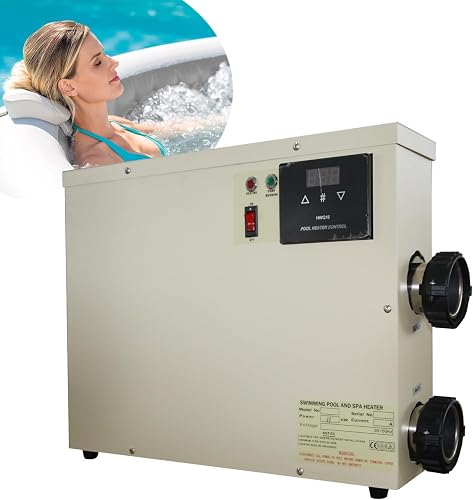
9. Pool Heater 11KW 220V Upgrade
Best for: Small spas or tiny pools needing quick, digital control.
With an 11KW capacity, this electric heater is built for pools up to 1,000 gallons. It features a digital touch display for easy temperature management and uses a stainless steel heating tube for durability.
It isn’t a plug-and-play device and requires a hardwired electrical connection. It’s built to cycle on and off automatically based on your preset temperature, making it a reliable option for small water volumes.
Pros
- Clear digital touch display
- Automatic temperature cycling
- Durable stainless steel heating tube
- Compact footprint for small spaces
- Simple, effective heating for small volumes
Cons
- Not plug-and-play; requires electrician
- Only for very small pools
Why this one: This heater is perfect for hot tubs or small plunge pools. It’s simple, effective, and takes up very little room. If you’re looking to heat a full-sized swimming pool, this unit is far too small.
10. Bestway – Solar-Powered Pool Heating Pad

Best for: Owners seeking a simple, eco-friendly heating boost.
This solar heating pad uses the sun’s energy to warm your pool water as it circulates through your filter system. It’s a simple, non-electric solution that’s easy to install using standard pool hoses.
It’s compatible with most cartridge and sand filter pumps. While it only raises the temperature by a few degrees depending on the weather, it’s a very low-maintenance way to get a little more warmth without using electricity or gas.
Pros
- No electricity or gas required
- Eco-friendly solar operation
- Easy installation with standard hoses
- Low-maintenance design
- Compatible with most filter pumps
Cons
- Provides only a modest temperature increase
- Dependent on weather conditions
Why this one: This is the best pick for users who want a small boost in water temperature without using electricity or gas. It isn’t for someone who needs to heat their pool to a specific temperature regardless of the weather.
How to Choose Yours
Choosing the right heater should be based on your specific pool size and your local climate. Think about how often you plan to swim and whether you need to heat the water quickly or just maintain a steady temperature.
- What is the total volume of your pool in gallons?
- Do you have access to a natural gas line nearby?
- Is your pool above-ground or built into the ground?
- Are you comfortable hiring an electrician for the setup?
- Do you need to control the temperature from your phone?
- What is the average ambient temperature in your area?
The Verdict for Most People
For most pool owners, the Raypak 8450 Heat Pump is the most reliable choice. It offers the best balance of quiet performance, energy efficiency, and long-term durability thanks to its titanium exchanger.
If you have a very small above-ground pool and want to avoid professional installation, the 18450 BTU Pool Heater is the better option. It provides easy, plug-and-play heating that works perfectly for smaller water volumes without complex wiring. Always check your local electrical codes National Electrical Code before finalizing your installation.
Related guides
Frequently Asked Questions
Will I need a professional to install my pool heater?
Most high-capacity pool heaters, especially gas and large electric heat pumps, require professional installation. Gas units need a gas line and proper venting, while electric heat pumps usually require a dedicated, high-voltage circuit. Small, plug-and-play units for above-ground pools are the only ones designed for DIY setup.
How do I keep my pool heater working for years?
Regular maintenance is key to long-term performance. Keep the area around the unit clear of debris, check your pool water chemistry regularly to prevent corrosion, and use a pool cover to retain heat. If your unit is a heat pump, ensure the coils remain clean and free of blockage for maximum efficiency.
Are heat pumps better than gas heaters?
Heat pumps are generally more energy-efficient and quieter. Gas heaters are superior for rapid, “on-demand” heating, which is helpful if you only use your pool occasionally or need to warm it up very quickly for a weekend party.
What is included in the box with these heaters?
The contents vary significantly by model. Most larger units include the heater itself and basic manuals, but you’ll often need to buy your own plumbing adapters, electrical breakers, or gas connectors. Always check the specific listing to see what is provided and what you might need to purchase separately.
Final Thoughts
Investing in a reliable solar system brings long-term value to your backyard oasis. Once you’ve gathered your quotes, reach out to a certified installer to discuss your roof’s specific layout. You’ll be glad you did when you’re enjoying a warm, refreshing dip while everyone else is still waiting for summer.