
Replacing a traditional tank water heater with a tankless system is a question many homeowners ask as energy costs rise and technology improves. If you’re considering this change, it’s important to understand not just the benefits, but also the challenges, costs, and practical steps involved.
Tankless water heaters offer several advantages, but switching from a tank system is not always simple. There are important details that can affect your decision, from installation requirements to long-term savings.
This guide explores everything you need to know about replacing a tank water heater with a tankless model. You’ll learn the basics, compare the two systems, understand the installation process, and discover what surprises many first-time buyers. By the end, you’ll be ready to decide if making the switch is right for your home and lifestyle.
Understanding Tank And Tankless Water Heaters
Before changing your water heater, it helps to know how each system works and what makes them different.
How Tank Water Heaters Work
A tank water heater stores hot water in a large insulated tank, usually between 30 and 80 gallons. The heater keeps this water hot all day, ready for use. When you open a tap, hot water leaves the tank and is replaced by cold water, which the heater then warms up. If the tank runs out of hot water, you have to wait for it to reheat.
Tank heaters are common in older homes and are simple to operate. They use electricity, natural gas, or sometimes propane.
How Tankless Water Heaters Work
Tankless water heaters, often called on-demand heaters, heat water only when you need it. When you turn on a hot water tap, cold water flows through a heat exchanger, which quickly heats it using gas or electricity. There’s no storage tank, so you never “run out” of hot water, but the flow is limited by the unit’s size.
Tankless units are smaller, can be mounted on a wall, and claim higher energy efficiency because they don’t keep water hot all the time.
Key Differences At A Glance
Let’s see how both systems compare in simple terms:
| Feature | Tank Water Heater | Tankless Water Heater |
|---|---|---|
| Hot Water Supply | Limited by tank size | Endless (within flow rate) |
| Size | Large, takes floor space | Compact, wall-mounted |
| Energy Use | Heats 24/7 | Heats only when needed |
| Lifespan | 8-12 years | 15-20 years |
| Upfront Cost | Lower | Higher |
Why Consider Replacing A Tank Water Heater With Tankless?
Many people think about switching for three main reasons: energy savings, space, and endless hot water. But there are more details to consider.
Energy Efficiency
Tankless heaters use 24%–34% less energy for homes that use less than 41 gallons of hot water a day, according to the U. S. Department of Energy. For higher usage (over 86 gallons/day), savings are smaller (8%–14%). This is because tank heaters keep water hot all day, even when you’re not using it—a problem called “standby heat loss.
”
Space And Design
A tankless heater is much smaller. If your home has little storage or you want a cleaner look, tankless units free up floor space. They can be installed in closets or even outside (in mild climates).
Longer Lifespan
A well-maintained tankless heater can last up to 20 years or more, while tank units usually last 8–12 years. This means fewer replacements over your lifetime in the home.
Endless Hot Water
With a tankless system, you won’t run out of hot water during long showers or when running multiple appliances—if the unit is sized correctly. This is especially helpful for larger families.
Reduced Risk Of Leaks
Traditional tanks can develop leaks as they age, sometimes causing water damage. Tankless models don’t store water, so this risk is much lower.
Non-obvious insight: While many expect instant hot water, tankless systems may take just as long as tank systems to deliver hot water to distant taps because of pipe length. This surprises many first-time owners.
Can You Replace A Tank Water Heater With A Tankless Model?
The short answer is yes—you can replace a tank heater with a tankless one. But the process can be simple or complex depending on your current setup, home age, and the type of tankless heater (gas or electric) you choose.
Basic Steps In The Replacement Process
- Remove the Old Tank Water Heater: This involves draining, disconnecting, and removing the heavy tank.
- Check Gas or Electrical Supply: Tankless heaters often need more gas flow or higher electrical capacity than tank models.
- Upgrade Venting (for Gas Units): Gas tankless heaters need special venting for safety.
- Install Water and Gas/Electric Connections: Connections may need to be moved or upgraded.
- Mount and Set Up the Tankless Heater: The new unit is installed, tested, and set for your home’s needs.
Professional Vs. Diy Installation
Switching to tankless is rarely a DIY project unless you have plumbing and electrical experience. Mistakes can be dangerous or costly. A licensed plumber or HVAC technician will handle gas lines, venting, and electrical upgrades safely.
Non-obvious insight: In many cities, a permit and inspection are required to install or switch water heaters. Not getting one can cause problems with insurance or home sales.
Choosing The Right Tankless Water Heater
Not all tankless heaters are the same. Picking the wrong size or type is a common mistake. Here’s what matters:
Sizing Your Tankless Heater
The most important factor is flow rate (measured in gallons per minute, GPM) and temperature rise (how much the water must be heated). If the unit is too small, you won’t have enough hot water when many taps are used.
Example Sizing Calculation
Suppose your home needs to run:
- 1 shower (2.5 GPM)
- 1 dishwasher (1.5 GPM)
- 1 bathroom sink (1.0 GPM)
at the same time. Add these up: 2.5 + 1.5 + 1.0 = 5.0 GPM. If your incoming water is 50°F and you want 120°F, you need a unit that can raise the temperature by 70°F at 5.0 GPM.
Gas Vs. Electric Tankless Heaters
- Gas tankless heaters can provide higher flow rates and work well for whole-house use.
- Electric tankless heaters are smaller and may be fine for small homes or point-of-use (like one bathroom).
Important: Most homes need to upgrade electrical panels to handle electric tankless units, which can add cost.
Indoor Vs. Outdoor Units
Some tankless heaters are made for indoor use, others for outdoor use (where winters are mild). Outdoor units free up indoor space but need freeze protection.
Energy Factor (ef)
This rating shows how efficient the heater is. Higher EF means more efficient. Look for models with an EF of 0. 82 or higher.
Brand And Warranty
Choose a trusted brand with a good warranty (at least 10 years on the heat exchanger). Repairs can be expensive.
Cost Comparison
Upfront costs are higher for tankless systems, but they can save money over time.
| Type | Upfront Cost (Install + Unit) | Annual Operating Cost | Lifespan |
|---|---|---|---|
| Tank | $800–$2,000 | $250–$600 | 8–12 years |
| Tankless | $2,500–$4,500 | $180–$400 | 15–20 years |
The Installation Process: What To Expect
Switching to a tankless system is more complex than a “swap. ” Here’s a closer look at what’s involved.
1. Assessing Your Home’s Readiness
A professional will check:
- Gas line size: Most tankless gas units need a larger gas pipe (3/4-inch vs. 1/2-inch for tanks).
- Venting: New venting is usually required, especially if your old heater vented into a chimney.
- Electrical capacity: For electric units, your panel must supply enough amps (often 120–200A total).
- Water lines: Connections may need to be moved to fit the new unit’s position.
2. Upgrading As Needed
Upgrades add cost and time. For example, running a new gas line can cost $300–$1,000. Electrical upgrades for electric units can cost $500–$2,000 or more.
3. Removing The Old Heater
The old tank must be drained (can take 30–60 minutes), disconnected, and carried out. Old tanks are heavy and may require two people.
4. Installing The New Tankless Unit
The new unit is mounted on the wall, often near where the old tank was. Plumbers connect water, gas/electric, and venting. The unit is flushed and tested.
5. Permits And Inspections
Most cities require a permit and inspection for water heater changes. This ensures safe operation and code compliance.
6. Final Testing
Installers will test for leaks, check water temperature at taps, and show you how to use the new controls.
Pro tip: Ask the installer to set the temperature to 120°F—hot enough for showers, but safer for children and saves energy.
Common Mistakes When Switching To Tankless
Many people make the same errors when replacing a tank water heater. Here’s how to avoid them:
- Choosing the wrong size: A small unit won’t keep up with your household’s needs.
- Ignoring installation costs: Upgrades for gas, electric, or venting add to the price.
- Expecting instant hot water: Tankless heaters don’t make hot water appear instantly at the tap; they just never run out.
- DIY installation: Mistakes in gas, venting, or electricity can be dangerous and void warranties.
- Skipping annual maintenance: Tankless units need yearly descaling in hard water areas.
- Not checking local codes: Unpermitted installations can cause problems with insurance or selling the home.
- Forgetting cold weather issues: Outdoor units need freeze protection or may not be suitable in very cold climates.

Credit: www.nilds.gov.ng
Real-world Example: Cost And Energy Savings
Let’s look at a typical home using 60 gallons of hot water per day.
- Old tank heater used 4800 kWh/year ($624 at $0.13/kWh).
- New tankless heater uses 3500 kWh/year ($455 at same rate).
- Savings: $169/year.
Over a 15-year lifespan, the tankless system saves $2,535. Subtracting the higher upfront cost ($2,500 more), the owner still comes out ahead—and replaces the system less often.
Note: Actual savings depend on water usage, local energy costs, and efficiency of the chosen unit.
Maintenance: What’s Different With Tankless?
Tankless heaters need less space, but they do require regular maintenance to stay efficient.
Yearly Descaling
Hard water causes mineral buildup inside the heat exchanger, reducing efficiency. Most tankless manufacturers recommend annual descaling, which can be done by a plumber or as a DIY task with a pump and vinegar.
Cleaning The Inlet Filter
Tankless units have a filter that catches debris from water pipes. This should be checked and cleaned every 6–12 months.
Professional Inspection
A yearly check by a plumber ensures safety, proper venting, and top performance.
Non-obvious insight: Skipping maintenance may void the warranty and can cause expensive repairs after only a few years.
Credit: www.onehourheatandair.com
Environmental Impact
Switching to a tankless heater is not just about comfort and cost. There are environmental benefits too.
- Lower energy use means less carbon footprint, especially if using renewable electricity or efficient gas.
- Longer lifespan means fewer units in the landfill.
- No tank leaks reduce the risk of water damage and mold.
Is Tankless Always The Best Choice?
While tankless heaters work well for many homes, they are not always the best fit.
When Tankless Makes Sense
- Smaller homes with limited space
- Families who use hot water throughout the day
- Homes with high energy costs (greater savings potential)
- People planning to stay in their home long-term
When A Tank May Still Be Better
- Homes with low water use (savings are smaller)
- Areas with hard water (needs more maintenance)
- Homes with old or small gas/electric systems (upgrade costs may be high)
- Short-term ownership (takes years to “pay off” the higher cost)
Alternatives: Hybrid Heat Pump Water Heaters
Another option is a hybrid heat pump water heater. These use electricity very efficiently and are becoming popular in some regions. They work best in warm spaces (like basements or garages).
Step-by-step Guide: How To Switch From Tank To Tankless
If you decide to replace your tank water heater with a tankless unit, here is a clear overview of the process:
1. Plan Your Needs
- List all hot water devices you use at once.
- Estimate the total GPM needed.
2. Choose A Qualified Contractor
- Get bids from licensed, experienced installers.
- Check reviews and ask about experience with tankless systems.
3. Select The Right Unit
- Decide on gas or electric, indoor or outdoor.
- Pick a trusted brand with good support.
4. Prepare For Upgrades
- Be ready for extra costs if gas, venting, or electrical upgrades are needed.
5. Schedule Installation
- The process usually takes 4–8 hours, but extra work can add time.
- Plan for a day without hot water.
6. Learn Basic Operation
- Know how to adjust temperature and reset the unit.
- Ask about maintenance tasks and warranty coverage.
7. Register The Warranty
- Most manufacturers require online registration for warranty activation.
Tankless Water Heater Brands And Reliability
Some of the most trusted brands in the US are:
- Rinnai
- Navien
- Rheem
- Noritz
- Bosch
- Stiebel Eltron
Look for units with good support in your area. Some brands have more service techs and easier-to-find parts.
Comparing Tank Vs. Tankless: Key Factors
Here is a quick summary of the biggest differences:
| Factor | Tank Water Heater | Tankless Water Heater |
|---|---|---|
| Hot water supply | Runs out after tank is empty | Endless (if sized right) |
| Space needed | Large, floor space | Small, wall-mounted |
| Energy waste | High (standby losses) | Low |
| Install cost | Lower | Higher (especially for upgrades) |
| Maintenance | Flushing every few years | Descale yearly |
| Lifespan | 8–12 years | 15–20 years |
Who Should Not Switch To Tankless?
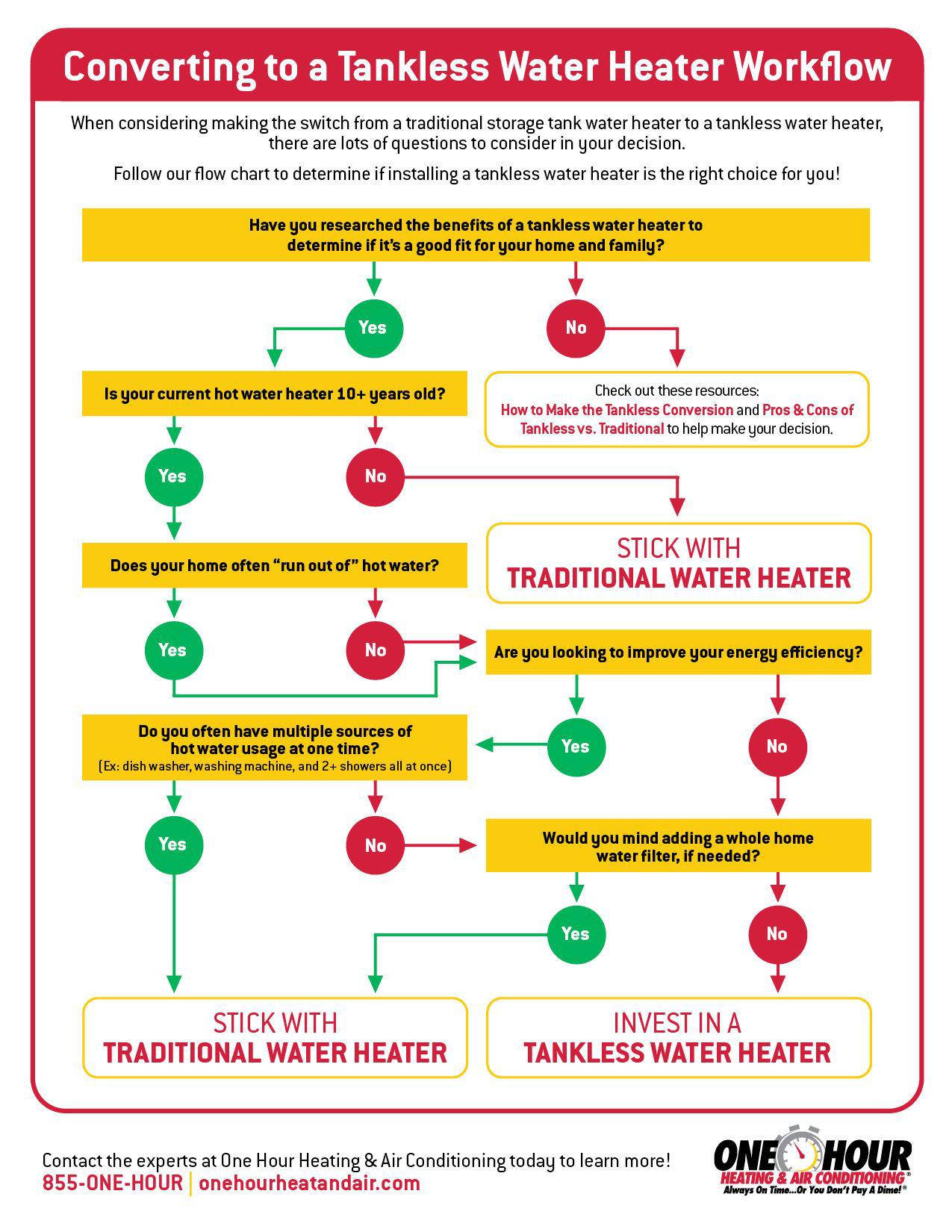
While tankless heaters suit many, they’re not for everyone. You may want to stick with a tank heater if:
- You have a very old home with small gas pipes or limited electrical service.
- You rarely use more than 20–30 gallons of hot water per day.
- Your budget is tight and you need a lower upfront cost.
- You plan to move soon (may not recover the cost).
- Your area has very hard water and you cannot do regular maintenance.
Tips For A Smooth Transition
Making the switch is easier with a few simple tips:
- Get multiple quotes from licensed professionals.
- Ask about all upgrade costs up front (gas, venting, electric).
- Check for local rebates or incentives—some states or utilities offer money back for high-efficiency upgrades.
- Consider a recirculation pump if you want faster hot water at distant taps.
- Read the manual and set reminders for yearly maintenance.
The Bottom Line
Replacing a tank water heater with a tankless model is possible and, for many, a smart upgrade. The main benefits are energy savings, endless hot water, and more space. However, the process is not always simple. Installation often needs gas or electric upgrades, new venting, and careful sizing.
Mistakes in sizing or installation can lead to disappointment.
Tankless systems are an investment that pays off over time, especially for families or homes with high hot water use. Regular maintenance is key to long life and top performance. If you plan to stay in your home for many years, the savings and comfort can be well worth the higher upfront cost.
For more technical details, the U.S. Department of Energy offers a helpful guide: U.S. Department of Energy.
Credit: www.reddit.com
Frequently Asked Questions
How Long Does It Take To Replace A Tank Water Heater With A Tankless Unit?
Most professional installers can complete the switch in 4–8 hours. If upgrades are needed (gas line, venting, or electric), it may take a full day or be split over two days.
Will I Get Instant Hot Water With A Tankless Heater?
No, tankless heaters do not provide instant hot water at the tap. The water still travels through pipes, so there can be a delay—especially if the tap is far from the heater. You can add a recirculation pump for faster delivery.
Is A Tankless Water Heater More Expensive To Maintain?
Yearly maintenance is needed (descaling and filter cleaning), but costs are similar to or less than tank heaters over time. Skipping maintenance can lead to expensive repairs.
Can I Install A Tankless Water Heater Myself?
It’s not recommended unless you have plumbing, gas, and electrical experience. Most cities require a licensed contractor and a permit for safety and insurance reasons.
Are There Rebates For Switching To A Tankless Water Heater?
Many states and local utilities offer rebates for high-efficiency water heaters. Check with your energy provider or state energy office for current programs.
Switching from a tank to a tankless water heater is a big decision. With the right information and planning, you can enjoy efficient, endless hot water for years to come.