
A water heater is one of the most important appliances in any home, but many people overlook one small part: the expansion tank. If you’ve been told you need one, you might wonder about the true cost of installing a water heater expansion tank. Is it a major expense? What exactly does it cover? Can you do it yourself, or is it better to hire a pro? Understanding these answers can help you avoid surprise costs and protect your home’s plumbing.
Adding an expansion tank is not just about following code or a plumber’s advice. It’s about safety, preventing leaks, and increasing the life of your water heater. This guide will break down everything you need to know about water heater expansion tank installation cost—from what factors affect the price, to labor rates, materials, and common mistakes that can lead to extra spending. By the end, you’ll know exactly what to expect and how to make the smartest choice for your home and budget.
What Is A Water Heater Expansion Tank?
Many people are not familiar with expansion tanks until they need one. A water heater expansion tank is a small tank, usually installed above or near your main water heater. Its job is to handle the extra water volume (and pressure) that happens when water heats up and expands. Without it, this extra pressure can cause your pipes to leak, valves to fail, or even your water heater to burst.
Expansion tanks have a flexible bladder inside. As heated water expands, the tank absorbs the extra volume, keeping pressure in your system safe and steady. In homes with closed plumbing systems (where water can’t flow back into the city line), expansion tanks are often required by code.
Not having an expansion tank when you need one can lead to costly plumbing repairs. In some cases, your water heater warranty might not cover damage from excessive pressure if you didn’t install one. This makes understanding the cost of installation even more important.
Why Do You Need An Expansion Tank?
If your home’s plumbing is an open system (older homes often are), expanding water can flow back to the city supply. But many modern homes have a check valve or pressure-regulating valve at the water meter, creating a closed system. In this case, as water heats and expands, pressure rises inside your pipes because it has nowhere to go.
Here’s why an expansion tank is so important:
- Protects plumbing and appliances: High pressure wears out pipes, valves, water heaters, and other connected appliances.
- Prevents leaks and bursts: Expansion tanks prevent small leaks or even dangerous bursts.
- May be required by code: Many cities and states require them for closed systems.
- Improves water heater lifespan: Reduces stress on the tank and internal parts.
- Prevents warranty issues: Some water heater warranties are voided if you skip this step.
If you notice your water heater’s pressure relief valve dripping or your faucets spitting, you may already have a pressure problem.
Factors Affecting Water Heater Expansion Tank Installation Cost
The total price for installing an expansion tank can vary a lot. Here are the main things that affect cost:
1. Expansion Tank Size And Type
Expansion tanks come in several sizes, usually between 2 and 5 gallons for most homes. The right size depends on your water heater capacity (in gallons) and home water pressure. Larger tanks cost more, but buying one too small can lead to failure.
There are also standard and specialty tanks:
- Standard tanks: For most residential water heaters.
- High-pressure tanks: For homes with higher water pressure or commercial settings.
2. Water Heater Type
Electric and gas water heaters use similar expansion tanks, but installation can be more complex with certain models, especially if space is tight or your current setup is unusual.
3. Labor And Installation Complexity
Labor is often the biggest part of the total cost. Factors that make installation harder (and more expensive):
- Hard-to-reach water heater (like in crawlspaces or tight closets)
- Upgrading old plumbing to fit the expansion tank
- Needing extra valves or fittings
- Local code requirements for placement
4. Location And Local Regulations
Costs vary by region. Plumbers in large cities may charge more for labor. Some areas also have stricter building codes, which can require extra parts or permits.
5. Additional Materials
Besides the tank itself, you may need:
- Mounting brackets
- Flex connections
- Shut-off valves
- Pressure gauges
These add to the total price, especially if your system needs upgrades.
6. Diy Vs. Professional Installation
Doing it yourself can save money, but mistakes are common and can end up costing more—especially if leaks or code violations result. Some areas require a licensed plumber for this kind of work.
7. Permit Fees
Some cities require a permit for expansion tank installation, usually costing $25–$100.
Non-obvious insight: Homeowners often overlook the cost of system draining and refilling. Some plumbers charge extra to drain the system safely, especially if there is sediment or rust.
Typical Cost Range For Expansion Tank Installation
So what should you expect to pay? The total cost can range widely, but most homeowners in the US pay between $150 and $600 for a professional installation.
Here’s a closer look:
| Expense | Low End | Average | High End |
|---|---|---|---|
| Expansion Tank (2–5 gal) | $30 | $55 | $120 |
| Plumber Labor | $80 | $200 | $400 |
| Extra Materials | $10 | $40 | $80 |
| Permit (if needed) | $0 | $60 | $100 |
| Total | $120 | $355 | $700 |
The average homeowner pays about $300–$400 for a standard installation, including parts and labor.
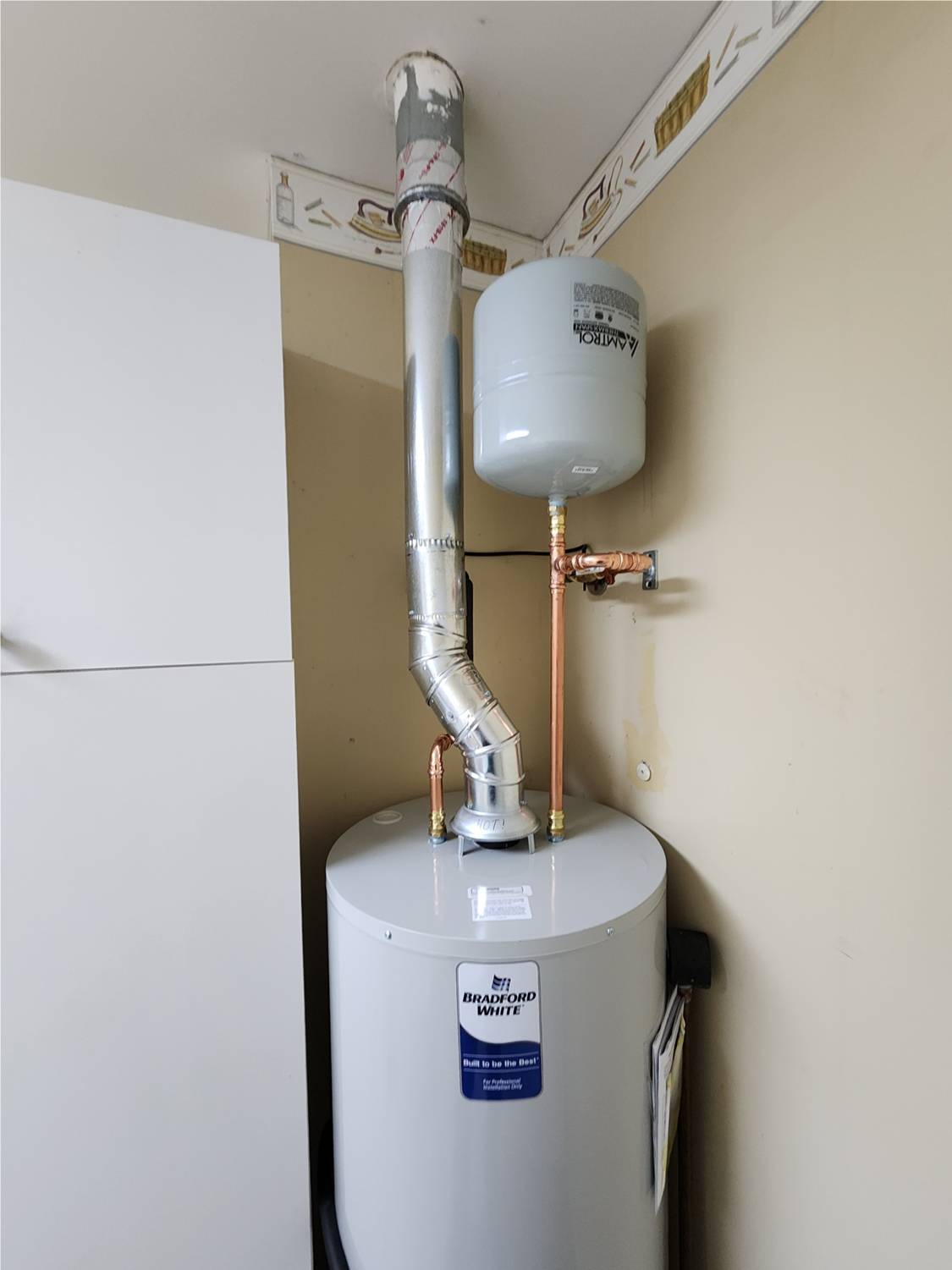
Credit: www.nilds.gov.ng
Expansion Tank Prices By Size
Choosing the right size is key. Most homes with standard 40- to 50-gallon water heaters use a 2-gallon expansion tank. Larger homes or high-pressure systems need bigger tanks.
| Tank Size | Water Heater Capacity Supported | Typical Price |
|---|---|---|
| 2 gallons | Up to 50 gallons | $30–$60 |
| 4.5 gallons | 50–80 gallons | $50–$90 |
| 5 gallons+ | 80+ gallons or high pressure | $90–$150 |
Tip: Always match the tank size to both your water heater and your household water pressure. Oversized tanks cost more but offer little extra benefit; undersized tanks can fail quickly.
Labor Costs: What’s Involved?
Most plumbers charge a flat rate for this job, but some bill by the hour. Nationally, plumber rates range from $75 to $150 per hour. A straightforward installation usually takes about 1–2 hours.
Labor includes:
- Shutting off water and draining the system as needed
- Choosing a proper location for the tank
- Cutting and attaching new fittings or connections
- Mounting and securing the expansion tank
- Refilling and testing for leaks
If your system has old pipes, unusual layouts, or other issues, labor can take longer. Always ask for an itemized quote.
Diy Vs. Professional Installation
You might wonder if you can install an expansion tank yourself to save money. If you’re handy with plumbing and have the right tools, it’s possible. Here’s a breakdown of what to expect.
Diy Costs
- Expansion tank: $30–$90
- Fittings, valves, Teflon tape: $10–$40
- Tools (if you don’t already own them): Pipe wrench, pipe cutter, adjustable wrench
Potential DIY savings: $150–$400 compared to hiring a pro.
Pros And Cons
Pros:
- Lower cost
- Immediate installation if you have the parts
Cons:
- Risk of leaks or water damage if installed incorrectly
- No professional warranty on the work
- May not pass inspection (if local codes require a pro)
- Can void water heater warranty if not installed per manufacturer instructions
Non-obvious insight: Some water heater manufacturers require a licensed plumber’s receipt for warranty claims. DIY work may not be covered.
Step-by-step: How Is An Expansion Tank Installed?
Knowing the steps can help you decide if you want to DIY or understand what your plumber is doing.
- Turn off power and water: Shut off the water heater and main supply.
- Drain some water: Drain a small amount to reduce system pressure.
- Choose the location: Most tanks mount above the cold water inlet to the heater.
- Install fittings: Attach a T-fitting and any needed adapters.
- Mount the tank: Use brackets if needed. Some tanks hang from the pipe, but wall mounting is safer for large tanks.
- Connect the tank: Use Teflon tape for leak-free joints. Tighten carefully.
- Refill and test: Turn water back on, restore power, and check for leaks.

Credit: nilds.gov.ng
Common Mistakes That Raise Costs
Many homeowners and even inexperienced plumbers make errors that add to the total cost:
- Wrong tank size: Too small, and the tank fails early; too large is wasted money.
- Improper mounting: A heavy tank not secured can strain pipes and cause leaks.
- Wrong pressure setting: Expansion tanks must be pressurized to match your home’s water pressure (usually 50–60 psi).
- Skipping the permit: May lead to fines or problems when selling your home.
- Ignoring water quality: Hard water can quickly damage expansion tanks. Consider a water softener if you have mineral-heavy water.
One smart tip: Always ask your plumber to check the air pressure in the tank before installation. It should match your home’s water pressure, which can be checked with a simple gauge.
How To Choose The Right Expansion Tank
Not all tanks are the same. Here’s what to look for:
- Correct size: Match your water heater and household pressure.
- Quality materials: Look for tanks with a butyl rubber bladder and corrosion-resistant steel shell.
- Good warranty: Many tanks come with 5-year warranties—avoid anything less.
- Brand reputation: Stick to well-known brands for reliability.
If your home has very high water pressure, look for tanks rated for higher psi.
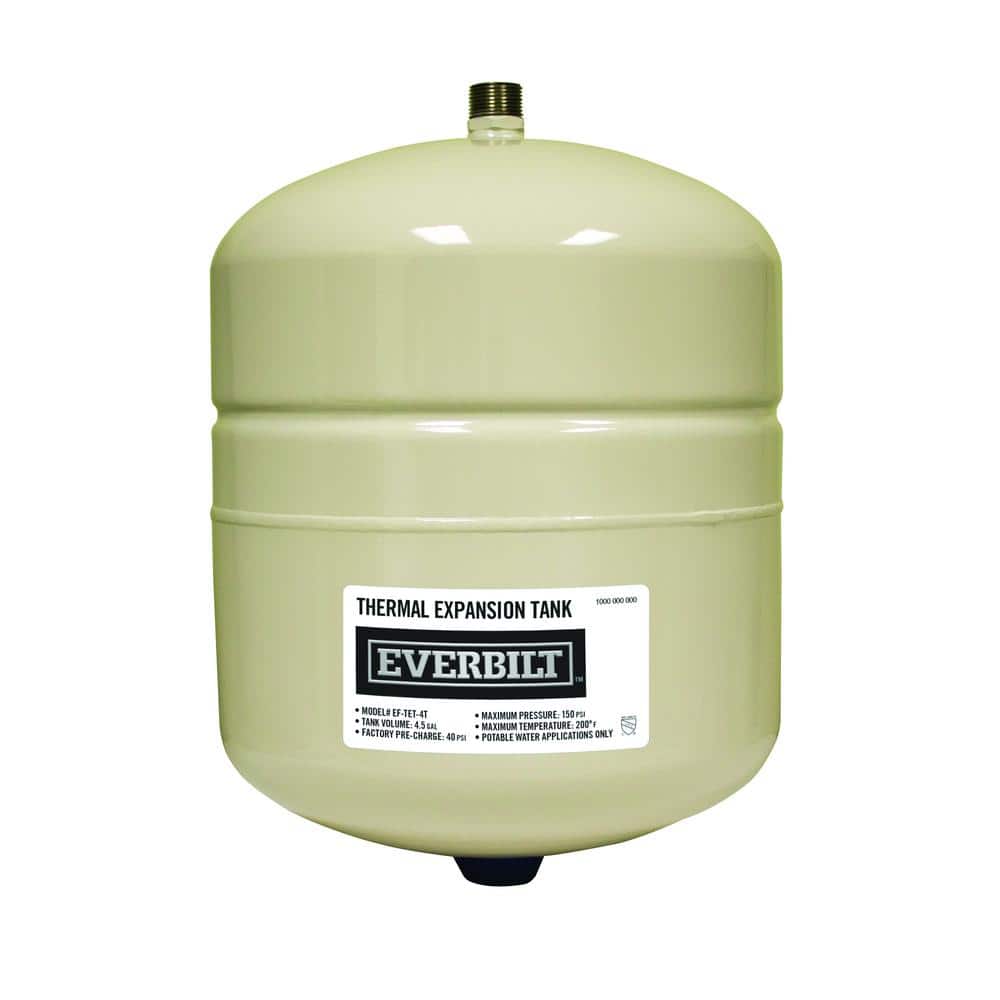
Credit: www.homedepot.com
Signs You Need A New Expansion Tank
Expansion tanks don’t last forever. Here are signs you need a new one or an upgrade:
- Water dripping from the pressure relief valve on your heater
- Sudden drops in water pressure
- Tank is waterlogged or “sloshes” when tapped (should sound hollow)
- Visible rust or leaks around the tank
Most tanks last 5–10 years. If yours is older, include replacement in your cost planning.
Real-world Examples: Cost Scenarios
To show how costs can change, here are three real-life examples:
Example 1: Small Home, Standard Tank
A homeowner with a 40-gallon electric water heater, easy access, and no extra fittings needed. Plumber charges $200 for parts and labor. No permit required.
Total cost: $200
Example 2: Older Home, Complicated Plumbing
An 80-gallon heater in a basement closet, old copper pipes, permit required. Needs a 5-gallon tank, new shut-off valve, and mounting bracket. Plumber charges $350 for labor, $120 for materials, $60 permit.
Total cost: $530
Example 3: Diy Installation
A handy homeowner buys a 2-gallon tank and fittings for $55. Already owns tools. Installs in one hour.
Total cost: $55 (but no labor warranty)
Comparing Expansion Tank Brands
There are many brands, but a few stand out for quality and price. Here’s a quick look:
| Brand | Typical Price | Warranty | Notable Features |
|---|---|---|---|
| Amtrol | $45–$90 | 5 years | High-quality bladder, corrosion-resistant |
| Watts | $35–$80 | 5 years | Easy installation, good for DIY |
| Zilmet | $40–$100 | 5 years | European design, compact size |
| Therm-X-Trol | $50–$120 | 5 years | Large range of sizes, reliable |
Tip: Don’t just pick the cheapest tank. Brand reputation and warranty can save you more in the long run.
Additional Costs To Consider
A few other costs sometimes surprise homeowners:
- Water pressure gauge: $10–$20. Useful for checking and adjusting tank pressure.
- Mounting bracket: $10–$25. Needed for wall-mount installs.
- Shut-off valve: $10–$30. Makes future maintenance easier.
- Annual inspection: Some plumbers offer this for $50–$100.
These are not always required, but they improve safety and convenience.
How To Save Money On Expansion Tank Installation
If you’re on a tight budget, here are some tips:
- Get multiple quotes: Prices vary widely between plumbers.
- Ask about bundled services: If replacing a water heater, many plumbers include tank installation at a discount.
- Buy your own parts: Some plumbers allow this; compare prices at hardware stores.
- Schedule off-peak: Avoid emergency or weekend rates.
- Check for rebates: Some local utilities offer rebates for safety upgrades.
When Is It Worth Upgrading Your System?
Sometimes, adding an expansion tank is a good time to upgrade other plumbing parts. Consider replacing:
- Old or corroded shut-off valves
- Aging water heater (if 10+ years old)
- Pressure-reducing valve (if your water pressure is always high)
Doing these at the same time can save on labor and future headaches.
How An Expansion Tank Protects Your Home
Beyond cost, the real value of an expansion tank is in preventing expensive damage. A failed water heater or burst pipe can cost thousands in repairs, not to mention the hassle of water cleanup and insurance claims.
Expansion tanks are a small investment compared to the cost of:
- Water heater replacement ($800–$2,000)
- Pipe repairs ($200–$1,000)
- Water damage restoration ($1,000+)
Non-obvious insight: In some areas, not having an expansion tank can cause problems with home insurance claims after a water leak.
Should You Install One If You Don’t “need” It?
If your city or plumber says you don’t need an expansion tank, is it still worth it? In most cases, yes—especially if:
- You notice small leaks or pressure changes
- Your pressure relief valve drips often
- You plan to stay in your home long-term
The cost is small compared to the risk of future damage.
Key Takeaways
- Total installed cost: Most pay $150–$600; average is $300–$400.
- Biggest factors: Labor, tank size, and installation complexity.
- DIY possible, but may void warranties and risk leaks.
- Choose quality: Don’t buy the cheapest tank; consider warranty and brand.
- Expansion tanks prevent expensive water damage and may be required by code.
- Get multiple quotes, and ask about rebates or bundled deals for best value.
Protecting your home’s plumbing system doesn’t have to break the bank, but it does require a little knowledge and smart shopping.
Frequently Asked Questions
What Size Expansion Tank Do I Need For My Water Heater?
Most homes with a 40- to 50-gallon water heater and normal pressure (50–60 psi) need a 2-gallon expansion tank. For larger water heaters or high water pressure, a 4.5- or 5-gallon tank is better. Always match the tank to your heater’s size and check your water pressure first.
Can I Install An Expansion Tank Myself?
Yes, if you have plumbing skills and the right tools. However, mistakes are common and can cause leaks or fail code inspection. Some warranties require installation by a licensed plumber. If you’re not sure, it’s safer to hire a pro.
How Long Does A Water Heater Expansion Tank Last?
Most tanks last 5–10 years. Hard water or high pressure can shorten lifespan. Check your tank yearly for leaks, corrosion, or waterlogging. Replace if you notice any problems.
Is An Expansion Tank Required By Law?
In many areas, yes—especially if you have a closed plumbing system with a check valve or pressure-reducing valve. Check with your local building department for requirements. Even if not required, it’s a smart upgrade for most homes.
Where Can I Learn More About Plumbing Codes And Safety?
For more details on plumbing codes and safe installation, visit the International Code Council. They set standards used by building inspectors across the US.
Adding an expansion tank is a simple, effective way to protect your water heater and entire plumbing system. When done right, it’s a small investment with big long-term savings and peace of mind.