
Have you ever turned on your shower only to discover the hot water runs out halfway through? Maybe your home has grown—more people, more bathrooms, or maybe you just want to fill that big soaking tub without waiting. Tankless water heaters are famous for endless hot water, but sometimes, one just isn’t enough. So, can you put two tankless water heaters together? The answer is yes, and for many homes and businesses, it’s a smart solution. But before you start shopping for a second unit, it’s important to understand why, how, and when to combine two tankless systems. This guide walks you through everything you need to know, from technical requirements to cost, common mistakes, and real-world examples.
How Tankless Water Heaters Work
Tankless water heaters heat water only when you need it. There’s no big tank storing hot water. Instead, cold water runs through a heat exchanger, which uses gas or electricity to raise the temperature instantly. This “on-demand” style means you’ll never run out of hot water—at least, in theory. But every unit has a flow rate limit—how much hot water it can produce per minute. If you have several showers, a dishwasher, and a washing machine running at the same time, a single unit can struggle to keep up.
Most homes choose a tankless system for the promise of endless hot water and energy savings. Still, the flow rate can be a bottleneck. For example, a typical tankless unit delivers 4–8 gallons per minute (GPM). A single shower uses about 2–2.5 GPM; a dishwasher uses 1.5–2 GPM. If two people shower and the washing machine runs at the same time, you might hit the maximum your heater can deliver.
Why Combine Two Tankless Water Heaters?
Adding a second unit is not just about luxury. There are practical, real-world reasons people link two tankless water heaters:
- High Hot Water Demand: Large homes, families with many members, or homes with luxury features (like hot tubs) need more hot water than one heater can supply.
- Multiple Bathrooms or Fixtures: If several showers, sinks, or appliances run at once, a single unit can struggle.
- Faster Recovery: Two heaters mean less waiting time between baths, showers, or laundry loads.
- Redundancy: If one heater fails, you still have hot water from the other. This is a hidden benefit many homeowners miss.
- Zoned Heating: You can dedicate each heater to part of the house (for example, one for upstairs, one for downstairs), making hot water delivery faster and more efficient.
- Commercial Applications: Restaurants, salons, gyms, and other businesses often need much more hot water than a single unit can provide.

Credit: www.wilsonvilleplumbing.com
Common Ways To Combine Two Tankless Water Heaters
There are two main ways to set up two tankless water heaters: parallel and series installation. The right choice depends on your needs, plumbing layout, and the type of heaters you choose.
Parallel Installation
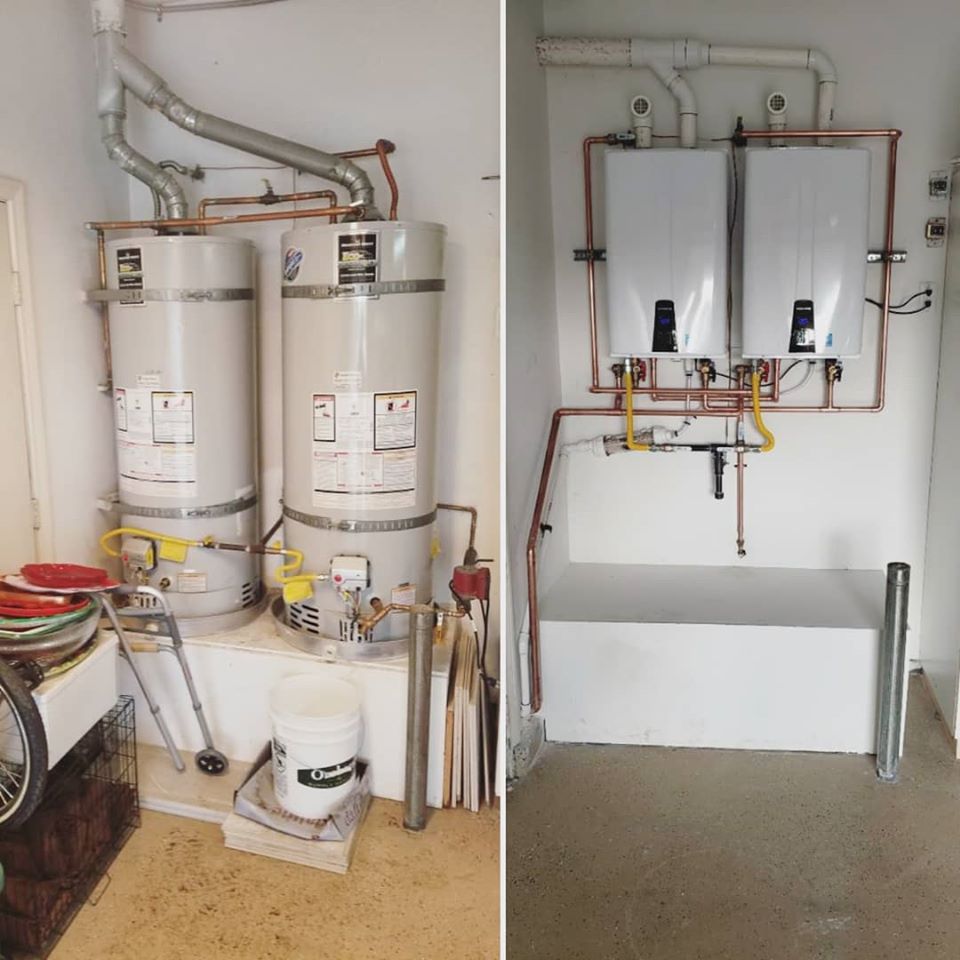
In a parallel setup, both heaters are installed side by side. Cold water splits and flows into both units, and the hot water output from both is joined together before being delivered to your home’s pipes.
Benefits:
- Doubles the flow rate.
- Heaters share the load, increasing efficiency.
- Great for homes with high simultaneous hot water needs.
How It Works:
- Both units operate at the same time during high demand.
- Some advanced tankless models “communicate” with each other to balance the work.
Series Installation
In a series setup, cold water enters the first heater, gets warmed up, then passes through the second heater for further heating. This setup is less common.
Benefits:
- Raises water temperature even higher (useful for very cold climates or special applications).
- Can help if incoming water is extremely cold and one unit can’t heat it enough.
Limitations:
- Does NOT increase flow rate.
- Most homes do not need this unless there are special temperature needs.
Which Setup Is Better?
For most homes and businesses, parallel installation is the preferred choice. It increases both flow rate and hot water availability. Series setups are rare and mainly used for commercial or industrial needs.
Technical Considerations Before Installing Two Tankless Water Heaters
Before you buy a second unit, it’s important to check a few key points:
Sizing And Flow Rate
- Calculate peak demand: Add up the GPM for every shower, faucet, or appliance that might run at once.
- Choose heaters that can meet or exceed this flow rate.
- Example: If your home could use three showers (2 GPM each) and one dishwasher (2 GPM) at the same time, your peak demand is 8 GPM. Two 5-GPM heaters in parallel can easily cover this.
Gas And Electrical Supply
- Check your supply lines: Each heater needs enough gas (for gas models) or electricity (for electric models). Installing two may require upgrades to supply lines, meters, or breakers.
- Ventilation: Gas models need proper venting. Adding a second heater means extra vent pipes or a larger vent system.
Water Pressure
- Both units need enough water pressure to operate correctly. Low pressure can cause heaters to shut off or work poorly.
Control Systems And Communication
- Some advanced tankless models can “talk” to each other and balance the load.
- Older or basic models may require manual control or special plumbing to work together smoothly.
Space And Location
- You need enough wall space for both units, plus room for maintenance.
- Units should be installed where they’re protected from freezing and have easy access for repair.
Installation: Step-by-step Overview
Professional installation is recommended, but here’s what the process usually involves:
- Plumbing Adjustments: Plumbers will split the cold water line and set up a manifold so both heaters receive water. Hot water outlets from both heaters are joined together.
- Gas or Electrical Upgrades: If your supply is not enough, upgrades are needed.
- Mounting Units: Heaters are mounted securely, often side by side.
- Venting: Each gas unit needs safe venting to the outside. Sometimes a shared vent is possible, but often, separate vents are used.
- System Balancing: Some systems need special valves to balance water pressure and flow between heaters.
- Testing: The system is tested under peak demand to ensure both units work together and provide enough hot water.
Important: Never attempt to install two tankless heaters yourself unless you are a licensed plumber or HVAC expert. There are risks with gas, electricity, and water that can damage your home or cause injury.
Cost Of Installing Two Tankless Water Heaters
Adding a second tankless water heater is a significant investment. Let’s break down the main costs:
Equipment Costs
- Tankless Heater Price: Quality units cost $800–$2,500 each, depending on size, brand, and features.
- Advanced Models: Units with “cascade” or “link” features (for parallel setups) are at the higher end.
Installation Costs
- Labor: Professional installation can run from $1,000–$3,000 per unit, depending on complexity.
- Upgrades: Gas line, venting, or electrical upgrades can add $500–$2,000 or more.
Ongoing Costs
- Maintenance: Each heater needs annual service for best performance.
- Energy Use: Two heaters use more energy when running together, but only when needed.
Example Cost Breakdown
Here’s a simple example for a typical home:
| Item | Estimated Cost (USD) |
|---|---|
| Two 7-GPM tankless heaters | $3,600 |
| Installation labor | $3,000 |
| Gas line upgrade | $1,200 |
| Venting materials | $800 |
| Total Estimated Cost | $8,600 |
Tip: Always get quotes from multiple licensed plumbers. Costs can vary by region and home layout.
Benefits Of Using Two Tankless Water Heaters
Why do people go through the extra effort and cost of installing two units? The benefits are often worth it:
Never Run Out Of Hot Water
Even with large families or guests, you can enjoy continuous hot water for showers, laundry, and dishes.
Flexible Hot Water Zones
You can assign each heater to a different part of the house. For example, one serves bathrooms, the other serves the kitchen and laundry. This can reduce wait time and save energy.
Improved Efficiency
Two smaller units working together are often more efficient than one very large unit. They only run when needed, so you save energy during low-demand periods.
Backup System
If one unit fails, the other can often meet basic needs until repairs are made. This “redundancy” is a hidden value many homeowners miss.
Scalable For Future Growth
If you add another bathroom, hot tub, or in-law suite, your hot water system can handle the extra demand without a full replacement.
Drawbacks And Challenges
While there are benefits, combining two tankless water heaters isn’t perfect. Here are some common challenges:
Higher Upfront Cost
Buying and installing two units is more expensive than one.
More Maintenance
You have double the equipment to maintain, which can mean higher service costs.
Space Requirements
You need more wall space and access for two units.
Complex Installation
Plumbing and gas/electric upgrades may be needed, making the project more complex than a simple swap.
Potential Balancing Issues
If the plumbing is not done correctly, one unit may do most of the work, while the other sits idle. This can reduce lifespan and efficiency.
Utility Upgrades
Your gas or electric system might need a costly upgrade to handle the extra load, especially in older homes.
Common Mistakes Homeowners Make
Even experienced DIYers and some contractors can make mistakes when installing two tankless water heaters. Here are pitfalls to avoid:
- Mismatched Units: Using different brands or sizes can cause problems. Always use identical or compatible units for best results.
- Incorrect Plumbing: If not piped properly in parallel, you won’t get the full benefit. Water may only flow through one heater.
- Ignoring Gas/Electric Needs: Many people forget to check if their home’s supply lines can handle two heaters.
- Insufficient Venting: Each gas heater must be vented properly for safety.
- No System Balancing: Without the right valves or controls, one heater might do all the work, leading to uneven wear.
- Skipping Maintenance: Two units mean double the annual maintenance tasks.
Non-obvious insight: Some tankless brands offer kits or built-in features for linking multiple units. Choosing compatible models can make installation easier and safer.
Real-world Examples: Who Needs Two Tankless Water Heaters?
Not every home needs two tankless water heaters. Here are real-life scenarios where dual units make sense:
- Large Homes: Houses with 3+ bathrooms, big tubs, or extra kitchens (like a basement apartment) often need more hot water than a single unit can provide.
- Families with High Demand: Four teenagers showering in the morning, plus laundry and dishes—one heater can’t keep up.
- Homes with Recirculation Systems: Some homes have hot water loops to keep water hot at every tap. Two heaters can manage the load more efficiently.
- Small Businesses: Salons, gyms, or restaurants need lots of hot water all day long.
- Guest Houses or Rentals: If you have a separate guest suite, a dedicated heater ensures comfort and privacy.
Practical tip: If you’re building a new home or doing a major remodel, planning for two tankless heaters gives you future flexibility. It’s much harder (and more expensive) to add a second unit later.
How To Size And Choose The Right Tankless Water Heaters
Choosing the right units is key to getting the benefits you want. Here’s a simple guide:
Step 1: Calculate Peak Hot Water Demand
List every fixture and appliance you might use at once.
- Shower: 2–2.5 GPM
- Bathtub: 4 GPM
- Kitchen faucet: 1.5 GPM
- Dishwasher: 1.5 GPM
- Washing machine: 2 GPM
Add them up for your “worst case” total. For example:
- 2 showers + dishwasher + washing machine = 2.5 + 2.5 + 1.5 + 2 = 8.5 GPM
Step 2: Consider Incoming Water Temperature
Colder incoming water means your heater works harder to reach the desired temperature. If you live in a cold climate, choose units rated for your local water temperature.
Step 3: Select Compatible Heaters
- Use identical models for best performance.
- Look for units with “cascade” or “multi-link” features if possible.
- Choose gas or electric based on your home’s setup.
Step 4: Plan For Utilities
- Check gas or electrical supply capacity.
- Plan venting routes for gas models.
Step 5: Get Professional Help
Consult with a licensed plumber or HVAC contractor who has experience installing multiple tankless systems. A good professional will review your needs and suggest the best configuration.
Table: Parallel Vs. Series Installation
It’s helpful to compare the two main installation types side by side.
| Feature | Parallel Installation | Series Installation |
|---|---|---|
| Main Use | Increase flow rate | Increase temperature |
| Hot Water Output | Higher volume | Same volume, hotter water |
| Common In Homes | Yes | Rare |
| Installation Complexity | Medium | High |
| Best For | Multiple users at once | Very cold climates or special needs |
Energy Efficiency And Long-term Savings
Tankless water heaters are popular for energy savings. But do two units use more energy? The answer depends on your hot water use.
When Two Units Are Efficient
- They only use energy when you need hot water.
- During low demand, only one heater might run (if designed to do so).
- Advanced models “share” the work for the best efficiency.
When Two Units Use More Energy
- If you often use lots of hot water at once, total energy use will be higher than with one heater.
- Standby losses are still lower than with tank systems, since there’s no big tank keeping water hot all day.
Practical Insight
If your home’s hot water use is mostly at one time (like mornings or evenings), two tankless heaters can actually save energy compared to a single oversized unit or a traditional tank. But if you only use a little hot water most of the time, one heater may be enough.
Table: Single Vs. Dual Tankless System Comparison
See how one tankless heater compares with two in key areas:
| Feature | Single Tankless | Dual Tankless |
|---|---|---|
| Max Flow Rate | Limited (4–8 GPM) | Double (8–16 GPM) |
| Energy Savings | High | High, only during use |
| Redundancy | No | Yes |
| Upfront Cost | Lower | Higher |
| Maintenance | Less | More |
| Flexibility | Limited | High (zoning, expansion) |
Credit: cinemaximiliaan.org
Non-obvious Insights For Homeowners
- Pipe Insulation Matters: Even with two heaters, uninsulated pipes mean wasted heat and longer wait times. Insulate hot water lines to maximize system performance.
- Mixing Valves Can Help: If you notice temperature swings, installing thermostatic mixing valves at key points can balance hot water delivery.
- Water Hardness: Tankless units are sensitive to mineral buildup. With two heaters, consider a water softener or regular descaling to keep both working efficiently.
How To Maintain A Dual Tankless System
With two units, maintenance is even more important. Here’s what to do:
- Annual Service: Flush each heater to remove mineral buildup.
- Check Venting: Make sure all vent pipes are clear and secure.
- Inspect Water Filters: Many tankless models have inlet screens or filters—clean or replace them regularly.
- Monitor for Leaks: Check all connections and valves for drips or corrosion.
Tip: Keep a log of maintenance for each unit. This helps spot patterns and plan future repairs.
Is Two Better Than One? When Not To Add A Second Tankless Heater
While two heaters offer many benefits, sometimes one is enough. Here’s when you might NOT need two:
- Small home or apartment: If you rarely have more than two hot water fixtures running at once, a single well-sized unit may be enough.
- Limited utilities: If your gas or electrical supply is maxed out, upgrading for two units can be costly.
- Budget: The cost of two heaters, plus installation, may not fit your needs.
A licensed plumber can help you decide if your current system can be improved without adding a second unit.
How To Decide: Checklist
Still unsure if you should install two tankless water heaters? Ask yourself:
- Do I run out of hot water during peak times?
- Do I have multiple showers or appliances running at once?
- Is my home larger than 2,500 sq. Feet or has more than 3 bathrooms?
- Am I planning a home addition or remodel?
- Can my utility lines support a second unit?
If you answer “yes” to several questions, a dual tankless system may be the right choice.
For more in-depth technical information, see the U.S. Department of Energy’s guide to tankless water heaters.

Credit: www.titanheater.com
Frequently Asked Questions
Can I Install Two Different Brands Or Sizes Of Tankless Water Heaters Together?
It’s possible but not recommended. Using identical models ensures both units work together smoothly. Different brands or sizes may heat unevenly or fail to balance the load, leading to uneven wear and possible system problems.
Do Two Tankless Water Heaters Double My Energy Use?
Not exactly. Two units use more energy only when both are running at the same time. Because tankless heaters only heat water when needed, there’s no extra energy cost during low-use times. Proper sizing and installation can keep energy use efficient.
Is It Better To Install Two Small Heaters Or One Large Tankless Heater?
For homes with high simultaneous demand (lots of people using hot water at once), two smaller heaters in parallel are often better. They can be zoned and provide redundancy. One large unit may be simpler but can be less flexible and has no backup if it fails.
How Long Does It Take To Install Two Tankless Water Heaters?
Installation usually takes 1–2 days, depending on your home’s plumbing, venting, and utility setup. Major upgrades (like new gas lines) can add to the timeline.
Can I Add A Second Tankless Heater To My Existing System?
Often yes, especially if your current unit is newer and compatible with linking features. However, plumbing, gas, and venting changes will still be needed. Consult a licensed plumber to review your setup.
Final Thoughts
Combining two tankless water heaters is a powerful way to meet high hot water demand, boost efficiency, and future-proof your home. It’s not a project for everyone—cost, complexity, and maintenance are higher. But for large families, busy homes, or small businesses, the investment can bring lasting comfort and convenience.
Always plan carefully, use matching units, and hire experienced professionals. With the right setup, you’ll enjoy endless hot water for years to come.