
When it comes to keeping your home warm and cozy, choosing the right baseboard heater can make a big difference. You might have come across terms like “one pole” and “two pole” baseboard heaters but aren’t sure which one fits your needs best.
Understanding the difference between these two can save you money, improve safety, and boost your heater’s efficiency. You’ll discover exactly what sets one pole and two pole heaters apart, and how to pick the perfect option for your space. Keep reading to make a smart choice that keeps your home comfortable all winter long.

Credit: www.reddit.com
Baseboard Heater Basics
Baseboard heaters offer a simple way to warm up rooms. They fit along the base of walls. These heaters give steady, gentle heat. Many homes use them for extra warmth. Understanding how they work helps in choosing the right one.
Baseboard heaters come in different types. Two main types are one pole and two pole models. Each type has its own features and uses. Knowing the basics makes it easier to decide.
What Is A Baseboard Heater
A baseboard heater is a long, narrow heating unit. It installs near the floor, along walls. It uses electricity to create heat. Some use hot water or steam instead. Baseboard heaters warm the air close to the floor. The heat then moves upward to warm the room.
How Baseboard Heaters Work
Baseboard heaters work by heating metal fins inside them. Electricity flows through heating elements. These elements get hot and warm the fins. Warm fins heat the air near the heater. The warm air rises and spreads heat in the room. This process repeats to keep the room warm. Baseboard heaters run quietly and do not blow air.
Electrical Poles Explained
Understanding electrical poles helps you choose the right baseboard heater. Poles refer to the number of live wires the heater connects to in your home’s electrical system. This affects the heater’s power and how it heats your space.
One pole and two pole heaters use electricity differently. Knowing the difference helps you pick a heater that matches your needs and your home’s wiring.
What Is A One Pole Heater
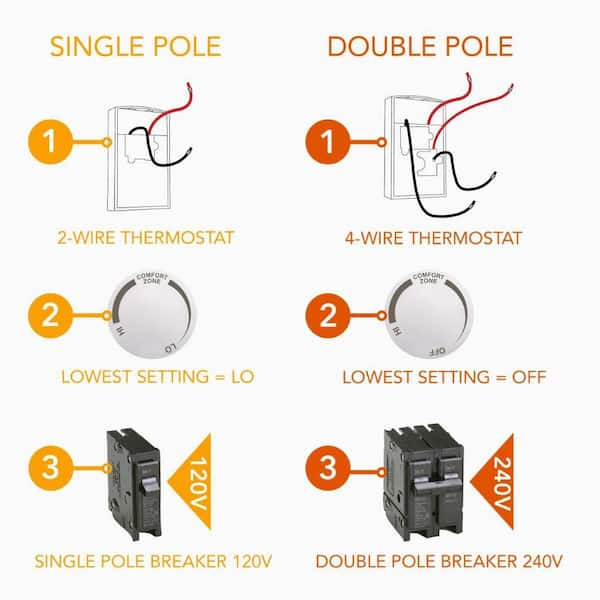
A one pole heater uses a single live wire and a neutral wire. It runs on 120 volts, common in most homes. These heaters are smaller and use less power.
One pole heaters work well in small rooms or spaces needing mild heat. They are easier to install and cost less to operate. Perfect for cozy rooms or areas with lower heating needs.
What Is A Two Pole Heater
A two pole heater connects to two live wires and no neutral wire. It runs on 240 volts, delivering more power. These heaters are larger and heat bigger spaces faster.
Two pole heaters suit bigger rooms or areas needing strong heat. They use more electricity but provide better warmth. Ideal for living rooms, basements, or open spaces.
Voltage And Power Differences
Understanding the voltage and power differences between one pole and two pole baseboard heaters helps in choosing the right heater. Voltage affects how much power the heater uses and how it connects to your home’s electrical system. Power determines the heat output and how quickly a room warms up.
Voltage Requirements For One Pole
One pole baseboard heaters use a single electrical line. They usually need 120 volts. This voltage works well for small rooms or spaces with low heat demand. One pole heaters connect to a standard circuit breaker. This makes installation simpler and less costly.
Voltage Requirements For Two Pole
Two pole baseboard heaters use two electrical lines. They require 240 volts. This higher voltage suits larger rooms or areas needing more heat. Two pole heaters connect to a double circuit breaker. This setup provides more power safely and evenly.
Power Output Comparison
One pole heaters deliver less power than two pole models. They typically produce up to 1500 watts. This limits the heat size they can provide. Two pole heaters can deliver 3000 watts or more. This higher power heats spaces faster and keeps them warmer.

Credit: theiideacompany.com
Installation Considerations
Installing baseboard heaters requires careful thought about electrical setup and safety. Choosing between one pole and two pole heaters affects how you prepare the wiring and circuit breakers. Proper installation keeps your home safe and heater efficient.
Wiring Needs
One pole baseboard heaters use a single live wire and a neutral wire. This setup suits smaller rooms and lower power needs. Two pole heaters need two live wires and a neutral. They handle higher power and larger spaces. Knowing this helps you pick the right wiring plan. Always check wire size to match heater power. Using the wrong wire can cause overheating or failure.
Circuit Breaker Compatibility
One pole heaters connect to a single-pole breaker. These breakers fit in most home panels. Two pole heaters require a double-pole breaker. Double-pole breakers handle higher voltage safely. Make sure your panel supports the breaker type needed. Using the wrong breaker can lead to tripped circuits or fire risks.
Safety Factors
Install heaters away from flammable materials and furniture. Proper grounding is essential to avoid shocks. Confirm all connections are tight and secure. Use a licensed electrician to ensure code compliance. Regular inspection and maintenance keep heaters safe over time.
Energy Efficiency And Cost
Energy efficiency and cost are key factors when choosing between one pole and two pole baseboard heaters. Understanding how each type uses energy helps save money. Choosing the right heater affects your electricity bill and long-term expenses.
Energy Consumption
One pole baseboard heaters use less electricity. They run on a single electrical circuit. This limits their power and heat output. Two pole heaters use more electricity because they connect to two circuits. This allows higher heat but increases energy use.
Energy use depends on room size and heater wattage. One pole heaters suit small rooms with low heat needs. Two pole heaters fit larger spaces needing more warmth. Choose based on your room size and heating needs.
Operating Costs
One pole heaters cost less to run daily. They use less power and keep bills lower. Two pole heaters use more electricity, raising monthly bills. Operating costs rise with heater size and runtime.
Running a two pole heater all day can increase costs quickly. One pole models offer better savings for limited heating. Balance comfort with your budget to manage operating costs well.
Long-term Savings
One pole heaters save money over time by using less energy. Lower electricity use means smaller bills. They last long and require little maintenance, adding to savings.
Two pole heaters warm large areas faster. They may reduce the need for extra heating devices. This can save money if you heat a big room often. However, expect higher electric bills.
Think about your heating needs and budget for long-term savings. Choose a heater that fits your space and energy goals.
Choosing The Right Heater
Choosing the right baseboard heater makes a big difference in comfort and cost. Picking between one pole and two pole heaters depends on several key factors. Understanding these factors helps find the best fit for your space and needs.
Room Size And Heating Needs
Small rooms need less heat. A one pole heater often works well in these spaces. Large rooms or open areas need more power. Two pole heaters provide stronger heat for bigger spaces. Consider the size of your room before choosing a heater.
Electrical System Compatibility
Check your home’s electrical system before buying. One pole heaters use 120 volts, matching most home circuits. Two pole heaters use 240 volts and need special wiring. Ensure your electrical system can handle the heater’s power requirements safely.
Budget And Preferences
One pole heaters usually cost less. They are simple to install and operate. Two pole heaters cost more but offer better heat for large rooms. Think about your budget and how much heat you want. Choose the heater that fits your price and comfort needs.
Common Issues And Troubleshooting
Baseboard heaters are common in many homes. They keep rooms warm and cozy. Sometimes, these heaters may face issues. Understanding these problems helps fix them faster. This section covers common issues with one pole and two pole baseboard heaters. It also shares useful maintenance tips to keep them running well.
Typical Problems With One Pole
One pole heaters often have trouble heating evenly. They may feel warm in one spot but cold elsewhere. Loose wiring can cause the heater to stop working. A faulty thermostat is another common issue. It might not turn the heater on or off properly. Dirt and dust buildup can block heat flow and cause overheating. Regular checks can catch these problems early.
Typical Problems With Two Pole
Two pole heaters sometimes trip the circuit breaker. This happens if there is a short circuit or overload. Wiring issues between the poles can cause uneven heating. The heater may make buzzing or humming noises if parts are loose. Faulty connections can lead to electric shocks or fire risks. Careful inspection of wires and connections is important for safety.
Maintenance Tips
Turn off power before working on your heater. Clean dust and dirt regularly from the heater fins. Check wiring connections for any signs of wear or damage. Test the thermostat to ensure it controls the heat correctly. Replace worn-out parts immediately to avoid bigger problems. Schedule yearly professional inspections for safety and efficiency. Simple maintenance extends the life of your baseboard heater.
Credit: www.homedepot.com
Frequently Asked Questions
What Is The Difference Between One Pole And Two Pole Heaters?
One pole heaters use a single wire for power, while two pole heaters use two wires. Two pole heaters offer more power and better heat distribution.
Can One Pole Baseboard Heaters Handle Large Rooms?
One pole heaters are best for small to medium rooms. Large rooms usually need two pole heaters for even heating.
Are Two Pole Heaters Safer Than One Pole Heaters?
Two pole heaters often have better safety features due to balanced power use. This reduces the risk of overheating.
How Does Installation Differ Between One Pole And Two Pole Heaters?
One pole heaters are simpler to install with less wiring. Two pole heaters require more wiring and professional installation.
Do Two Pole Heaters Consume More Electricity Than One Pole Heaters?
Two pole heaters use more electricity but heat rooms faster. This can save energy in large spaces by running less time.
Which Heater Is More Cost-effective For Home Heating?
One pole heaters cost less upfront and suit smaller spaces. Two pole heaters are better investments for bigger rooms and efficiency.
Conclusion
Choosing between one pole and two pole baseboard heaters depends on your needs. One pole heaters work well for small rooms or low power needs. Two pole heaters provide more heat and are better for larger spaces. Think about your room size, power supply, and safety before deciding.
Both types have clear advantages. Pick the heater that fits your home and budget best. This helps you stay warm and save energy. Simple choices can make a big difference in comfort and cost.