
Are you trying to decide between hardwired and plug-in electric baseboard heaters for your home? Choosing the right type can save you money, improve comfort, and even boost safety.
But with so many options, it’s easy to feel overwhelmed. This guide breaks down the key differences in a clear, simple way so you can make the best choice for your space. Keep reading to discover which heater fits your needs perfectly and why it matters more than you might think.

Credit: www.eheat.com
How Electric Baseboard Heaters Work
Electric baseboard heaters provide warmth by using electricity to generate heat. They are simple devices installed along the base of walls. These heaters convert electrical energy into heat energy efficiently.
The heat travels from the heater into the room, warming the air and surfaces. This process creates a cozy atmosphere during cold days. Understanding the basics helps in choosing the right heater type.
Heating Element Function
Inside the heater, a metal heating element gets hot when electricity passes through it. This element is usually made of metal coils or strips. The heat from the element then warms the metal fins around it.
The fins increase the surface area, allowing more heat to spread into the room. This design helps the heater warm the air quickly and evenly.
Heat Distribution Process
Warm air rises from the baseboard heater naturally. Cooler air moves in to replace it. This cycle creates a steady flow of warm air throughout the room.
The heater works quietly, without fans or moving parts. This silent operation makes baseboard heaters ideal for bedrooms and living areas.
Thermostat Control
Most baseboard heaters have a thermostat to control temperature. The thermostat turns the heater on and off to keep the room at the set temperature. This control saves energy and avoids overheating.
Users can adjust the thermostat to their comfort level easily. Some models allow digital or manual settings for convenience.
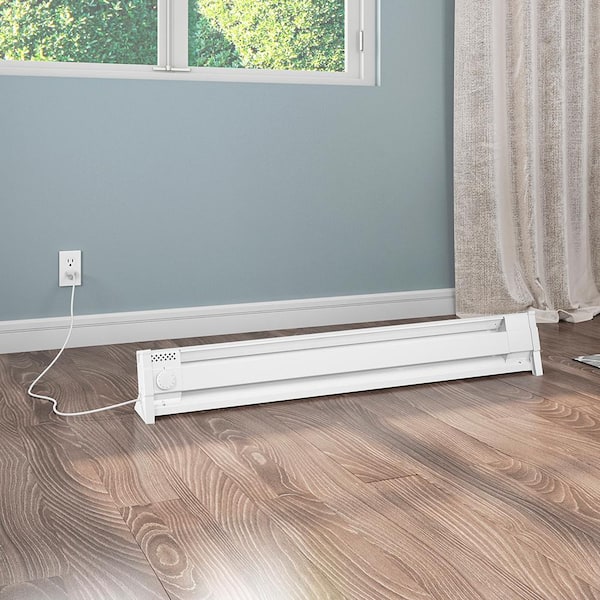
Credit: www.homedepot.com
Hardwired Baseboard Heaters
Hardwired baseboard heaters connect directly to your home’s electrical system. They do not use a plug but are wired into a circuit breaker. This setup provides more power for heating larger spaces. These heaters are common in permanent installations.
They offer steady heat and often last longer than plug-in models. Understanding their installation, power needs, safety, and costs helps you choose wisely.
Installation Process
Hardwired heaters need a professional electrician for installation. The electrician connects the heater to a dedicated circuit in your breaker box. This ensures the heater gets enough power without overloading the system.
The installation involves mounting the heater on the wall and running wires inside the walls. It usually takes a few hours, depending on the room size and wiring condition.
Power Supply And Wiring
These heaters use a direct power supply from your home’s electrical panel. They require a dedicated circuit with the right voltage and amperage. This prevents electrical problems and ensures safe operation.
Wiring must follow local electrical codes. Using the correct wire size and breaker is crucial for safety and efficiency.
Safety Features
Hardwired heaters often include built-in safety features. These can be overheat protection or automatic shutoff. Proper wiring and installation reduce fire risks.
Since they are hardwired, there is less chance of accidental unplugging or damage to the power cord. This makes them safer for long-term use.
Cost And Maintenance
Initial costs are higher due to professional installation and wiring. The heater unit itself may cost more than plug-in versions. Maintenance is usually minimal, mostly cleaning dust from the heater.
Hardwired heaters tend to be more efficient and last longer. They may save money on energy bills over time. Regular checks by an electrician keep the system safe and reliable.
Plug-in Baseboard Heaters
Plug-in baseboard heaters offer a simple heating solution for small spaces and temporary needs. They connect directly to a standard electrical outlet. This makes them easy to move and use in different rooms.
These heaters do not require special wiring. Many people choose them for their convenience and flexibility. They work well in apartments, offices, or rooms without hardwired heating systems.
Installation Ease
Plug-in baseboard heaters need no electrician for setup. Just place the heater near an outlet. Then, plug it in and turn it on. This saves time and effort. No tools or special skills are necessary.
The simplicity allows quick use during cold days. No wall modifications or complicated steps.
Power Source And Flexibility
They run on standard 120-volt outlets. This means no special power source is required. You can move the heater to any room with an outlet.
This flexibility suits renters and temporary setups well. You can adjust your heating as needed. No fixed installation limits your options.
Safety Considerations
Plug-in heaters have built-in safety features like tip-over switches. These turn the heater off if it falls. Overheat protection also prevents damage or fire risks.
Still, avoid using extension cords with these heaters. Use a grounded outlet to reduce electrical hazards. Keep flammable objects away from the heater.
Cost And Upkeep
Plug-in baseboard heaters cost less upfront than hardwired models. Installation costs are minimal or zero. Maintenance is easy since you can clean and inspect them often.
Energy use can be higher if the heater runs often. Regular checks ensure safe and efficient operation. Replacement parts and repairs tend to be affordable.
Performance And Efficiency
Electric baseboard heaters come in two main types: hardwired and plug-in. Both types provide warmth by converting electricity into heat. Their performance and efficiency depend on several factors. Understanding these can help you choose the right heater for your space and needs.
Heating Capacity
Heating capacity measures how much heat a baseboard heater can produce. Hardwired heaters often offer higher capacity. They connect directly to the electrical system, allowing more power use. Plug-in models usually have lower capacity. They plug into standard outlets, limiting their power. For large rooms, hardwired heaters perform better. Small rooms or spot heating can work well with plug-in heaters.
Energy Consumption
Energy consumption shows how much electricity the heater uses. Hardwired heaters tend to use energy more steadily. They can handle higher power without overheating. Plug-in heaters use less power but may take longer to warm a room. Both types convert nearly all electricity into heat, making them efficient. Choosing the right size avoids wasting energy.
Thermostat Control Options
Thermostat control helps manage room temperature efficiently. Hardwired heaters often come with built-in thermostats or connect to wall controls. This setup allows precise temperature settings. Plug-in heaters usually have simple, built-in thermostats on the unit. Some models offer digital controls for better accuracy. Better thermostat control means less energy waste and more comfort.
Pros And Cons Comparison
Choosing between hardwired and plug-in electric baseboard heaters depends on many factors. Each type offers unique benefits and drawbacks. Understanding these can help you pick the best option for your space.
Below is a clear comparison of the pros and cons for both hardwired and plug-in models. This guide shows what makes each type suitable or less ideal for different needs.
Advantages Of Hardwired Models
Hardwired baseboard heaters connect directly to your home’s electrical system. This setup offers a clean, seamless look without cords. It saves wall space since no outlets are needed. These models often provide higher power and better heat output. They can handle larger rooms more effectively. Hardwired heaters usually have better durability and a longer lifespan. They work quietly without any plugs or switches exposed.
Advantages Of Plug-in Models
Plug-in baseboard heaters are easy to install. You just plug them into a standard outlet. No electrician is needed for setup. This makes them ideal for renters or temporary heating. They offer flexibility to move the heater between rooms. Plug-in models are less expensive upfront. They allow quick replacement if needed. These heaters usually come with built-in controls for easy use.
Drawbacks To Consider
Hardwired models need professional installation, which can cost more. They are fixed in place and cannot be moved easily. Repairs might require an electrician’s help. Plug-in heaters take up an outlet, limiting space for other devices. They often have lower power, which means less heat for big rooms. The cords can create clutter or trip hazards. Both types require regular maintenance to stay efficient.
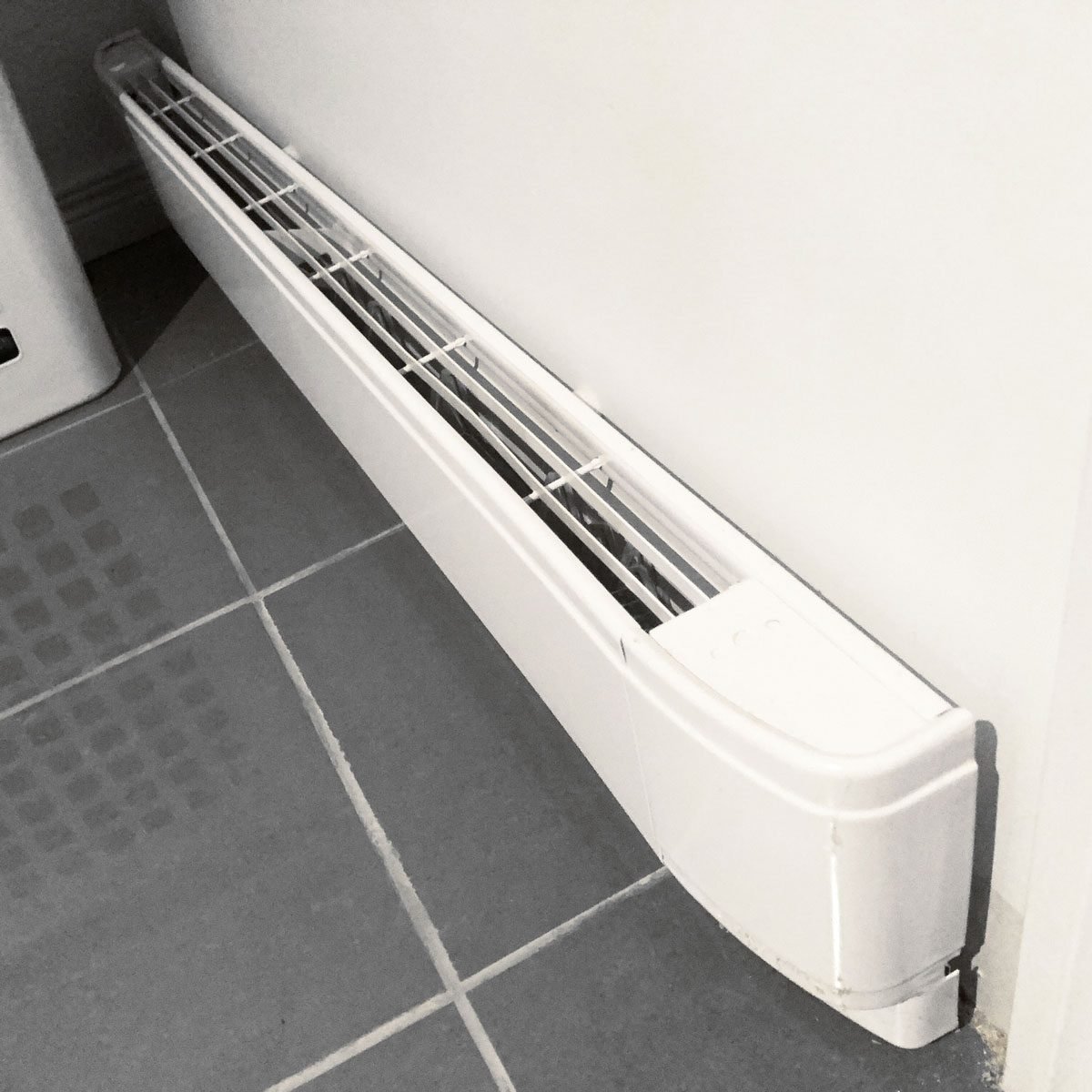
Credit: www.familyhandyman.com
Best Use Cases For Each Type
Electric baseboard heaters come in two main types: hardwired and plug-in. Each type suits different needs and spaces. Choosing the right one depends on your home setup and heating goals.
This section explains the best use cases for each type to help you decide.
Ideal Settings For Hardwired Heaters
Hardwired heaters connect directly to your home’s electrical system. They are perfect for permanent heating solutions. These heaters fit well in rooms that need constant warmth.
Hardwired models work best in living rooms, bedrooms, and large spaces. They provide steady heat without cables or plugs. Installation requires an electrician, which makes them suitable for long-term use.
They are also good in homes without many outlets. Hardwired heaters offer clean looks and keep floors clear. They handle higher power, so they heat bigger rooms efficiently.
Ideal Settings For Plug-in Heaters
Plug-in heaters are easy to move and install. They work well in small rooms or temporary spaces. You can plug them into any standard outlet quickly.
These heaters suit apartments, offices, or rooms where you need heat only sometimes. They are great for renters or spaces without hardwired options. Plug-in heaters add warmth without permanent changes to wiring.
They are also handy for spot heating, like near a desk or reading chair. You can unplug and store them when not needed. Plug-in models provide flexible heating without complex setup.
Installation Tips And Safety Guidelines
Installing electric baseboard heaters requires careful attention. Proper installation keeps your home safe. It also improves heater performance and energy use.
Both hardwired and plug-in models need specific steps. Following safety rules prevents electrical hazards and fire risks. Here are key tips for a smooth installation.
Preparing The Installation Site
Choose a clear wall space away from curtains and furniture. Measure the area to match the heater size. Make sure the wall can support the heater’s weight.
Check that the floor below is clean and dry. Avoid places with high moisture like bathrooms or kitchens.
Electrical Requirements
Hardwired heaters need a dedicated circuit and breaker. Confirm your home’s wiring matches the heater’s power needs. Use a licensed electrician for hardwiring to ensure code compliance.
Plug-in heaters require a grounded outlet. Do not use extension cords or power strips. These can overheat and cause fires.
Mounting The Heater
Follow the manufacturer’s instructions carefully. Use the correct screws and anchors for your wall type. Keep the heater level and secure.
Leave space around the heater for air circulation. Avoid blocking the airflow with furniture or curtains.
Testing And Safety Checks
Turn on the power and test the heater operation. Check for unusual noises, smells, or sparks. If any issue appears, turn off the heater immediately.
Install a smoke detector nearby for extra safety. Regularly inspect the heater for dust buildup or damage.
Cost Analysis And Long-term Savings
Understanding the cost and savings of electric baseboard heaters helps make smart choices. Both hardwired and plug-in models have different costs upfront and over time. Evaluating these factors shows which option fits your budget best.
Initial Purchase And Installation Costs
Plug-in heaters often cost less to buy. They need no special wiring or electrician. Just plug into a regular outlet.
Hardwired heaters usually cost more at purchase. They need professional installation. This adds extra fees for wiring and labor.
Energy Efficiency And Operating Expenses
Both types use electricity at similar rates. Efficiency depends on heater quality, not wiring type.
Hardwired units may connect to better circuit systems. This can reduce energy loss slightly. Plug-in heaters might cause small power drops from outlets.
Maintenance And Repair Costs
Plug-in heaters are easy to replace. No need for an electrician. This keeps repair costs low.
Hardwired heaters may require professional help for fixes. This raises maintenance expenses over time.
Long-term Savings Potential
Plug-in heaters save money initially. But frequent replacements add up.
Hardwired heaters cost more upfront. They last longer and need fewer repairs. This lowers costs in the long run.
Frequently Asked Questions
What Is The Difference Between Hardwired And Plug-in Heaters?
Hardwired heaters connect directly to your home’s wiring. Plug-in heaters use a standard electrical outlet. This affects installation and power supply.
Are Hardwired Baseboard Heaters More Efficient?
Hardwired heaters usually provide steady and reliable heat. They avoid power loss from loose plugs. This can make them more efficient overall.
Can I Install A Plug-in Baseboard Heater Myself?
Yes, plug-in heaters are easy to install. Just plug them into a standard outlet. No special wiring or tools are needed.
Do Hardwired Heaters Require Professional Installation?
Yes, hardwired heaters need a licensed electrician. They must connect to your home’s electrical panel safely. Proper installation prevents hazards and ensures good performance.
Which Heater Type Is Safer For Long-term Use?
Hardwired heaters are generally safer for permanent use. They have secure wiring and less risk of disconnection. Plug-in heaters can be safe but may pose risks if cords are damaged.
How Do Costs Compare Between Hardwired And Plug-in Heaters?
Hardwired heaters usually cost more upfront due to installation. Plug-in heaters are cheaper and ready to use. Long-term energy costs depend on heater efficiency and home size.
Conclusion
Choosing between hardwired and plug-in electric baseboard heaters depends on your needs. Hardwired units offer a clean look and often better efficiency. Plug-in heaters provide easy installation and flexibility. Both types can effectively warm your space. Consider your budget, room size, and installation options.
Safety is important; follow guidelines and local codes. Taking time to compare helps you pick the best heater. Stay warm and comfortable with the right choice. Simple steps lead to better heating solutions.