
When it comes to heating your home, choosing the right system can feel overwhelming. You might be wondering whether convection or hydronic electric baseboard heaters are the better fit for your space.
Each option has its own way of warming your room, and understanding the difference can save you money and keep you comfortable all winter long. You’ll discover how these two types of heaters work, which one suits your needs best, and what to consider before making a decision.
Keep reading to find out how to make your home cozy and efficient with the right electric baseboard heater.
Credit: thorfamilylaw.com
How Convection Heaters Work
Convection heaters warm a room by moving air over a heated surface. This method uses natural air flow to spread heat. It is simple but effective for many homes and offices. Understanding how these heaters work helps in choosing the right heating system.
Heat Transfer Process
Convection heaters use heat transfer to warm the air. The heater’s surface gets hot. The air touching this surface heats up and rises. Cooler air moves in to take its place. This cycle repeats, moving warm air around the room.
Air Circulation Dynamics
Warm air rises because it is lighter than cold air. As warm air moves up, cooler air sinks down. This creates a natural flow called convection currents. These currents spread heat evenly without needing fans or motors. It keeps the room warm and comfortable.
Common Uses
Convection heaters are common in homes, offices, and small shops. They work well in rooms with good airflow. These heaters are quiet and easy to install. People choose them for steady, gentle heating during cold months.

Credit: www.advancedresources.com
How Hydronic Baseboard Heaters Work
Hydronic baseboard heaters provide a quiet and even heat source. They use hot water heated by electric elements to warm your space. This method differs from traditional convection heaters that heat air directly. Understanding how hydronic heaters work helps to choose the right heating system for your home.
Heating Mechanism
Hydronic baseboard heaters use hot water to transfer heat. The water heats up inside metal pipes. These pipes run through the baseboard unit along the wall. As the water moves, it releases heat to the metal fins. The fins then warm the air in the room slowly and evenly.
Role Of Electric Elements
Electric elements heat the water inside the heater. They act like a small electric boiler. The elements warm the water quickly and efficiently. This heated water flows through the pipes inside the baseboard. The temperature stays steady, providing consistent warmth.
Typical Applications
Hydronic baseboard heaters suit homes needing steady, quiet heat. They work well in bedrooms and living rooms. They fit spaces where silent operation is important. These heaters also perform well in zones with low ceilings. Hydronic systems are ideal for energy-efficient homes.
Energy Efficiency Comparison
Energy efficiency plays a major role in choosing the right heater for your home. Both convection and hydronic electric baseboard heaters use electricity but work differently. Understanding their energy use helps save money and reduce waste.
Power Consumption
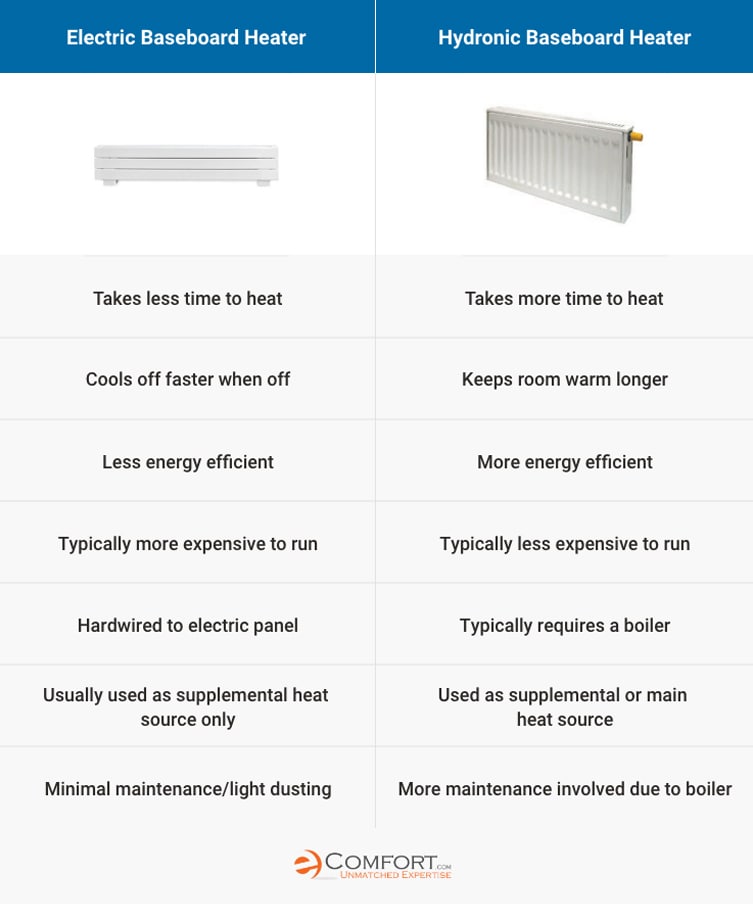
Convection heaters warm air quickly by blowing it around the room. They use more power at the start to heat the air fast. Hydronic heaters heat a liquid inside pipes, which then warms the room slowly. This method often uses less power over time.
Heat Retention
Convection heaters lose heat fast when turned off. The warm air cools quickly and the room feels cold. Hydronic heaters keep heat longer because the liquid stays warm. Rooms stay cozy even after the heater stops running.
Operational Costs
Convection heaters may cost more due to higher power use. Hydronic heaters save money by using energy more steadily. Choosing a heater with good heat retention lowers your monthly bills.
Installation And Maintenance
Installation and maintenance play a big role in choosing between convection and hydronic electric baseboard heaters. Each type needs different care and setup. Knowing these differences helps you avoid problems later.
Setup Requirements
Convection heaters are easy to install. They usually mount on walls and plug into a standard outlet. No special plumbing or extra parts are needed.
Hydronic heaters require more work. They need a water or oil-filled system inside. This means plumbing connections and a power source. Installation often needs a professional.
Maintenance Needs
Convection heaters need little maintenance. Dusting the fins and checking for blockages keeps them working well. No fluid changes or special checks are required.
Hydronic heaters need regular checks. The fluid inside may need topping or replacing. Pipes and valves should be inspected to avoid leaks or damage.
Longevity Factors
Convection heaters usually last 10 to 15 years. Their simple design means fewer parts can fail.
Hydronic heaters often last longer. The sealed system protects internal parts. Proper maintenance can extend their life to 20 years or more.
Comfort And Heat Distribution
Comfort and heat distribution are key when choosing between convection and hydronic electric baseboard heaters. Both types warm a room, but they do so differently. This affects how cozy the space feels and how the heat spreads. Let’s explore their differences in temperature consistency, noise levels, and air quality impact.
Temperature Consistency
Hydronic heaters use hot water to spread heat evenly. This method keeps the room at a steady temperature longer. Convection heaters warm the air directly, causing temperature changes as warm air rises and cool air falls. This can make the room feel less even. Hydronic systems offer smoother, more consistent warmth.
Noise Levels
Hydronic baseboard heaters work quietly since they rely on water circulation. You rarely hear any sound from them. Convection heaters sometimes produce a faint humming or fan noise. This noise comes from the heating element warming the air. For quiet rooms, hydronic heaters are often the better choice.
Air Quality Impact
Convection heaters move air around, which can stir up dust and allergens. This may affect people with allergies or asthma. Hydronic heaters do not blow air, reducing dust movement. They create a calmer air environment. This makes hydronic heaters better for sensitive air quality needs.
Cost Considerations
Cost plays a big role when choosing between convection and hydronic electric baseboard heaters. Understanding the expenses helps you pick the right heater for your budget. This section breaks down the key cost factors.
Initial Investment
Convection heaters usually cost less to buy and install. They have simple parts and fit easily on walls. Hydronic heaters cost more upfront. Their system includes water tubes and pipes. Installation can take longer and need a skilled technician.
Running Expenses
Convection heaters use electricity directly to warm air. This may raise electricity bills faster. Hydronic heaters heat water, which keeps warmth longer. They often use less energy over time. This can lower monthly costs in the long run.
Repair Costs
Convection heaters have fewer parts. Repairs are usually quick and cheap. Hydronic heaters have more complex parts. Fixing leaks or pumps can cost more. Regular checks can help avoid big repair bills.
Safety And Environmental Impact
Safety and environmental impact are key factors in choosing between convection and hydronic electric baseboard heaters. Both types have different effects on home safety and the environment. Understanding these differences helps make better heating choices.
Risk Factors
Convection heaters can cause dry air and dust movement. This may trigger allergies or breathing problems. They get hot to the touch, posing a burn risk, especially to children and pets.
Hydronic heaters use hot water inside the baseboard. They stay cooler outside, reducing burn chances. They do not blow air, so less dust spreads. This makes them safer for sensitive individuals.
Eco-friendliness
Convection heaters use electricity directly to warm air. This can lead to higher energy use. They often cycle on and off, which wastes energy.
Hydronic heaters are more energy-efficient. They keep heat longer because water holds heat well. This means they use less electricity overall, lowering your carbon footprint.
Regulatory Compliance
Both heater types must meet safety standards in many countries. These rules ensure electrical parts and heating surfaces are safe.
Hydronic heaters often meet stricter standards due to their design. They have fewer exposed hot surfaces and better temperature control. Check local regulations before installing any heater.
Choosing The Right Heater
Choosing the right heater can make a big difference in your home’s comfort and energy use. Both convection and hydronic electric baseboard heaters have unique features. Understanding these can help you pick the best option for your space.
Room Size And Layout
Small rooms heat up quickly with convection heaters. They spread warm air fast but may create uneven heat in large spaces.
Hydronic heaters use heated water to warm the room slowly. They work well in bigger rooms or open layouts. Their heat feels steady and gentle.
User Preferences
Convection heaters provide quick warmth. Ideal for those who want instant heat on cold days. They might cause dry air or dust movement.
Hydronic heaters offer a quiet, cozy heat. They do not blow air, so the air stays clean and moist. Perfect for sensitive users or allergy sufferers.
Budget Constraints
Convection heaters usually cost less upfront. They are easy to install and require little maintenance.
Hydronic heaters cost more at first. Their energy use can be lower over time, saving money on bills.
:max_bytes(150000):strip_icc()/Baseboardheater-GettyImages-182924153-839b39e85fdf4783b2af9850059da492.jpg)
Credit: www.thespruce.com
Frequently Asked Questions
What Is The Main Difference Between Convection And Hydronic Baseboard Heaters?
Convection heaters warm air that moves around the room. Hydronic heaters use hot water to heat the metal baseboard, which then warms the air.
Which Heater Is More Energy-efficient, Convection Or Hydronic?
Hydronic baseboard heaters are usually more energy-efficient because water holds heat longer. Convection heaters can cool down faster, using more energy.
How Quickly Do Convection And Hydronic Heaters Warm A Room?
Convection heaters warm a room faster since they heat the air directly. Hydronic heaters take longer but keep the room warm for a longer time.
Are Hydronic Baseboard Heaters Safer Than Convection Heaters?
Hydronic heaters have lower surface temperatures, reducing burn risk. Convection heaters can get hotter to the touch, which may be less safe.
Can Convection And Hydronic Heaters Work In The Same Home?
Yes, both heater types can be installed in one home. They can complement each other based on room size and heating needs.
Which Heater Is Better For Allergy Sufferers, Convection Or Hydronic?
Hydronic heaters produce less air movement, so they stir up fewer dust particles. Convection heaters can circulate dust and allergens more, which may bother sensitive people.
Conclusion
Choosing between convection and hydronic electric baseboard heaters depends on your needs. Convection heaters warm the air quickly and spread heat fast. Hydronic heaters use hot water and give steady, gentle warmth. Both types have benefits for home comfort and energy use.
Think about room size, budget, and how long you want the heat. This helps pick the best heater for your space. Understanding these differences makes heating easier and more effective.